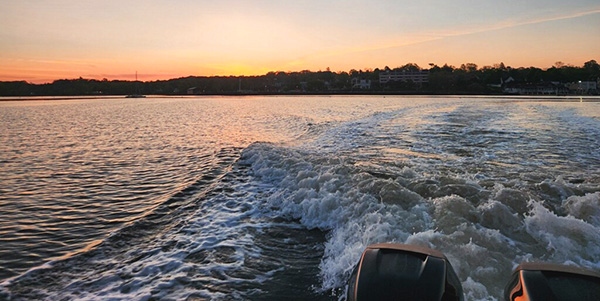
The 10th season of the Unified Water Study (UWS) with Save the Sound in Larchmont, New York, and 30 partner organizations ready to collect water quality samples in 52 bays and harbors around Long Island Sound during the 2026 monitoring season, recently got on its way.
Launched by Save the Sound in 2017 to better understand water quality in the Sound’s bays and harbors, the Unified Water Study standardized monitoring procedures, protocols and equipment used to collect data on a range of parameters, including dissolved oxygen, Chlorophyll a, turbidity (water clarity), macrophytes (seaweed), and oxygen saturation. Having access to comparable data collected around the Sound helps paint a picture of the ecological health of the Sound’s bays and harbors and how well they can support aquatic life and healthy marine habitats.
“We believe in the model of data-to-understanding-to-action, and the Unified Water Study standardized the ways these data are collected in local bays and harbors,” said Peter Linderoth, director of Healthy Waters and Lands at Save the Sound, who managed the development of the UWS with partners and has coordinated the program since its launch. “With years of reliable data, we can make apples-to-apples comparisons of water quality conditions in bays and harbors around the Sound. That helps us understand the water quality challenges an embayment may be facing, which leads local decision-makers to determine the best potential solutions to restore and protect it.”
Save the Sound uses the data to create Bay Grades, which are published and shared in its biennial Long Island Sound Report Card.
“Each bay along the Connecticut and New York shorelines is unique, differing in their depth, shape, the condition of the stormwater, tributaries and groundwater that flow into them, and their proximity to the waters of the open Sound,” said Linderoth. “Their challenges are also unique, as each embayment receives different percentages of nitrogen pollution from multiple sources, whether that’s onsite septic systems, wastewater treatment plant effluent, lawn fertilizer, combined sewer overflows in the more urbanized areas, or stormwater runoff.”
The UWS season runs from May 1 through Oct. 31; groups conduct biweekly monitoring days over the course of the six-month season, with all sampling events to occur within three hours of sunrise.
“We thank all of the groups that participate in the Unified Water Study and all the passionate individuals who are working toward a common goal of understanding and improving water quality in Long Island Sound,” said Emily Bulmer, environmental analyst at Save the Sound, who coordinates the UWS monitoring groups. “This program would not be possible without all of the dedicated partners.”
Data collection for the Unified Water Study is funded by the Environmental Protection Agency’s Long Island Sound Partnership. Science Advisors to the UWS are Jamie Vaudrey, Ph.D., and Jason Krumholz, Ph.D.