Nonprofit Westchester (NPW) held a June 4 event at Manhattanville University in Purchase that was the first in a three-part series, “Inside the Nonprofit Sector.”
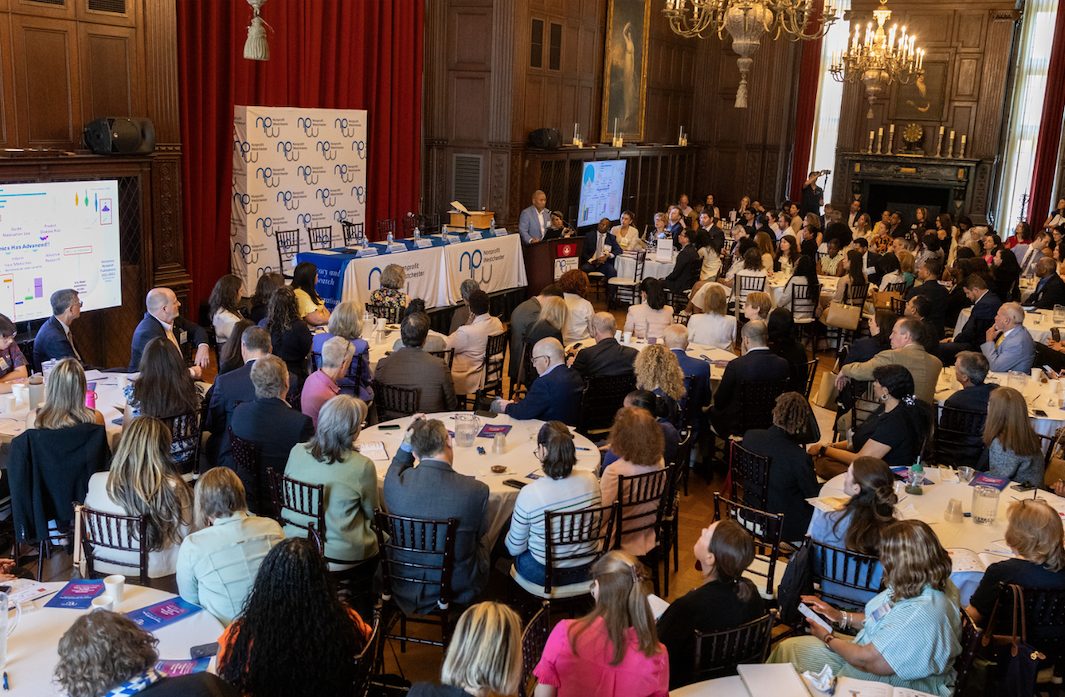
The morning conference, “Advancing Community Health: Aligning Cross-Sector Action”, convened high-level experts from across the nonprofit, health care, business, government, and higher education sectors to tackle complex socio-economic issues affecting Westchester County.
Westchester County Executive Ken Jenkins, who opened the program, emphasized the county’s dedication to shared responsibility.
“The fact that we have so many folks here from so many different sectors in one room speaks to how important this topic is,” Jenkins said. “When we talk about community health, we’re talking about much more than health care. It includes housing, nutrition, quality education, and economic opportunity. Government clearly can’t do this alone, health care providers cannot do it alone, business can’t do it alone, and the nonprofits can’t do it alone. The most successful solutions emerge when we work together, share resources, and align our efforts around common goals.”
Among the aspects of health care under discussion were the shifting landscape, moving away from hospital-centric care toward community-based outpatient models, dealing with workforce shortages, and the role of artificial intelligence in health care delivery. Also discussed were planned cuts to Medicaid in Donald Trump’s so-called “Big Beautiful Bill” that could leave an estimated 400,000 New Yorkers without health insurance over time starting July 1.
“Too often we approach our greatest challenges through the lens of our own sectors, rather than recognizing the opportunity and necessity of working across sectors to solve problems,” said Jan Fisher, executive director of Nonprofit Westchester. “Today is an opportunity to start doing something different. In order to have healthy communities, we need to address more global issues like income disparity, housing, education and other socio-economic factors. Meaningful progress does not always begin with large-scale, audacious initiatives. Sometimes the most impactful change starts with practical ideas, listening to each other, and small collaborative steps forward.”
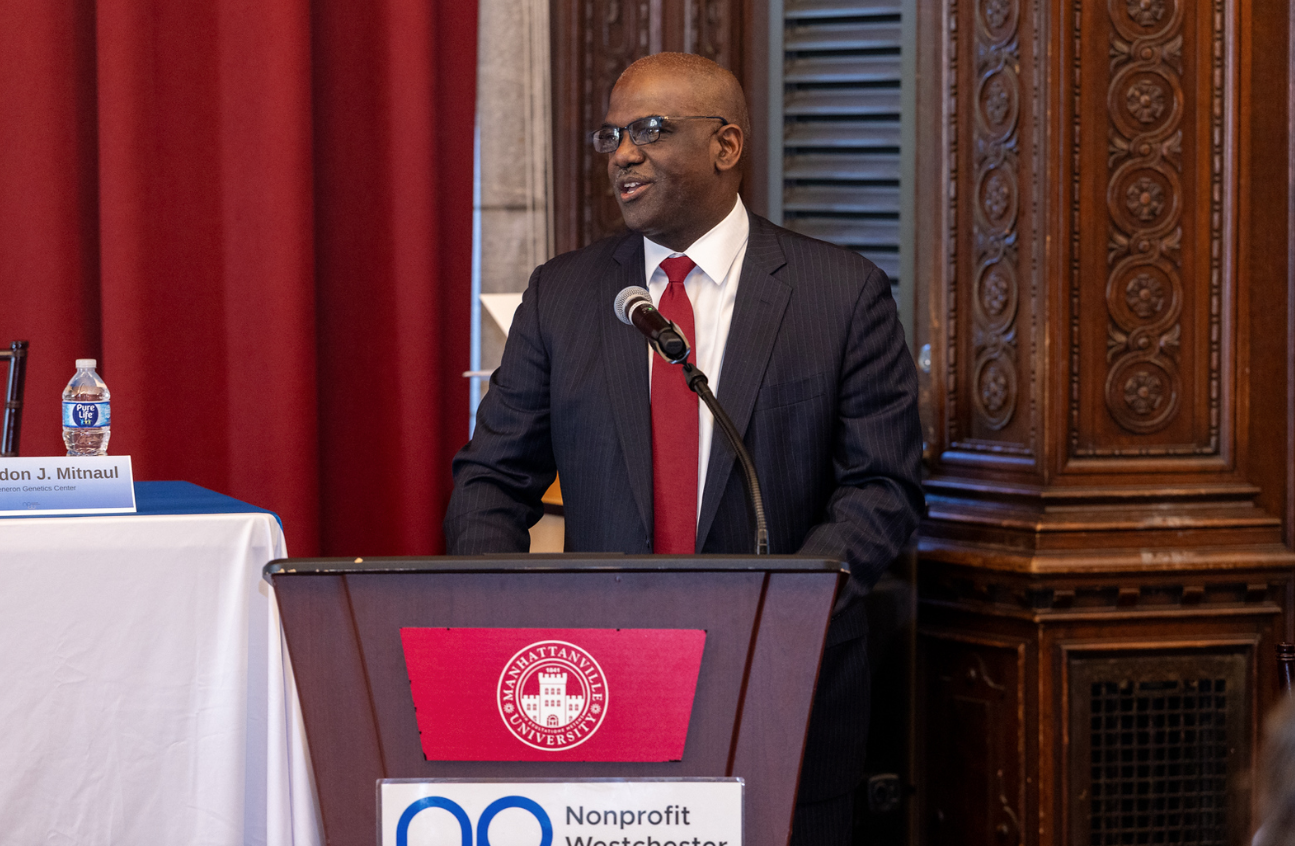
The keynote address was by Dr. Lyndon J. Mitnaul, executive director at the Regeneron Genetics Center. He highlighted Regeneron’s partnership with historically Black colleges and universities.
“Regeneron supports global and local communities because we believe community plays a vital role in addressing health disparities, removing barriers, addressing root causes, and creating equitable opportunities for residents.,” Mitnaul said. “Our approach as scientists is to keep you out of the hospital. With science and tools like AI, we can understand how human genetics interact with social determinants of health to transition toward a future of equitable, precision health care.”
Manhattanville University President Frank Sánchez spoke and noted, “Community health cannot be solved in a vacuum. It requires an intersection of policy, corporate responsibility, grassroots advocacy, and higher education. From a higher education perspective, I think about how we fuel this ecosystem. We recently started the Westchester Public Health Network, comprised of 32 different organizations, to build interdisciplinary career pathways.”
He said hosting the gathering aligned with Manhattanville University’s commitment to health care education.
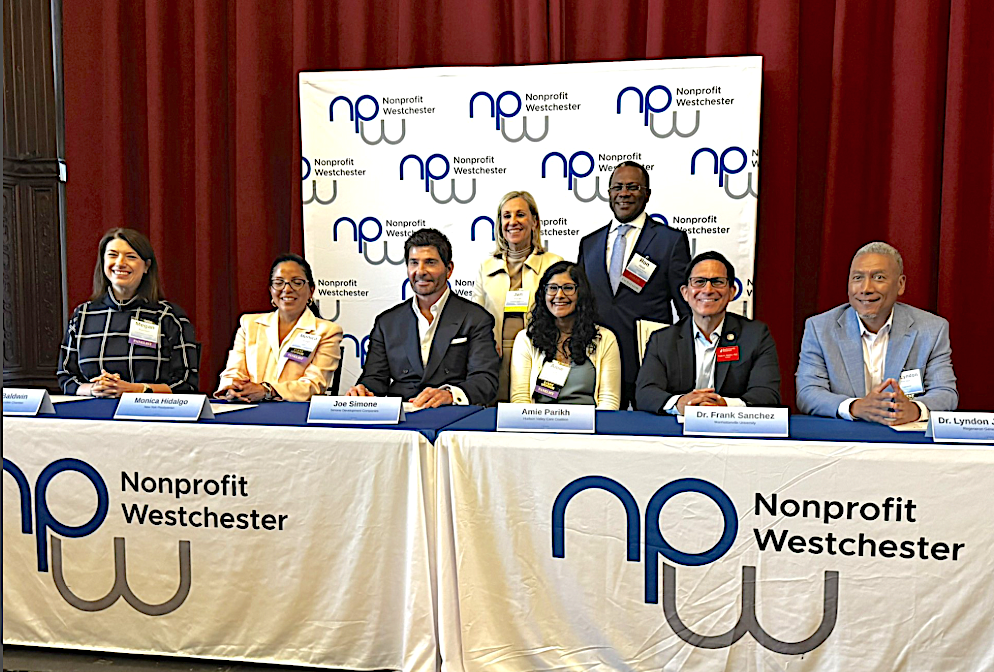
Other participants included: Megan Baldwin, New York state’s deputy secretary for health; Amie Parikh, CEO of Hudson Valley Care Coalition; Joe Simone, president of Simone Development Companies; and Monica Hidalgo, senior director of community relations for New York-Presbyterian.
Following the main presentation, attendees moved into breakout discussion groups focusing on seven core health areas: food access; economic stability; health care; arts and culture; housing stability; education; and technology.