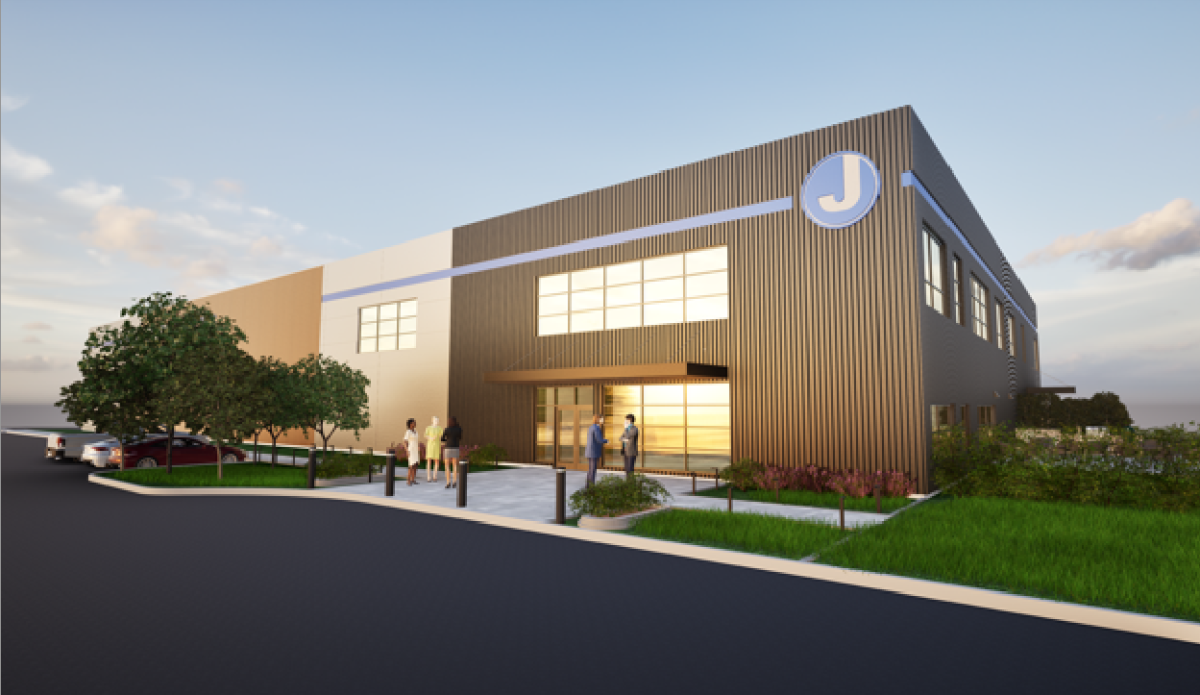
What had for many years been home to the Westchester Broadway Theatre (WBT) in Elmsford is now being transformed into the new home of Jonard Tools, which manufactures more than 900 unique products and services customers in all 50 states and more than 100 countries around the world.
WBT, a dinner theater that for 46 years staged Broadway-caliber shows, in 1991 had moved into its building at 1 Broadway Plaza in the Robert Martin Company’s Cross Westchester Executive Park. The theater closed in the state-mandated shutdown of public assembly places during the Covid-19 pandemic and never reopened. The building that was custom-built for WBT now has been redesigned for Jonard by Peter F. Gaito & Associates, the White Plains-based architecture, engineering and planning firm.
Jonard was founded in 1958. It began in the Bronx, moved to Tuckahoe, and in 2019 moved to 200 Clearbrook Road in Elmsford, also in the Cross Westchester Executive Park. Products the company provides include tools for working on fiber optic cables as well as coaxial cables, tool kits for electricians, various hand tools and gauges for measuring different pressures.
“It’s a unique space and we want to celebrate the fact that it’s the headquarters for a 58-year-old tool company,” Peter Gaito told Westfair’s Westchester County Business Journal. “We try to make it familiar but yet different from what was there and unique to the company that’s going to occupy it.”
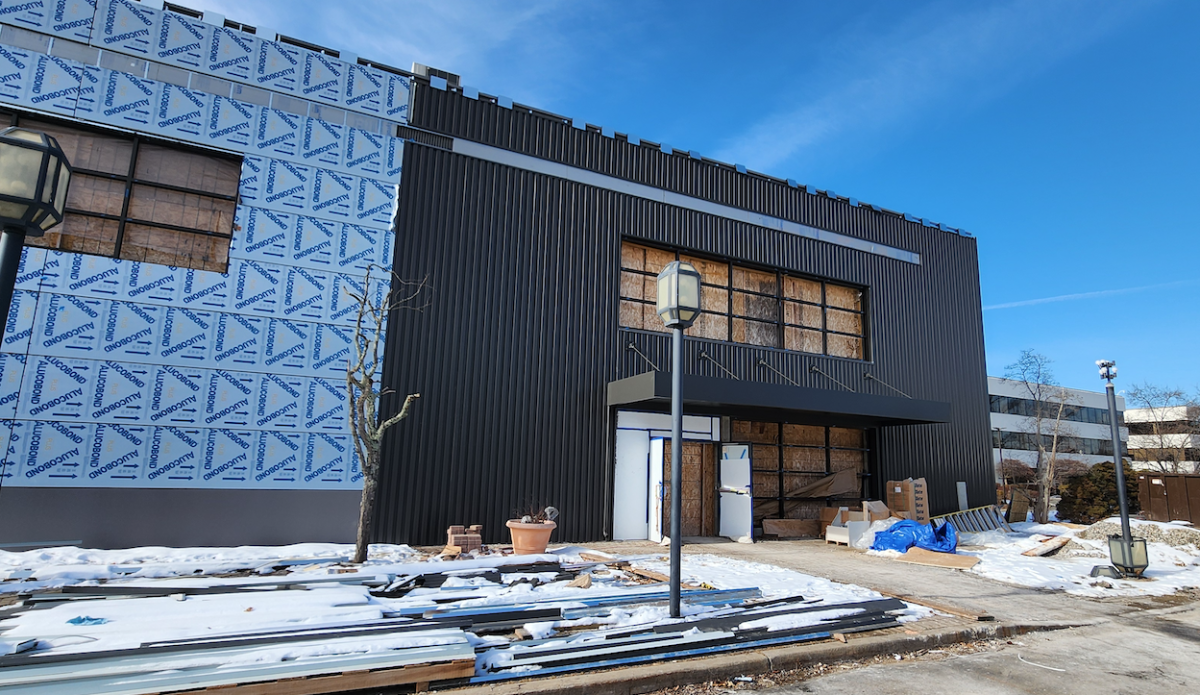
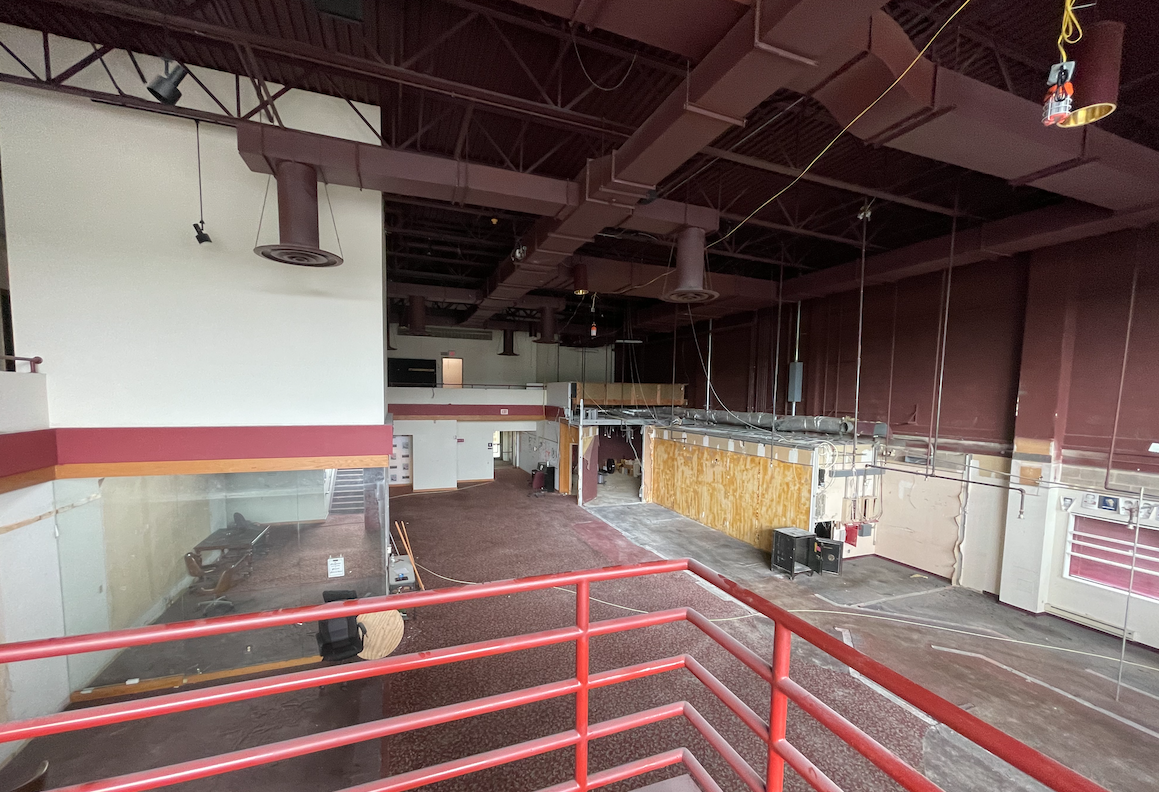
Gaito said they they looked at what would make sense to save from the layout that existed and would be useful for the building’s new user. When it functioned as a dinner theater, there was seating for more than 450 in the main audience area along with elevated luxury suites in the rear. The stage and backstage area had dressing rooms and spaces for musicians. There was a professional kitchen, a souvenir shop, a ticket booth, service bars, large restrooms and production offices.
“In this case, there was seating along with level changes that we had to remove,” Gaito said. “We kept the footprint of the building, we kept the first floor and mezzanine levels as starting points, and we kept the delivery doors they had for the theater. We isolated the main points we wanted to save and then designed the interior around those elements. We did not touch existing solar panels. We put in all new low-flow devices for toilets and sinks. All lighting is LED now.”
Gaito said that this is the third project his firm has done with Jonard. He described the joy evidenced by Jonard’s CEO Rich Gerszberg for the new facility during the creative process to move Jonard into a 14,000-square-foot office area and 19,000-square-foot warehouse section.
“We had a complete understanding of the methodology of the workflow between the office area and the warehouse area,” Gaito said. “A lot goes into the project behind the scenes before we put pencil to paper. A lot happens in the design process. A lot happens during construction. We’re there every step of the way.”
Gaito said that the process included submitting initial drawings, discussing refinements and then adjusting the plans.
“When construction happens we’re there all the time as well to make sure that the contractors conform to the drawings and the (materials) samples we thought about six months ago are the ones we’re looking at today,” Gaito said. “Our office has been around for 50 years or so and we’ve done a variety of projects.”
Gaito described working on projects as varied as townhouses, 10 and 20 story buildings, hotels and restaurants.
“The products that are available to us to put into buildings and help clients enjoy their environments certainly have improved over the years,” Gaito said. “They’re healthier, they’re better, they’re long-lasting. In the computer world, we can represent that more accurately in terms of scale, with material visualization to help clients understand what they’re getting. The computer accuracy comes through into construction documents and helps contractors as well.”
Gaito said that in a project, whether repurposing a former dinner theater building or something else, it’s important to bring in the architect very early to work with principals, engineers, consultants and contractors in a collaborative environment.
“It’s not as simple as drawing a box and keeping the rain out,” Gaito said.