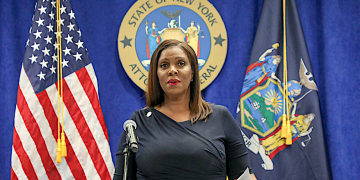
New York Attorney General Letitia James and Connecticut Attorney General William Tong are in a coalition of 23 other states and the District of Columbia that is suing the Trump administration to stop what they say are unlawful restrictions on federal student loans for students pursuing careers in critical health care fields. The suit was filed in the United States District Court for the District of Maryland. It names as defendants the United States Department of Education and Linda McMahon in her official capacity as secretary of education.
In May, the U.S. Department of Education issued a rule that limits the degree programs that qualify for higher federal student loan limits. The rule drops a previous $200,000 cap down to $20,500 per year. The lawsuit contends that the rule change makes it significantly harder for students pursuing careers in nursing, social work, physical therapy, occupational therapy, physician assistant studies, and other essential fields to afford the education and clinical training they need.
James, Tong and other other plaintiffs argue that these restrictions will worsen the existing health care workforce shortage and make it harder for communities nationwide to access care. The coalition is asking the court to block the rule and restore access to the federal student loans for health care students.
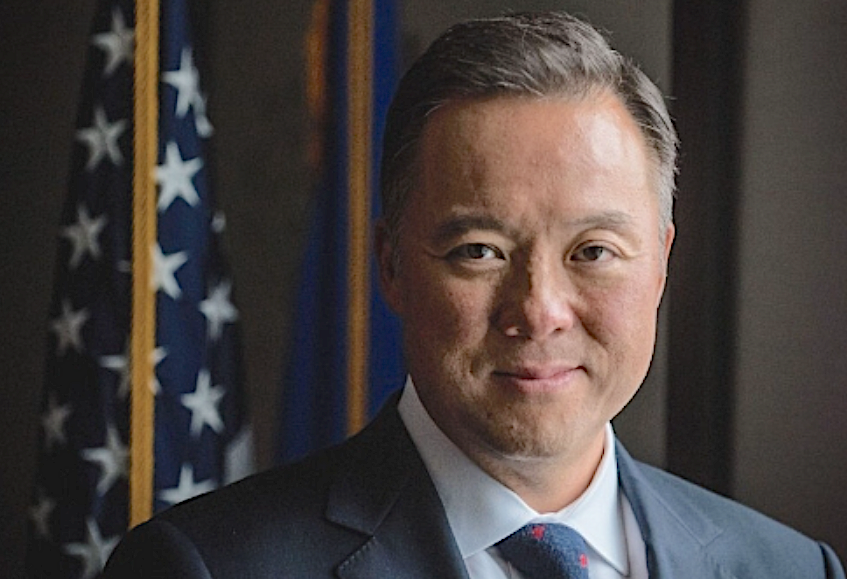
“We need more nurses, therapists and social workers, and our federal government should be supporting their studies, not defunding them,” Tong said. “The Trump/McMahon plan to magically drive down education costs by barring student loans defies Congress, defies the law, defies reality, and will do real damage to Connecticut students and workers. We are suing to restore common sense and to force Trump and McMahon to follow the law.”
According to James, “You should not have to be wealthy to serve your community as a nurse, physical therapist, or physician assistant. Higher education is expensive, and our health care system is already under immense strain. This rule will shut talented people out of critical professions and leave communities with fewer health care providers they desperately need.”

Last year, Congress enacted new federal student loan caps that distinguish between “graduate” and “professional” degree programs. The law set higher federal loan limits for students enrolled in professional degree programs, which often require extensive training, clinical placements, and professional licenses. Loans were capped at $100,000 total for graduate programs and $200,000 for professional degree programs. Congress used the existing federal definition of a “professional degree,” which includes programs that prepare students to begin practice in a profession and generally require professional licensing.
In May 2026, however, the Trump administration issued a final rule narrowing that definition. The rule imposes new restrictions not enacted by Congress. As a result, students pursuing degrees in nursing, physical therapy, occupational therapy, physician assistant studies, social work, speech-language pathology, audiology, athletic training, and other fields will only be able to access $20,500 per year in federal student loans.
The lawsuit argues that many students will be forced to rely on more expensive private loans, take on unsustainable debt, delay completing their education, or abandon these programs altogether.
The lawsuit also challenges the Department of Education imposing restrictions on students who Congress intended to protect such as those who transfer schools or temporarily withdraw and later re-enroll.
The lawsuit contends that what the administration has done violates the Administrative Procedure Act because it directly contradicts federal law and is arbitrary and capricious. They are asking the court to block the rule and ensure the loans are made available as Congress intended.
In addition to James and Tong, the plaintiffs in the lawsuit are the attorneys general of Arizona, California, Colorado, Delaware, Hawaii, Illinois, Maine, Maryland, Massachusetts, Michigan, Minnesota, Nevada, New Jersey, New Mexico, North Carolina, Rhode Island, Oregon, Vermont, Virginia, Washington, Wisconsin, and the District of Columbia, as well as the governors of Kentucky and Pennsylvania.