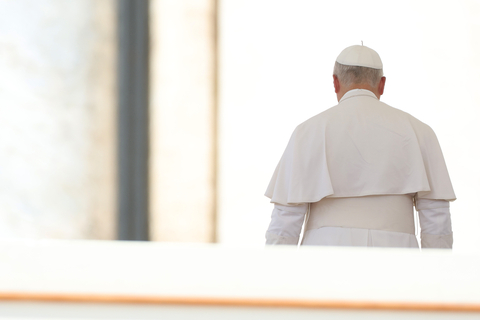
© Marco Iacobucci
| Dreamstime.com.
When Pope Leo XIV was elected last May 8, becoming the first U.S.-born pontiff, many saw him as a counterweight to President Donald J. Trump, a view that would come to be shared by Trump himself. Perhaps few, however, would have imagined that the two would square off on a global stage over the most existential issues – war and peace, death and life.
Yet that is exactly what has happened. In an excoriating post on Truth Social, the president has accused the pope of being part of the American radical left, weak on crime and terrible at foreign policy. He said he was not true MAGA like Louis Marius Prevost, the U.S. Navy veteran who is the older of the pope’s two older brothers, and implied that Pope Leo was ungrateful, since he owed his papacy to the president. (While Roman Catholics believe the Holy Spirit is at work in the College of Cardinals’ selection of the pope, the president may have a point, although not in the way he imagines. Again, see the counterweight argument.)
Trump also posted a picture of himself as Jesus that critics quickly labeled blasphemous. Though the president said he was portraying himself as a healer, the image was removed. However, Trump said he will not apologize to Pope Leo.
For his part, Leo – in a manner echoing Jesus before Pontius Pilate – said on his flight to Algeria, part of a four-country African tour: “I have no fear, neither of the Trump Administration, nor of speaking out loudly about the message of the Gospel. And that’s what I believe I am called here to do.”
Although even a pope can throw a bit of shade: Asked about Trump’s Truth Social post, the pontiff, whose sense of humor tends more toward the nerdy, said: “It’s ironic – the name of the site itself. Say no more.”

If Leo seems serene in the maelstrom that may be because this is not a fight of his own volition, said Daniel Rober, Ph.D., associate professor of Catholic Studies and chair of the Catholic Studies department at Sacred Heart University in Fairfield, where he contributes to the school’s Cor Ecclesiae podcast on all things Catholic and papal. Rather, he added, “Pope Leo is enunciating basic ideas from ancient Catholic sources” while also aligning himself with the popes of the modern era, who denounced war. They range from Benedict XV in World War I; to Pope Paul VI in his “Never Again War” speech at the United Nations on Oct. 4 (St. Francis of Assisi’s feast day), 1965; to Pope St. John Paul II’s pleas in 2003 to the U.S. not to invade Iraq.
In the run-up to the Iraq War, then-President George W. Bush and John Paul agreed diplomatically to disagree, Rober said. The Trump-Leo face-off is unprecedented, but that doesn’t mean it hasn’t been building a long time – from initial conservative skepticism about Leo, a registered Republican, after his election to the papacy; through to the pope and U.S. bishops’ criticism of the Trump Administration’s handling of the migrant situation and wars in Gaza and Iran.
Indeed, Trump’s post on Leo – on April 12, Divine Mercy Sunday in the Catholic Church – follows a controversial April 6 article in The Free Press that had the Pentagon allegedly threatening the pope via a meeting with then-papal nuncio Cardinal Christoph Pierre that invoked the Avignon Papacy. (The Avignon Papacy, in which the French controlled the Holy See through a succession of seven pontiffs, began with the kidnapping and murder of Pope Boniface VIII in 1303.)
While the Pentagon and the Vatican have said the meeting has been mischaracterized, Rober said that it was “contentious.” But he added that the notion that it was what led to Leo’s decision not to visit the U.S. for its 250th birthday is the stuff of influencers’ fancy. There was never any real chance Leo was going to be here for that anniversary. (He will instead receive the nonpartisan Liberty Medal July 3 via video.)
A more pointed reaction to U.S.-Vatican relations, Rober said, was the pope’s decision to visit Lampedusa, an Italian island that is a gateway to Europe for migrants, instead on July 4.
What does all this mean for Catholic voters, the majority of whom supported Trump in 2024? Catholics are traditionally swing voters, Rober said, and they are likely to swing again. While the attack on Leo will not be the deciding factor, he added, it helps fuel the growing criticism the president faces on his policies.