With an office in Darien offering state-of-the-art treatment, Pro Eyecare has opened an another in Greenwich – replacing one in Old Greenwich and marking what its founder, optometrist Inna Lazar, OD, calls “a major milestone in the practice’s growth and commitment to delivering exceptional eye health services.”
Recently, the Westfair Business Journal had a conversation with Lazar about the practicalities of opening a specialist center, along with her “vision” for exceptional eye care in the region.
Congratulations on your new space in Greenwich and thank you for talking with us about Pro Eyecare. What brought you to Connecticut, and why specifically Greenwich for your new practice?
“My decision to come to Connecticut was primarily strategic. I was looking for a market that values specialized medical care, preventive health and high-touch service – not just transactional health care. Fairfield County, and Greenwich…in particular, stood out because it supports a boutique medical model.”
When you looked at the local market, what gap did you think Pro Eyecare could fill?
“When I evaluated the local market, most eye care fell into two categories – retail optical centered on eyewear sales or traditional medical offices focused on refractions and pathology. What was largely missing was structured management of chronic conditions, particularly dry-eye disease, followed closely by progressive pediatric myopia, delivered through a treatment-driven model rather than episodic visits.
“Our point of view is preventive and longitudinal rather than transactional – measuring ocular surface health like a chronic disease, intervening early in children with myopia progression and integrating medical treatment with optical solutions into one coordinated plan. From a business standpoint, it shifts the model from product shopping to a tailored, integrated experience that supports long-term relationships and retention.”
How did you fund the launch of the new outlet and what did the capital primarily go towards?
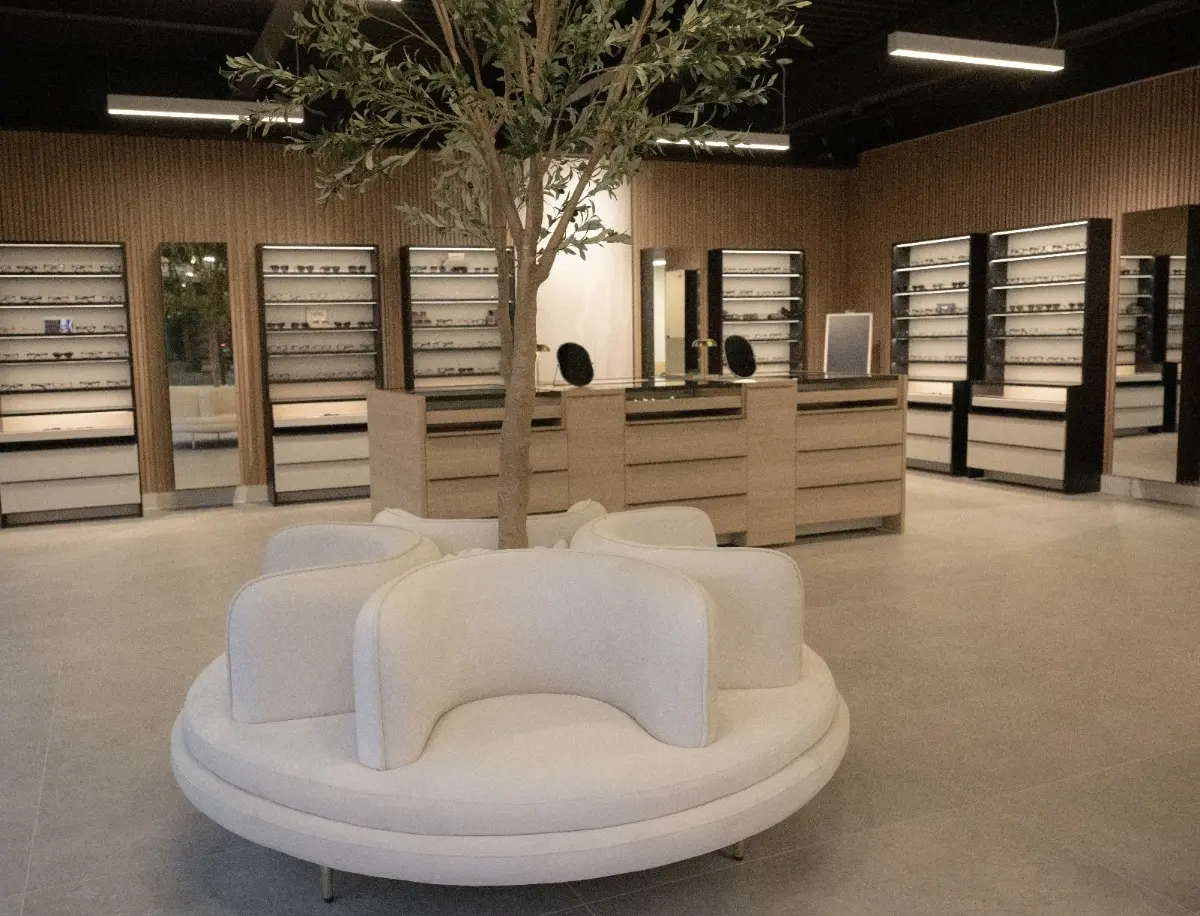
“The expansion was funded through a combination of reinvested earnings from the practice, traditional bank financing and a small group of silent investors. Most of the capital went into infrastructure, advanced diagnostic and treatment technology, medical build-out requirements and workflow design that supports longer specialty visits. A significant portion was also allocated to a purpose-built eyewear studio capable of housing exclusive collections and custom fittings, along with staff training to support a higher-touch care model.”
When you were planning the practice, what were your biggest “must-haves” and what did you decide to “keep simple” at first?
“From the beginning, the nonnegotiables were clinical infrastructure and patient experience. Dry eye and myopia management have been my clinical focus since opening my first practice in Old Greenwich in 2016. As technology advanced and patient demand grew, we wanted to bring the most current diagnostic and treatment technology available in the U.S. to the community, which ultimately required a larger and more advanced space.”
What does your revenue model look like in broad strokes and which parts are expected to drive growth?
“Broadly, the practice operates on three complementary pillars – medical eye care, the eyewear studio and structured treatment programs for dry eye and myopia control. General medical eye care forms the clinical entry point, while dry eye treatment and pediatric myopia management function as longitudinal care pathways. The eyewear studio supports that medical model rather than operating as standalone retail.”
What licenses and professional requirements are needed to operate an optometry clinic in Connecticut and what parts of compliance were the most arduous?
“Operating an optometry clinic in Connecticut involves two levels of compliance – individual licensure and business operations. For the doctor, licensure is issued through the Connecticut Department of Public Health after completing accredited training, passing national boards and maintaining ongoing continuing education.
“For the practice, requirements include registering the business entity, optical permitting, employing properly credentialed staff, maintaining medical record standards and meeting health-care facility regulations. The most time-consuming part wasn’t a single license but coordinating everything simultaneously.”
Advanced diagnostic tools must be expensive. How did you decide what to buy at launch, and what’s your approach to financing equipment?
“The decision process was clinical first, financial second. The most advanced, evidence-based diagnostic and treatment technology was one of our nonnegotiables. If a device improved diagnostic accuracy, guided therapy or allowed us to treat conditions in-house, it qualified as an initial investment. Otherwise, it could wait. From a financing standpoint, we use a mix of purchasing and vendor financing, depending on the technology life cycle.”
Looking ahead, what does sustainable success mean to you – more services and/or more locations perhaps?
“Sustainable success to me is not defined by the number of locations or the number of services offered. It means maintaining clinical quality and consistency as the practice grows. Expansion only makes
sense if the patient experience and medical outcomes remain identical to the original standard. Long-term success is measured by patient trust, retention and clinical outcomes. If growth strengthens those metrics rather than diluting them, then it’s sustainable.”