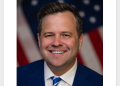
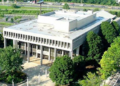
Photo courtesy of Avangrid
ORANGE — United Illuminating President and CEO Frank Reynolds claims the utility’s return on equity of 3.55% in 2024 “renders us unable to access capital in the market,” which will not allow it to make needed improvements to its system.
A subsidiary of Avangrid Inc., UI believes that will only exacerbate the challenge of continuing to provide electricity efficiently to its 345,000 ratepayers. Reynolds blames the lower ROE on rate decisions made by the Public Utilities Regulatory Authority (PURA).
“The fundamental role of electricity – in our economy, our relationships, the comfort and livability of our homes – is only becoming increasingly central to every aspect of our lives,” Reynolds said in a press release. “For that reason, today’s announcement – that UI’s Return on Equity fell to just 3.55% in 2024 – should ring alarm bells from Hartford to New Britain, as an ROE this low renders us unable to access capital in the market.”
UI had budgeted for an ROE of 8.63% in 2024.
He explained that these are the returns with which the company compensates its lenders for investments in critical reliability and resiliency projects. “Thus, these meager returns will result in both higher bills and decreased service quality,” he said.
At the same time two other Avangrid subsidiaries – Southern Connecticut Gas (SCG) and Connecticut Natural Gas (CNG) – had much lower ROEs in 2024: 5.84% for SCG and 8.77% for CNG. SCG and CNG had planned for a ROE 9.15%.
Reynolds pointed out that the lower ROE is indisputable evidence that those revenues, which make up less than a third of the residential bill, are entirely insufficient. “Yet PURA has shown an incredible – and frankly, irresponsible – lack of urgency in correcting it,” he said.
On Nov. 18, 2024, PURA issued its final decisions in the CNG and SCG rate cases, which resulted in approximately $35 million in total revenue reductions for those utilities. CNG’s revenue cut amounts to $24.6 million, while SCG faces a $10.8 million reduction. PURA’s rate orders were finalized after a 2-1 vote by the commission’s three members, with Chair Marissa Gillett and Vice Chair John Betkoski in favor and Commissioner Michael Caron opposed.
“Commissioners at PURA, the chairs of the legislature’s Energy & Technology Committee, and other policymakers like to threaten to use utilities’ ‘franchise agreement’ as a bludgeon: if utilities fail to invest adequately in the system, they’ll chase us out of the state,” Reynolds said. “But they fail to mention our ‘franchise agreement’ is only enabled by PURA appropriately setting our revenues against our prudent operational and capital costs.”
GOP solution for high prices
In a related matter, state Senate Republican leadership has filed legislation designed to lower energy costs and electricity bills. That proposal went before the state Energy and Technology Committee last week.
“Electric bills are crushing working class families and small businesses across Connecticut,” Senate Minority Leader Stephen Harding. “Connecticut has the second highest energy rates in the country. The truth is: State policies deserve blame for the high rates of electricity that every single constituent of ours has to pay every month. And this bill seeks to ‘do something about it.”
The Republican legislation seeks to remove public benefits charges from electric bills, separate PURA from the state Department of Energy and Environmental Protection, and commissioner of Energy and Environmental Protection or any electric distribution company from entering into a power purchase agreement that provides for the purchase of electricity at a rate exceeding 150 % above the wholesale price of electricity.
“The public benefits charge is equivalent to a hidden tax in our electric bills,” Harding said. “It funds over 40 different discretionary government programs passed by the state legislature.”