“Housing is no just about walls or roofs; housing is about dignity. Housing is about stability. Housing is about whether a family has a chance to build a future,” Westchester County Executive Ken Jenkins said when delivering the keynote address at the dinner that capped Habitat for Humanity New York City and Westchester County’s “Home is the Key Golf Outing” held at the Scarsdale Golf Club.
Jenkins noted that the event was taking place April 27, just a few days after the 58th anniversary of the enactment of the federal Fair Housing Act. It was on April 11, 1968, that President Lyndon B. Johnson signed Title VIII of the Civil Rights Act of 1968, also known as the Fair Housing Act.
Jenkins referred to it as a “landmark promise that where someone lives should never be determined by discrimination or exclusion. We also gather as Habitat for Humanity marks 50 years of extraordinary service.”
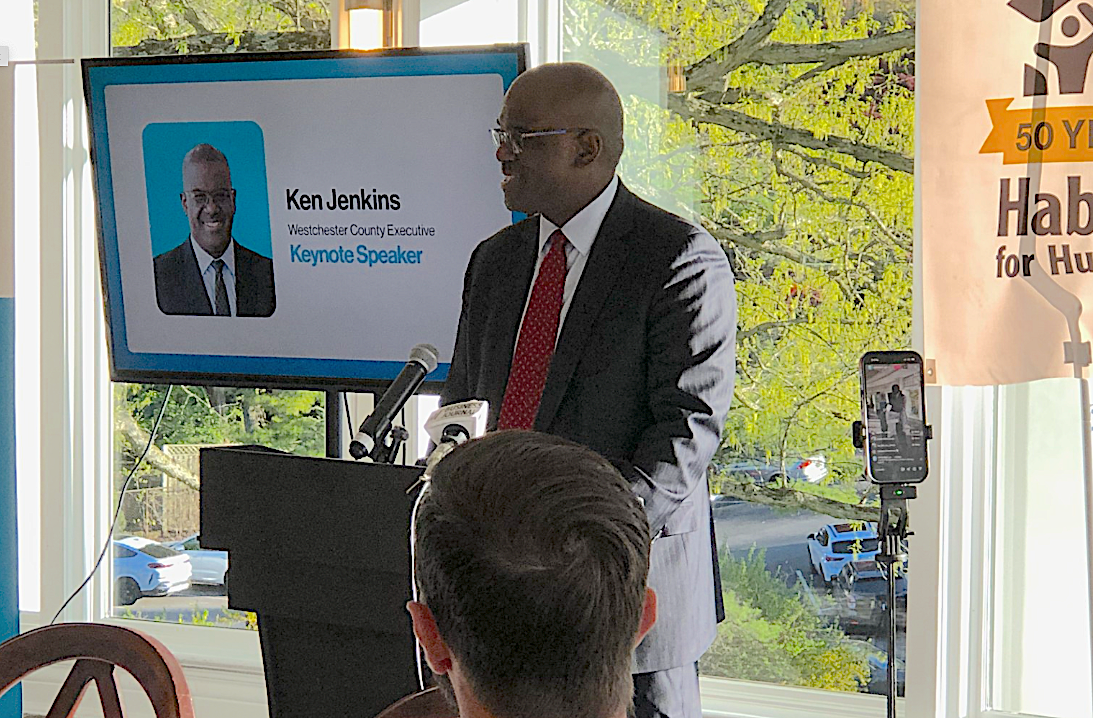
Jenkins says that the organization has shown how effective it can be to focus not just on housing but on affordable home ownership. He said that mission matters deeply in Westchester County and across America because communities face a housing challenge that touches on nearly every facet of life.
“When housing is unaffordable employers struggle to attract workers,” Jenkins said. “Young adults struggle to stay near the communities where they grow up; seniors struggle to age in place; families struggle to save; and too many people spend their time worrying more about their rent than planning for the future.”
Jenkins said that Westchester is not going to just stand by and look at the problem.
“We’re going to work together and solve it,” Jenkins said. “We’re working not to just increase the supply of affordable housing, but just as importantly to expand the pathways to home ownership in partnership with organizations like Habitat, because home ownership changes trajectories; it builds equity; it creates generational stability and it strengthens entire communities.”
Jenkins praised Habitat for not just building homes but building opportunities by creating ways for working families to invest in their communities and their futures when Habitat build houses.
“You’re bringing volunteers, municipalities, community partners together for real tangible outcomes and you remind us that lasting solutions are built through collaboration,” Jenkins said.
Sabrina Lippman, CEO of Habitat for Humanity New York City and Westchester, told the gathering, “Right now, as we speak, in this region, in the five boroughs and in the county of Westchester we are building 400 homes that are currently in our development pipeline. That is the most at any point in our history. It doesn’t stop there. This past year alone we saved more than 2,000 families from being displaced from the homes that they love and many of those were low-income seniors right here in our backyard in Westchester.”
Lippman characterized the scope of the organization’s efforts as having real momentum.
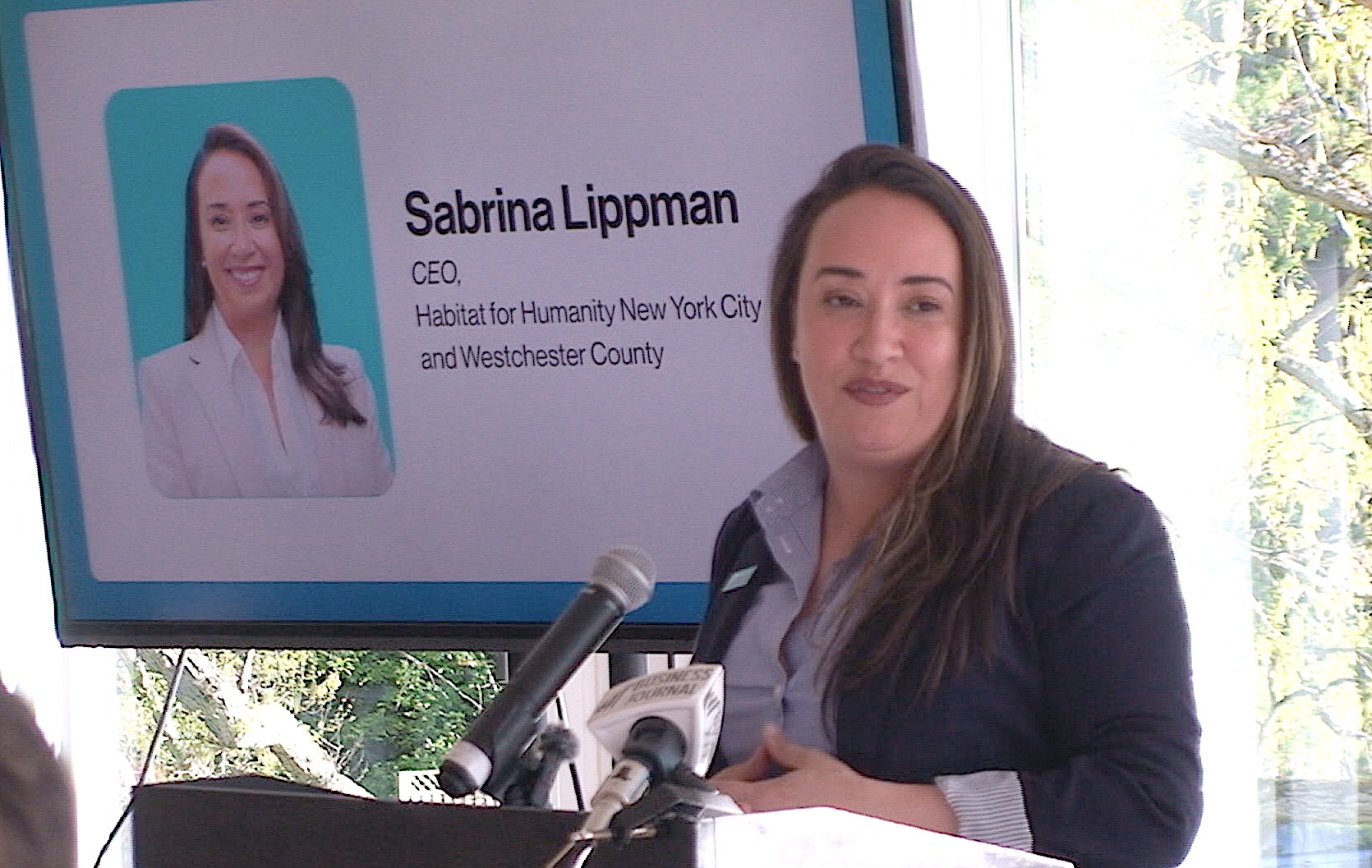
“To do this at the scale that this moment demands we need partners,” Lippman told the audience, which included people from construction and finance among other specialties. “We need people like you, people who understand how to build, how to invest, how to move thing forward.”
Adrienne Goolsby, senior vice president for the U.S. and Canada for Habitat for Humanity International said, “A home is the foundation on which we build our lives and it is the cornerstone to strong and vibrant communities. Yet, the door to a safe, decent and affordable home remains closed for millions of families.”
Goolsby noted that earlier in April Habitat kicked off its 10th annual awareness and fundraising initiative “Home is the Key.”
“‘Home is the Key’ calls attention to the need for affordable housing and it encourages everyone to help open the door to equitable home ownership across the U.S.,” Goolsby said.
Tim Foley, CEO and executive vice president of the Building and Realty Institute of Westchester and the Mid-Hudson Region (BRI) pointed out that while there still are people in communities who do not want to see affordable housing built near them, there are now countervailing voices that are willing to proclaim, ‘yes in my backyard.'”
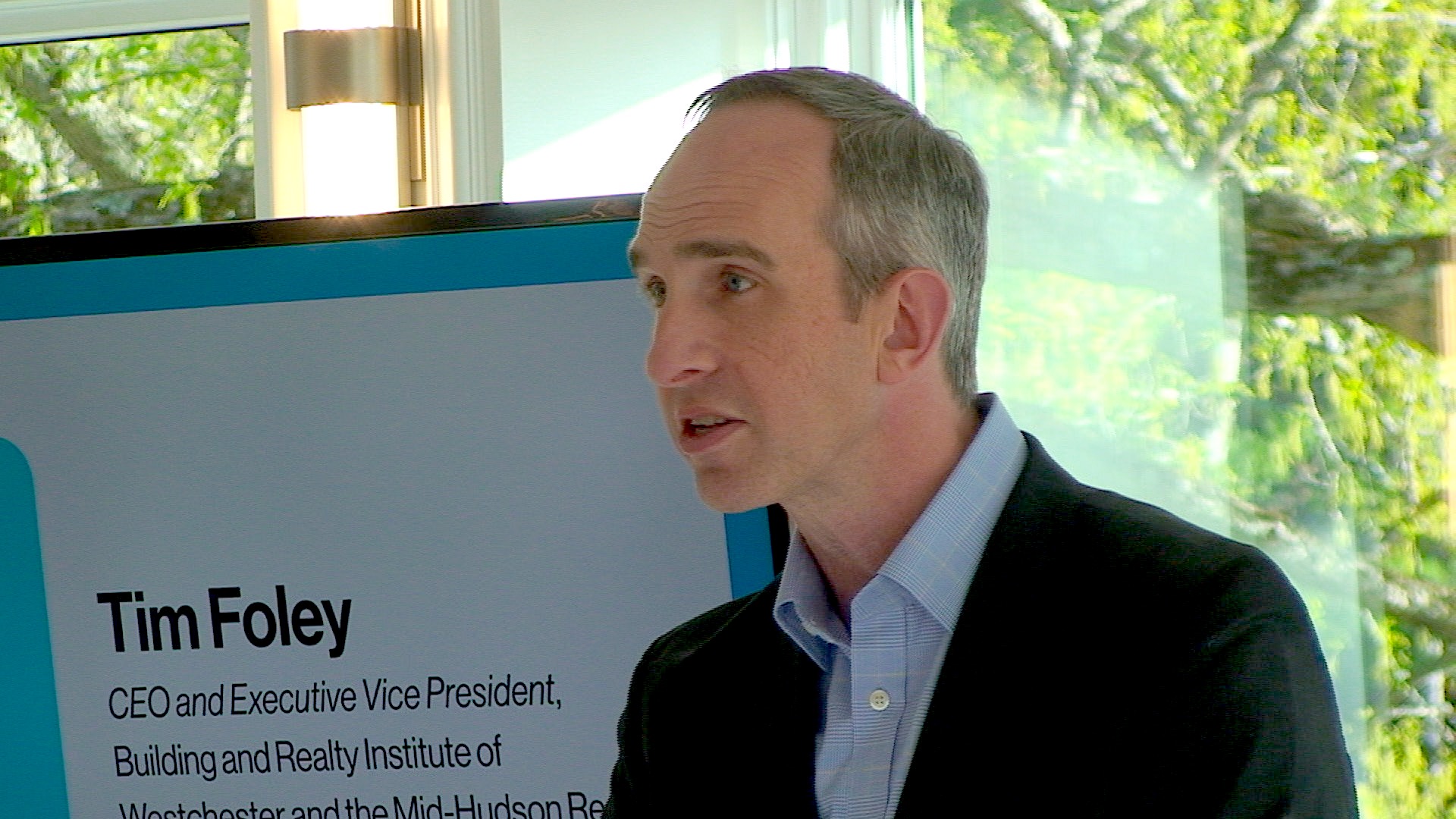
Foley said that BRI was one of the founding partners of the Welcome Home Westchester campaign, “a true multi-stakeholder effort that combines companies involved in homebuilding with economic leaders like the Westchester County Association and Nonprofit Westchester, academics, think tanks, organizations dedicated to ending homelessness and supporting families in need, faith leaders and climate activists coming together to drive forward a new conversation on building the housing we need, particularly affordable housing.”