A handful of Fairfield County area businesses and nonprofits have spelled out the negative impact of federal funding cuts, agency layoffs, and international tariffs with trading partners has already had on their business.
Gov. Ned Lamont decided to create the tool last month as the Trump administration and federal Department of Government Efficiency (DOGE) began gutting such federal agencies as USAID, Department Health and Human Services, and Department of Education.
As of May 1, 28 businesses and nonprofits in the state have used the new Office and Policy Management federal impact reporting online tool. The tool is intended to collect information regarding the impact of federal policy and funding changes on nonprofits, municipalities, and businesses.
Any information submitted through this reporting tool should be considered public information and may be released by the state to interested parties, according to OPM. A press release issued by Lamont stated that the reporting tool serves only to ensure situational awareness to state officials, and no commitments of state action in response to these issues is expressed or implied.
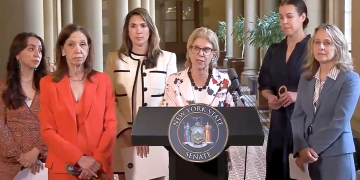
State Treasurer Erick Russell believes the online tool will shed some light on how state businesses and government are being affected by the federal actions.
“The consequences and impact of slashed federal funding are being felt by our citizens every day,” Russell said. “The reporting system unveiled today not only shines a light on the true scope of the damage being done to our economy and our people, but it provides real-time information that allows us to push back.”
Here are the Fairfield County businesses and nonprofits that listed their problems related to the loss of federal funding and impending tariffs:
Blandina Brewster of Ridgefield
“Our company utilizes electric motors and batteries that only have one supply chain: China. There are no domestic options for these parts. These tariffs have happened at our peak sales season and lead to a near 40% loss of sales and a reduction in profit margin down to less than 5%. We have invested into manufacturing here in Connecticut and currently are on track to close our doors within 1-1.5 months if tariffs are not removed. It has become an emergency situation. This is devastating after manufacturing here since 2019.”
City of Danbury
“The federal funding freeze and stop work orders issued for the Epidemiology and Laboratory Capacity II Grant and the Immunization and Vaccines for Children Grant have had significant consequences on the operations of the City of Danbury Department of Health and Human Services, particularly within the Community Health Division. These grants were critical in addressing the effects of the COVID-19 pandemic, such as decreased routine childhood immunization rates, and accounted for $906,072.15 of our Community Health budget.
This funding supported 13 part-time employees holding essential positions, including Public Health Nurses, Community Health Workers, and Immunization Outreach Workers. These individuals played pivotal roles in:
- Infectious disease case investigations.
- Infection prevention and vaccine campaigns, education, outreach, and advocacy.
- Vaccine administration and vaccine records translations.
- Distribution of COVID-19 at-home test kits to local non-profits and healthcare providers.”
The loss of federal funding has placed immense strain on the Community Health Division, limiting our ability to meet the increasing demand for immunization services and public health outreach. These challenges underscore the importance of securing alternative funding sources or reinstating support for these critical programs to sustain the health and well-being of our community.”
Connecticut Foodshare
“Connecticut Foodshare experienced three separate federal funding and commodity cancellations out of the LFPA25 and TEFAP programs between Jan. 21, 2026 and March 30, 2026:
- Alerted March 11, 2025 – $1 million cancelled through LFPA25 (USDA, CTDOAG)
- Alerted March 17, 2023; March 25, 2025 – 1.4 million pounds of TEFAP Bonus commodities (34 loads) valued at $1.7 million (USDA, CTDSS)
The total value of these cancellations is approximately $2.7 million including the value of 1.4 million pounds of scheduled food commodities cancelled for delivery.
LFPA25 funding would have been utilized by the organization to continue Connecticut Foodshare’s ‘Farm to Neighbors’ program utilized federal funds to purchase food grown from Connecticut farms for direct distribution to food pantries and individuals experiencing food insecurity at no cost. Without these funds Connecticut Foodshare cannot continue its Farm to Neighbors program.
Over the two prior rounds of funding for this program Connecticut Foodshare received around $2 million and distributed more than 1 million additional meals of locally sourced produce.”
Discovery Museum of Bridgeport
“To date, we have been unable to receive information from NASA regarding whether our award is subject to reinstatement and have therefore discontinued programming. Despite multiple attempts to reach our program officer and being redirected to other NASA personnel who claim they are the correct contacts, no one will answer our questions as to whether our project falls under the cease and desist or whether we may resume.”
Stamford Department of Health and Human Services
“Reduced ability to conduct disease surveillance, create and distribute information about respiratory illness and childhood immunizations through multiple channels, and administer vaccines.”
Star Fallon-O’Connell, business owner in Bridgeport
“On May 2, the de minimis exemption (the threshold for which tariffs kick in, which is $800 in the US) will be removed, and this change will significantly impact my business. I sell both handmade and resale clothing and jewelry at festivals in Connecticut. While my handmade items are crafted by me, most of the materials I use — fabrics, charms, findings, and embellishments — are manufactured in China. I also source many of my resale items from China, the EU, and India. Unfortunately, for most of these components, there simply aren’t alternative manufacturers in the U.S. or in countries with lower tariffs.
As a small business, I’ve relied on the de minimis exemption to import these supplies without tariffs, or with manageable fees on larger orders. This flexibility has made it possible to stay in business despite narrow profit margins. Now, without that exemption, I face a sudden and steep increase in the cost of doing business.
Even before the tariffs take effect, the announcement alone triggered a noticeable drop in my online sales, likely due to reduced consumer confidence. Between rising material costs and fewer customer purchases, the outlook is deeply unc