As Connecticut parlayed a $2.7 million grant into a new financial studies curriculum at community colleges, auditors panned the federal program that made it possible, stating an initial examination of a small number of grants found they had yet to demonstrate value.
The Connecticut Department of Higher Education last month approved a new associate degree in insurance and financial services, to be offered initially this fall at Norwalk Community College and at Capital Community College in Hartford.
The Workplace Inc., a work-force investment board covering lower Fairfield County, helped secure the grant, one of two the Bridgeport-based organization has landed through the U.S. Department of Labor”™s (DOL) High Growth Job Training Initiative.
Since 2001, DOL has awarded $235 million under the program spanning more than 130 grants. In a 100-page audit issued a month ago, however, the federal Office of Inspector General (OIG) determined that DOL”™s Employment Training Administration (ETA) did not follow proper procurement procedures in nine of 10 grants studied. U.S. Sen. Tom Harkin of Iowa requested the audit in his role as chairman of the Senate Subcommittee on Labor, Health and Human Services.
“While we recognize that many of these were pilot and demonstration grants which may not always be successful, objectives still need to be clearly articulated and measurable,” OIG auditors stated in the report. “We found that ETA did not determine the usefulness of the grants”™ products and activities before decisions were made to continue or disseminate them.”
OIG recommended that ETA take steps to recover “questioned costs” totaling $2.6 million.
The Workplace was not one of the 10 grant recipients studied, and the organization was not contacted as part of the OIG audit, according to Jo Shute, vice president of marketing, communications and planning at The Workplace.
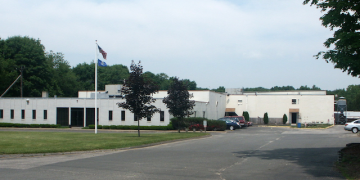
In addition to the financial studies funding, The Workplace had previously received $2 million in 2004 to work with ASML on training workers in advanced semiconductor manufacturing techniques. ASML has its main U.S. plant in Wilton, where it employs more than 650 people. The Workplace successfully raised matching funds from ASML and other partner organizations.
Â
“One of the unique approaches in this particular project is to go out the four walls of ASM and work with the supply chain,” Shute said. “Sometimes it takes a special focus like a grant (or) an outside party ”¦ to kind of push the process along. There was a big commitment both by ASML and partner companies to make their people available. Even in very well-run companies, this is hard to do.”
Two other Connecticut organizations have received grants under the High Growth Job Training Initiative; neither was mentioned in the OIG report. In 2006, the Hartford-based Connecticut Business and Industry Association received $1.8 million to establish a certificate program in advanced manufacturing techniques at the state”™s community colleges, with The Workplace participating in the program”™s design. Capital Workforce Partners, another work-force investment board covering the Hartford area, received $500,000 for training in health sciences.
Â