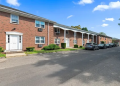
A tax tribunal has found that the developer of the Harbor Square apartments in Ossining is not entitled to a portion of Brownfield Cleanup Program tax credits granted for the project.
The New York Tax Appeals Tribunal ruled last month that Martin and Irene Ginsburg received about $119,000 more in tax credits than allowed on their 2016 state tax returns.

“Off-site infrastructure improvements, even when required by the municipality,” the tribunal said, do not qualify for the credits.
Ginsburg Development Companies, Valhalla, spent nearly two decades developing the $65 million apartment and retail complex on a former riverfront industrial site next to the Ossining train station.
In 2006, the state approved the proposed Harbor Square for Brownfield Redevelopment Tax Credits for cleaning up the contaminated site.
The cleanup was finished in 2008. But the water line near the site was inadequate to support the proposed apartment complex. In 2014, the village required the developer to replace fire hydrants and 2,600 feet of water pipe near the project site, and to repair Snowden Avenue.
Harbor Square opened in 2016.
The Ginsburgs claimed a $5.5 million Brownfield tax credit on their 2016 state income tax return.
The state Division of Taxation determined that $1.5 million in costs attributed to the off-site waterline replacement did not qualify for Brownfield tax credits, and it reduced the tax credit by nearly $119,000.
The Ginsburgs petitioned the state to reconsider the decision.
Last year, an administrative law judge concluded that off-site work was necessary to redevelop the project site. The village had bargained for the improvements, the judge found, and without them the village infrastructure could not sustain the development. To deny the credit would ignore the legislative purpose of the brownfield tax credits and would be irrational and unreasonable.
“We do not agree with the determination of the administrative law judge,” the Tax Appeals Tribunal commissioners concluded.
While the water line work may have enabled the Harbor Square development, the work was not done on Harbor Square property, as the plain language of the Brownfield law required.
The tribunal granted the Division of Taxation position, reversed the administrative law judge, and denied the Ginsburg’s petition for a refund.