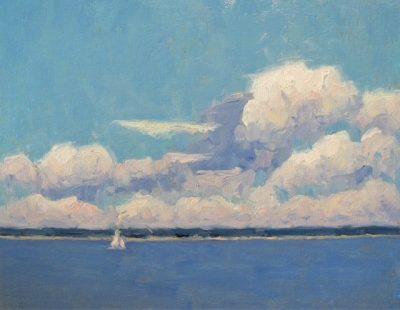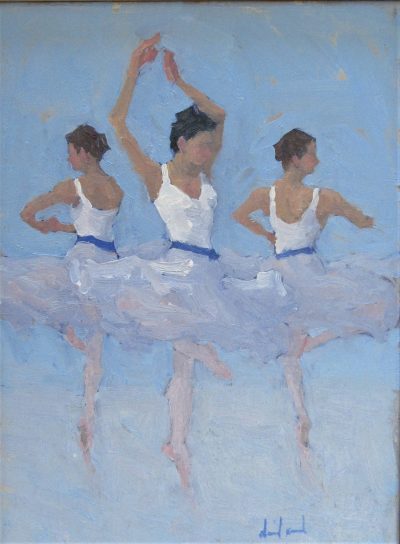
A show of his ballet paintings at Purchase College, to coincide with the Rye Ballet Conservatory’s recent production of “A Midsummer Night’s Dream,” brought artist David Elsea a number of ballet portrait commissions and has placed him firmly on the radar of ballet enthusiasts in our region..
Elsea — who studied painting in Paris, then moved to the village of Biot in Southern France, where he painted local landscapes for 12 years – describes his ballet portraits as “niche.” His youngest sister was a student at the New York City Ballet-affiliated School of American Ballet in Manhattan, where he made many connections with dancers and “ballet moms,” establishing an early commercial interest in the art form. But he is equally known for his paintings of the sea and his portraits.
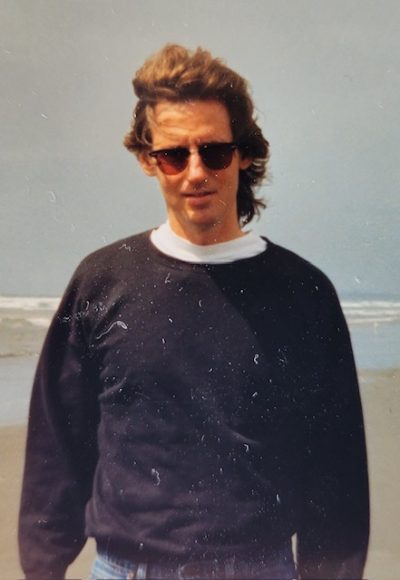
While he currently spends most of his time in Washington, D.C.’s Georgetown, Elsea is a peripatetic figure, with other connections to our area. For instance, he regularly sails on the Long Island Sound shore with local friends, trips that have become an inspiration for his best-selling seascapes. And while still enamored of the ballet, it is, he freely acknowledges, “the sunsets and the sunrises” of his sailing voyages that have a much broader appeal. He said a portrait of his niece at the ocean has been the most popular of any painting that he has ever done.
Talking to the Westfair Business Journal about the commercial aspect of his art, a subject relevant to any independent artist, Elsea said he was fortunate that his schedule remains quite full most of the time with ballet and sailing commissions, so he has no need for gallery representation.
“This allows me to offer somewhat lower prices by working directly with my clients and not paying the usual 50% gallery commission,” he confirmed. At the show at the Rye Ballet Conservatory, he sold eight of 10 paintings at prices ranging from $1,000 for 9-by-12-inch “impromptus,” to $5,000 for larger works. His head-to-toe portrait commissions in the 3-by-4-foot range go for $9,000.
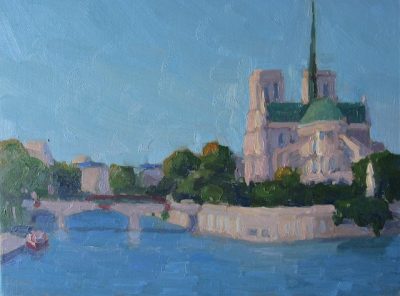
Elsea also works as a restorer, maintaining a studio in Virginia, and the connections he has made through restoration work have been “ invaluable.”
“Most of these folks have paintings in the $100,000 to $2 million range,” he said, adding humbly, “but they have often bought my paintings as well.”
Another “plus” for the artist is that over the years he has developed close friendships with many of his restoration clients, which he describes as “a win-win situation.” That is to say, he stays in their homes to do restoration work when they are traveling, and this way they eliminate any risk of shipping expensive works of art as well as the high costs associated with it.
Several interior designers in Connecticut also place paintings for him, bringing him commissions. One client, a former attorney who said she “became weary of arguing with people all day long,” now buys, renovates and decorates high-end beach homes for vacation rentals, while Elsea receives commissions from her guests who have seen his ocean paintings in her properties.
“Art for art’s sake,” as Oscar Wilde famously expressed, but “money for God’s sake,” as the British band 10cc quipped. In a profession in which it is notoriously difficult to make a living, the talented Mr. Elsea seems to have cracked it elegantly by finding niche markets and collaborating with other commercial enterprises.