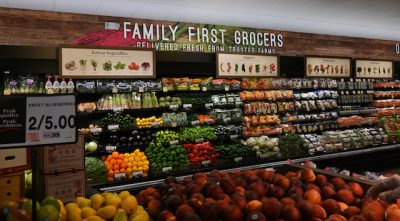
It’s no accident that produce is usually front and center in a supermarket where the jewel colors of everything from apples to melons to peppers can immediately start you salivating.
“You buy with your eyes,” said Tom Cingari Jr., vice president of produce, floral and e-commerce at Cingari Family Markets, a fourth-generation family-owned grocery business dating from 1929 that serves Fairfield, Litchfield and New Haven counties with 10 ShopRites as well as two Grade A Markets in Stamford.
Recently, Cingari was named the Produce Merchandiser of the Year by Produce Business magazine, so our first question to him had to be about the art and the science of his field – which is forever at the mercy of weather, trade and consumer interests.

Food merchandising, Cingari said, begins with the Goldilocks process of food ordering.
“We try to buy as much produce for that day as we need, so that the next day we have a fresh batch. It’s a delicate process. You don’t know how much the customers will want.”
Misjudging that can lead to waste but not at Cingari Family Markets. “We throw very little out. Anything still good at the end of the day goes to food pantries and food banks.”
Cingari estimated that one pound of food equals one meal. Last year, the Cingari markets donated one million meals.
While ordering is key to merchandising, display goes hand in hand. Although you don’t want to over-order, here more is definitely more. “If you put out 10 apples, you’ll sell eight, but if you put out 100, you’ll sell 90.”
You group fruits and vegetables to look colorful and appealing though not necessarily monochromatic, Cingari added. You might want to break up the displays of crimson applies with green Granny Smiths or yellow Golden Delicious. Or stores will cross-merchandise, pairing one kind of apple with a complementary cheese.
But display areas – under 60 inches in height so colors and textures are readily presented — must also be clean and spacious for shopping comfort. With this and other objectives in mind, Cingari Family Markets has renovated nine of its 12 stores in the last four to five years, he said.
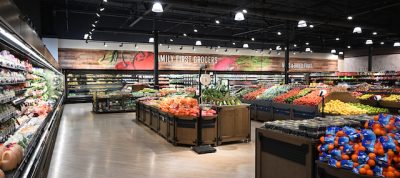
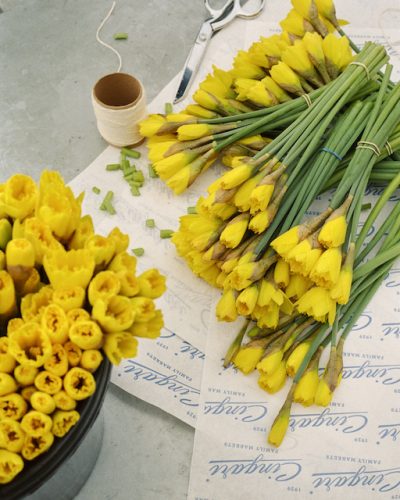
While much produce is locally sourced in summer, Cingari Family Markets relies on Florida, California, Canada and Mexico for many of its staples. Flowers, which the markets “have been doing really well with” as they tend to be 30% to 40% less expensive than florists, are also both locally and internationally sourced, with roses from Colombia but 75% of outdoor plants coming from Connecticut and New Jersey.
It is premature, Cingari said, to comment on what effect tariffs will have on these goods. (Indeed, the Trump Administration’s tariff policy is a fluid situation. As of this writing, the United States has rolled back its 145% tariff rate on China to 30%, while China’s retaliatory tariffs dropped from 125% to 10%, sending the stock market soaring.)
Cingari grew up in the family business, beginning work in the Stamford ShopRite on Shippan Avenue at age 8. After graduating from the city’s now defunct Trinity Catholic High School, he received a bachelor’s degree in management from Bryant University in Smithfield, Rhode Island, then set about on a two-year training program in the family markets. He clerked, swept floors and learned every aspect of the business.
“Looking back, I would say it was hard work,” Cingari said. “But I fell in love with produce.”
For 13 to 14 years, he served under Al Salemme, who headed produce for Cingari for 45 years. Cingari has now been with the company for 18 years, working alongside his father, Tom Sr., president and CEO; uncle David, the executive chef; cousin Dominick, who heads beauty, pharmacy and nonfoods; and brother John, who has a hand in various departments. While family members have their areas of specialization, everyone does a variety of tasks, Cingari said.
Produce, though, will always have his heart. “I just love the dynamics – the relationship to nature and weather patterns, just the colorfulness.”
Such enthusiasm is key, he added: “If you’re not passionate about food, the customers will know it.”