So it’s tariff time in the United States and if it’s prolonged, it will have a devastating effect on wine and spirit production and sales worldwide.
Much of the wine and spirit production is orchestrated by major corporate producers with deep pockets. But in every wine region I have visited, there are always many smaller mom-and-pop operations, or self-funded folks who have cashed out of some business and followed a dream to create something. Often they are saddled with debt as start-ups and have little wiggle room outside of the original balance sheet propositions they began with. A tariff shut down, for any extended time, will hurt the big boys but will crush the kids, which will lead to the big operations buying the crippled smaller producers, suppressing independent ideas and creativity within the industry.
Given the current state of affairs, I think I should consider domestic production and regions and give a time-out for non-U.S. companies or regions. Any wine or spirit already in the United States and on the shelves is exempt from tariffs so maybe it’s an effective strategy to buy and try older vintages of whatever you fancy.
Grapes are now grown in many states, although not all states contribute to wine production. California is by far the largest producer, contributing a full 90% of the U.S. total. Washington state is next followed by New York. In the era of global warming, documented by earlier and earlier harvests, northern locations can still help establish the sufficient hang time on the vine to contribute finesse and nuance to the final wine. The Pacific Northwest, including Oregon as well as Washington, offer both latitude and altitude and for years now I have heard it being referred to as the “New Napa.”
Since those states came to the party much later, many of their vines are just now showing what they are capable of. It takes decades for a region to discover its terroir and learn which grapes will flourish in which soil type, its orientation to the sun, prevailing winds and water. Syrah vines were first planted in Washington in 1986 and have steadily established themselves as producing one of Washington’s notable grapes.
I had the good fortune of receiving three wonderful Washington state Syrahs recently, each from a different American Viticultural Area (AVA). Another benefit of more northerly districts is finding attractively restrained alcohol levels. (Many wineries are now pushing the alcohol by volume (ABV) levels from above 14.5% to a high of 15%.) The three wines I tasted ranged from 13.3% to 13.9%.
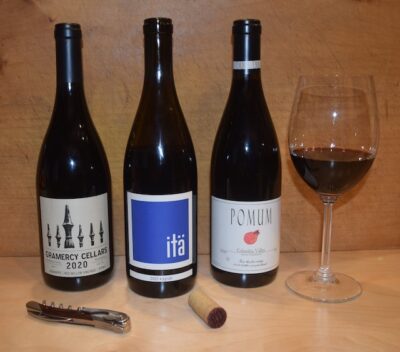
The first wine I opened from the Walla Walla AVA was made by itä wines. This 2021 Syrah from Les Collines Vineyard showed dark and dense ruby red color, with a great mouthfeel and texture. Flavors of dark cherry, blackberry, pomegranate and plum cycled through. It opens promptly, emitting a pleasant balanced spiciness. At $48, it’s worth the price.
Next, I poured a 2021 Pomum from the Columbia Valley AVA. It showed blackberry and cinnamon with a big spicy presence, angular and dusty. (Think of a Mourvèdre grape.) This Syrah was silky smooth and well-integrated and at $36, it over delivers.
Finally, I poured the Gramercy Cellars 2020 Columbia Valley Syrah from the Red Willow Vineyard, a lovely wine priced at $65. Bright, fresh, vibrant red fruit with raspberry and a very satisfying tannic integration with a brilliant mouthfeel make this wine a homerun. Look for it.
I’ve been to Washington state twice, once in 1999 and again in 2008. These three Syrahs are urging me to plan another visit. Washington is one of the most productive agricultural regions of the world, producing more than 300 different crops. Apples, potatoes, hay, wheat, hops, onions and grapes are just some of its produce. Syrah production has found a happy home in Washington. It’s only going to improve.
Reach Westfair’s wine and spirits columnist at doug@dougpaulding.com.