If there’s one topic that’s been gripping thespian circles on both sides of the Atlantic these past few months, it’s “Evita,” Andrew Lloyd-Webber and Tim Rice’s musical, which has not been seen on Broadway since 2012. All sorts of theater people are asking when Michael Harrison’s new production, which wowed audiences in London during its run last year, is coming to the Great White Way. And will Rachel Zegler, the New Jersey-born actress and Golden Globe winner, resume the title role, namely of Eva Perón, the woman who rose from poverty in Argentina to become the most powerful woman in Latin America in the 1950s.
All of which leads Travel Talk to suggest that if the oil keeps flowing, planes keep flying and the American trend for traveling longer distances for shorter periods continues (despite dipping in the first quarter of 2026), Argentina – and especially its capital, Buenos Aires – is about to become a hot travel destination.
There are numerous reasons to visit this massive, pulsating, cosmopolitan city – the second largest in South America after São Paolo, Brazil, with its metropolitan population of 16 million – about 10 ½ hours flying time from New York City.
Most famously, perhaps, Buenos Aires is the home of tango, the passionate, wildly suggestive dance still indulged in social halls (and tourist restaurants) around the city, while for meat-lovers, Buenos Aires’ steakhouses have to be the finest in the world. And those red wines – predominantly Malbec but they run the gamut – aren’t half bad either.
Then there is soccer – not merely fútbol but a religion to the Argentinians – while the city’s strong café culture, with grand, 19th century establishments like Café Tortoni, El Federal and Las Violetas, all still gloriously intact, could have you drinking coffee all day, instead of getting out and seeing the city.
Buenos Aires’ wide boulevards and public and private residences took their inspiration from Georges-Eugène Haussmann’s Paris rather than anything in the mother-country (Spain), so much so that Buenos Aires is often referred to as the Paris of South America. And while I don’t usually care for jejune equivalences, the moniker is certainly a fair one.
Hop-on Hop-Off buses – in my view, a great way to familiarize yourself with any new city – leave from outside the city’s landmark Cabildo, on the city’s central square, Plaza de Mayo. Finished in 1610, the Cabildo has served as a town hall, court of appeals, public library and prison. Declared a National Historic Monument in 1933, it was opened to the public five years later.
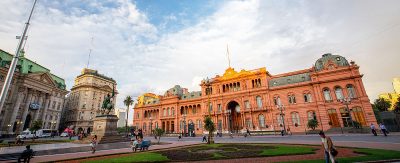
Facing it, on the opposite side of the huge square, is the Casa Rosada, or “Pink Palace,” where the sainted Evita, to quote from Lloyd-Webber’s lyric, appeared on the balcony to address her supporters, who were known as the descamisados (“shirtless ones”). Nowadays, it’s the seat of the Argentine national government and houses the president’s office. The Pink Palace also houses a museum.
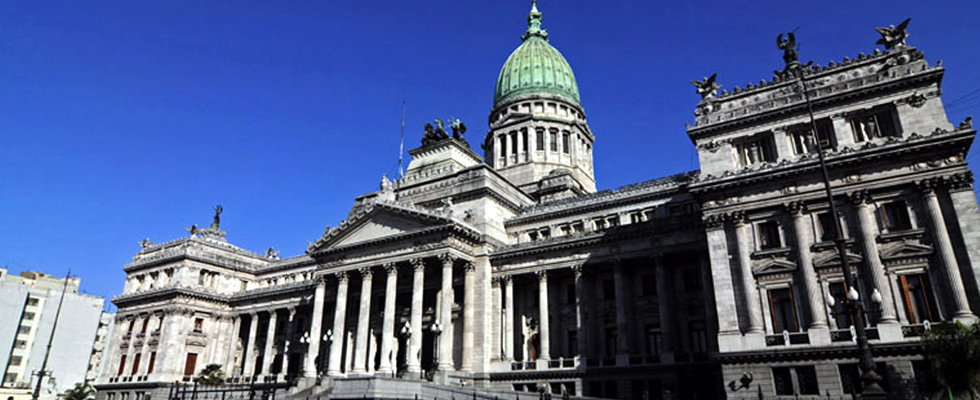
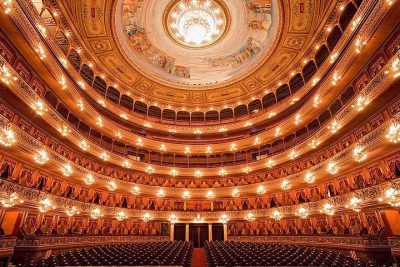
Indeed, Buenos Aires has many museums, including the Museum of Latin American Art (MALBA), the Museum of Decorative Art and the Museum of Modern Art. It also boasts magnificent civic buildings, like the National Congresso, the National Library of Argentina and the colossal Bank of London and South America, besides being home to one of the world’s great opera houses, Teatro Colón. Its famous Recoleta cemetery, is another major site attraction, on account of its elaborate family tombs.
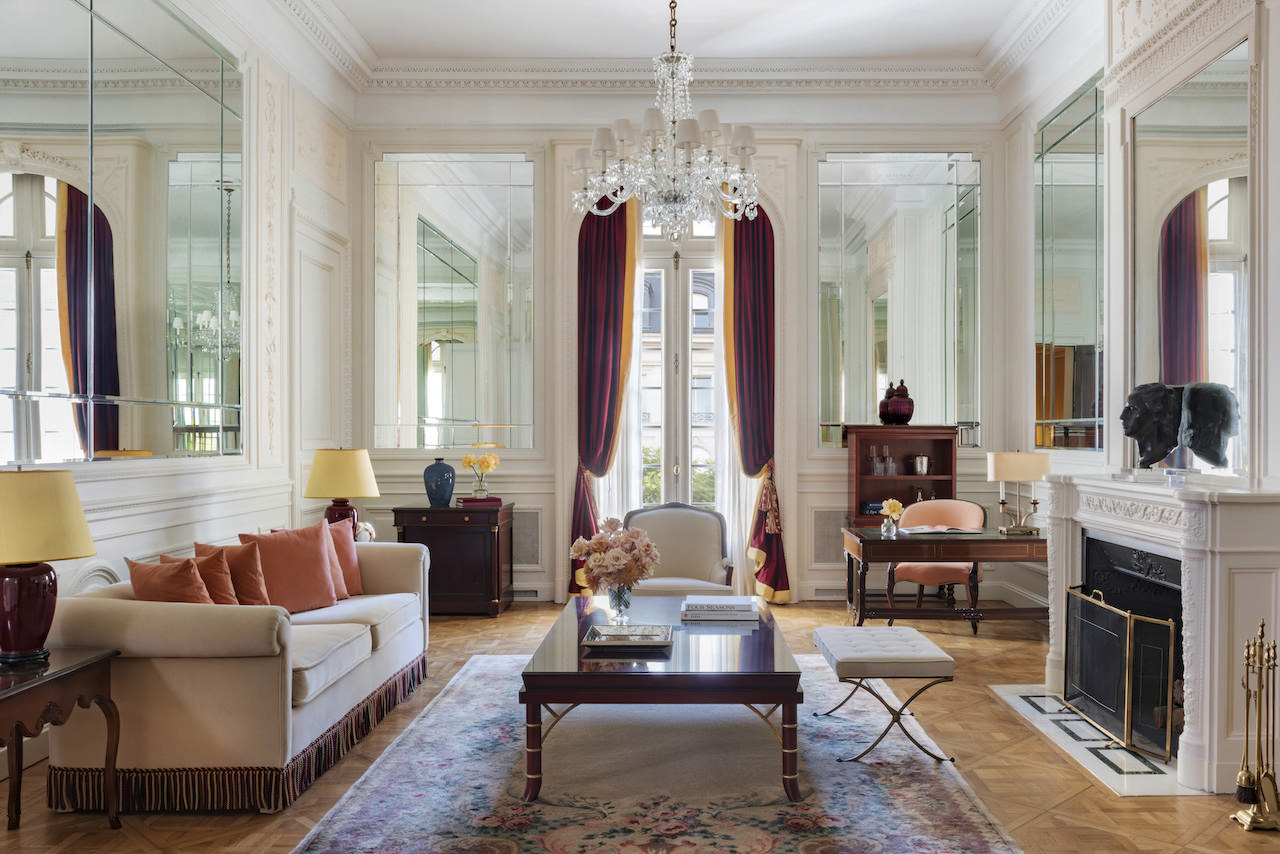
As for where to hang your hat, the five-star Alvear Palace, with its vast marble halls and white-gloved butlers, is the city’s “grande dame” hotel, the one for traditionalists, while the stylish Palacio Duhau Park Hyatt Buenos Aires effortlessly evokes 1930s glamour. The in-crowd, though, flocks to Hotel Faena, hotelier and real estate developer Alan Faena’s contemporary gem (which has a sister hotel in Miami). With its deep-buttoned Chesterfields, Aubusson-style rugs, grand piano and candelabra with drop glass petals in the otherwise masculine bar, the Faena combines an old-world atmosphere with a touch of camp. Liberace meets New York City’s University Club, if you will.
But my choice is Four Seasons Hotel Buenos Aires, 25-years-old this year but still lording it over the competition. On the edge of the tony Recoleta district, the subtly horsey, polo-themed property – polo and the raising of polo stars and ponies being another national pastime – has a swimming pool that’s a treasure (and the only heated outdoor pool in Recoleta). That alone might be reason enough to stay here.
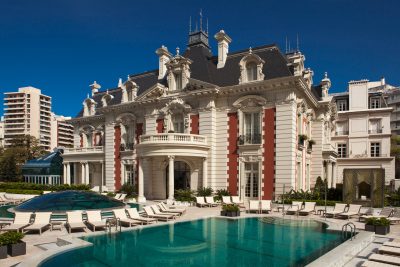
Another, though, would surely be La Mansión Álzaga Unzué, a perfectly-proportioned Belle Époque mansion built in the early 20th century by aristocrat Félix Alzaga Unzué, president of the Buenos Aires Jockey Club, as a wedding present for his wife, Elena Peña. Adjoining the main hotel, with its meticulous renovation now complete, the mansion pay srespect to each of the seasons with extensive murals in the public rooms, while the guest rooms – some “period,” some more contemporary – are exquisite.
Four Seasons Hotel Buenos Aires gets big points, too, for its drinking and dining outlets. Linger for an hour or two in the Four Seasons’ polo-themed Pony Line bar, and it seems the whole world, or at least the Buenos Aires beau monde, passes through, while the hotel’s adjacent Elena restaurant serves what most agree is the best hamburger in Buenos Aires – made from 45-day-aged beef.
Then, there’s the Four Seasons’ swish Nuestro Secreto restaurant, housed in a conservatory in the gardens, where Patricia Ramos wears the chef’s whites. Although Ramos is credited with being the only female chef of a gourmet grill in the country, I mused that she is certainly not the first Argentinian woman to have fanned the flames.
So, as speculation continues as to when “Evita” the musical will come to New York, and frustrated would-be producers are throwing up their hands and exclaiming, “Oh What a Circus, Oh What a Show!,” if you’re hungry for an “Evita” fix, then why not forget the show for now and settle down for an evening in with the 1996 movie Evita, starring Madonna and Antonio Banderas and available on Amazon Prime Video, instead.
Accompanied, it goes without saying, by a great steak and a glass or two of Malbec.