Iran stages new attacks on some of its neighbors
U.S.allies in the Persian Gulf are once again under attack, with Iran launching drones and ballistic missiles at Kuwait, Saudi Arabia and the UAE in recent hours. Tehran is also warning it could target U.S. assets in the Red Sea, raising fears of a broader escalation. Earlier today, the U.S. Embassy in Baghdad was targeted by drones, according to video geolocated by CNN and Iraqi officials. Meanwhile, Israel’s military said it has killed Iran’s top security official, Ali Larijani, though Iran has not confirmed the claim. Larijani was the one directing attacks against Israel and the Gulf Arab states, an Israeli military official said.
Travel disruptions continue in Gulf region
The war in Iran is continuing to disrupt travel across the Gulf after Iranian drone strikes triggered two major air incidents in recent days. Flights at Dubai International Airport were briefly suspended on Monday after a drone struck a nearby fuel tank, igniting a large fire. The shutdown forced cancellations and diversions as aviation authorities closed the airport. Part of the UAE’s airspace was also closed for a few hours overnight after the country said it was responding to incoming missiles and drone strikes from Iran. Meanwhile, the prices of many global airfares that bypass the Middle East are rising, as the conflict drives up oil prices and airlines warn of higher fuel costs ahead.
Gasoline prices continue to rise in U.S.
Gasoline prices have skyrocketed due to the U.S.-Israel war on Iran, adding even more financial strain on many Americans’ wallets. The average price of regular gas has jumped nearly 80 cents, or 27%, over the past month, according to AAA, with diesel rising even more. However, drivers hoping for relief at the pump are unlikely to get any help from their states amid the current spike. Unlike in 2022, when several states suspended gas taxes after Russia’s invasion of Ukraine, few state officials are considering similar moves now. Tighter state budgets are one key reason, leaving less room for costly tax breaks, analysts say.
Accused bomber wants Trump’s pardon protection
The Virginia man accused of planting two pipe bombs in Washington, D.C., the night before the 2021 U.S. Capitol riot asked a federal judge on Monday to dismiss his case, arguing that President Donald Trump’s expansive pardon of Jan. 6 rioters applies to him. Lawyers for Brian Cole argued that that Trump’s sweeping clemency for members of the Jan. 6 mob prevents him from being prosecuted. “The president’s pardon unequivocally applies to Mr. Cole, because in no manner is Mr. Cole’s alleged conduct wholly independent of events at the Capitol on January 6,” the attorneys said. Prosecutors say that Cole placed bombs near the Republican and Democratic national committees’ headquarters on the night of Jan. 5, 2021, and that the discovery of the bombs diverted law enforcement from the violence at the Capitol the next day.
Cuba power failure affects 10 million
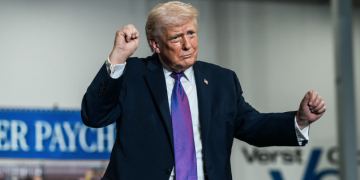
Cuba’s electrical grid suffered a total collapse on Monday, plunging 10 million people into the dark. It’s the latest in a string of blackouts and the first nationwide collapse since the U.S. effectively cut off oil flows to the island. Crews are working to restore power, but the outage underscores a deepening energy crisis in a country heavily reliant on fuel imports. On the unofficial market, gas prices in Cuba have surged to about $9 a liter — meaning it costs more than $300 to fill up a car’s gas tank, which is more than most Cubans earn in a year. The blackout came as onald Trump suggested from the Oval Office that he might “take” or “free” Cuba, saying he could “do anything” with the island.
Workers at meatpacking plant go out on strike
Thousands of meatpacking workers walked off the job at a JBS-owned plant in Colorado on Monday in the industry’s first strike in 40 years. JBS USA is one of four major beef processors that account for 85% of U.S. production and employs about 25,000 workers nationwide. The union representing 3,800 striking workers said that JBS failed to meet its demands for higher wages, improved safety measures and better health care. JBS said that its current offer already includes wage increases, a secure pension and long-term stability. The strike comes as beef prices have climbed 15% over the past year due to the smallest cattle herd in 75 years, according to the American Farm Bureau Federation.
Some material ™ & © 2026 Cable News Network, Inc., a Warner Bros. Discovery Company. All rights reserved.