The Westchester Innovation Network’s (WIN) City Labs initiative recently delivered ideas for improving the town of Greenburgh’s food scraps recycling program.
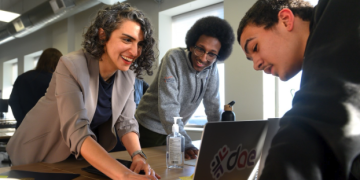
The project, a collaboration between the BCW WIN and Iona’s Hynes Institute for Entrepreneurship & Innovation, tasked college students with using design thinking to solve the town’s recycling challenges. After conducting surveys and interviews with over 200 residents and local businesses, the students delivered a clear message to town officials: convenience is key.
The students’ primary research revealed a significant gap between resident interest and actual participation. While 69% of respondents agreed that food scrap recycling is important, 63% were unwilling to participate in the current drop-off model due to inconvenience.
However, the data pointed toward a solution: 75% of residents indicated they would be willing to participate in a curbside pickup program. The students identified specific barriers to adoption, including concerns about attracting pests and potential extra fees.
To address these hurdles, the students proposed a multipronged strategy involving educational social media campaigns to influence household habits, school-based initiatives to normalize composting for children and a user-friendly website prototype to centralize information.
Jared Balcacer, an Iona senior from Yonkers and one of the student presenters, emphasized that understanding the daily lives of residents was crucial to their findings.
“The goal is for the entirety of Greenburgh to be participating in this program. And for that, you have to give a lot of people convenience,” said Balcacer, who also highlighted the need for a modern communication strategy.
Greenburgh Supervisor Paul Feiner reacted enthusiastically to the presentation, reaffirming his commitment to rolling out a curbside program in 2026. He noted that the students’ research validated the potential for cost savings; if residents remove food waste from the garbage stream, the town could potentially reduce regular trash collection frequency.
“I definitely want to pursue this, and this is going to be very helpful,” Feiner said after the presentation. “If we do it, we could go from two days a week pick up to one day a week pick up. And that would be a savings to the taxpayers.”
Professor Aakash Sapru, who guided the students through the design thinking process, praised the collaboration for allowing students to apply academic concepts to real-world municipal problems. He noted that the methodology ensures solutions are actually viable for the end-users.
“It’s not what the designer wants… It’s more in line with what does the community thinks and what they would be willing to do,” Sapru explained. “Because eventually, if they have to be included in this program, we have to get buy-in from them and that’s something that design thinking helps us with.”
Greenburgh is the eighth Westchester community to have participated in the City Labs initiative. The Iona students’ past topics of analysis have ranged from downtown parking to economic development, placemaking and environmental awareness.