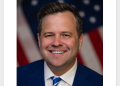
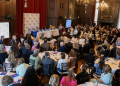
White Plains and its Mayor Tom Roach took center stage at the recent United States Conference of Mayors (USCM) 92nd Winter Meeting in Washington, D.C., when the city and mayor were honored for the multitude of arts programs in the city and their cumulative beneficial effect. The Conference of Mayors is the official non-partisan organization of U.S. cities with populations of 30,000 and up. There are about 1,400 such cities represented in the organization.
Roach accepted a 2024 Public Leadership in the Arts award from the organization Americans for the Arts and the USCM. The nonprofit ArtsWestchester, based in its own building at 31 Mamaroneck Ave. in White Plains, had nominated Roach for the award.
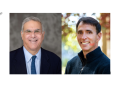
The National Award for Local Arts Leadership that honored Roach and White Plains was for cities with a population of fewer than 100,000. The award for cities with a population of 100,000 or more went to St. Louis Mayor Tishaura O. Jones. Colorado Governor Jared Polis received the award for state arts leadership.
Roach and White Plains were specifically praised for helping stage JazzFest White Plains, which presents free and affordable live jazz music as well as ArtsWestchester’s Serious Fun Arts Fest that brought two days of concerts and 18 new mural and sculpture installations to the downtown. It was noted that ArtsWestchester and the city have worked closely for many years to bring numerous arts activities and displays of various artworks to the city.

A study of the impact of the arts on economic activity that was released recently by ArtsWestchester showed that in Westchester in 2022 the arts generated $182.3 million in economic activity. The study did not break out figures for White Plains. The study found that $116 million was spent by arts and culture organizations with another $66.2 million in expenditures by their audiences.
“Arts and culture drives commerce to local businesses,” the study said. “When people attend a cultural event, they often make an outing of it — dining at a restaurant, paying for parking or public transportation, enjoying dessert after the show.”
The study found that arts events tended to attract visitors from nearby communities as well as tourists, and they often take the time to shop in local stores
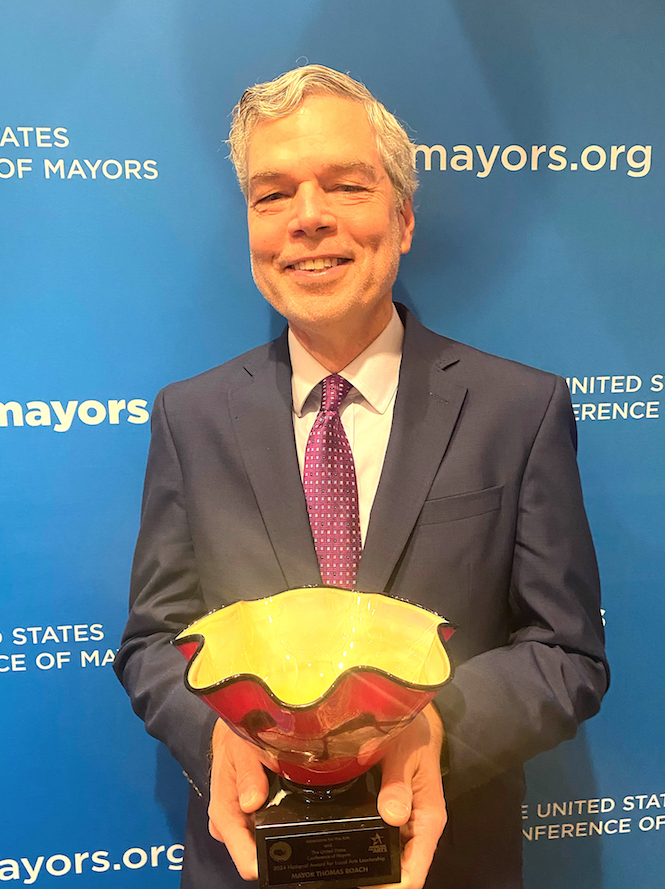
“We have worked very hard to bring more performance art, more visual art into the city,” Roach told the Business Journal. “Since I’ve been on we’ve been pushing to get more activity downtown, make it a fun place to be. Having ArtsWestchester here in the city is obviously a great benefit to us. I’ve had a good relationship with Janet Langsam (CEO of ArtsWestchester) and everybody over there.”
Roach said that there has been good reaction from businesses over the years to the activity surrounding arts events, with more people in the downtown translating into more shoppers and more business.
“It’s art making your downtown a place where people want to be,” Roach said. “It starts with having people live downtown. Even if people don’t come to a particular event it plants a thought that ‘this is a cool place where things are happening.’ It has an impact on whether or not they come back. When they’re looking for something to do, they think of us because we have a lot happening. Art is really a key component of that and, of course, the performing arts as well. Public art adds a little joy. You turn the corner and there’s an artwork that wasn’t there before. It gives you chance to look at it, talk to people about it.”
Roach said that a prime example is found in the art that was installed when the MTA renovated the Metro-North train station.
“You’re running to catch a train and the old train station isn’t exactly going to lift your spirits,” Roach said. “Now it’s bright, it’s clean and there’s art that I think puts people in a better frame of mind.”
Roach said that many things make White Plains unique including Mamaroneck Avenue, which has a growing mix of commercial activity along with new apartments that have already come online or are being built. He said that during the mayor’s conference he and some of the other mayors were exchanging information about arts activities and other thing cities are doing.
“A lot of the different breakout sessions they had, whether it’s about homelessness or public safety, you learn about what others are doing and how you might be able to bring it home to your community,” Roach said. “There’s so much to talk about. We kind of just help each other.”
During various sessions, the mayors heard from U.S. Secretary of State Antony Blinken, U.S. Transportation Secretary Pete Buttigieg, as well as Rep. Josh Gottheimer (D-NJ), and Rep. Marc Molinaro (R-NY).
On the afternoon of Jan. 19, the mayors went to the White House for a session with President Biden. Roach noted that under the Biden Administration, new federal funding has been made directly available to cities and does not have to first pass through other levels of government. The administration also has encouraged sustainable practices such as the purchases of green alternative fuel vehicles. Biden spent about 55 minutes with the mayors.
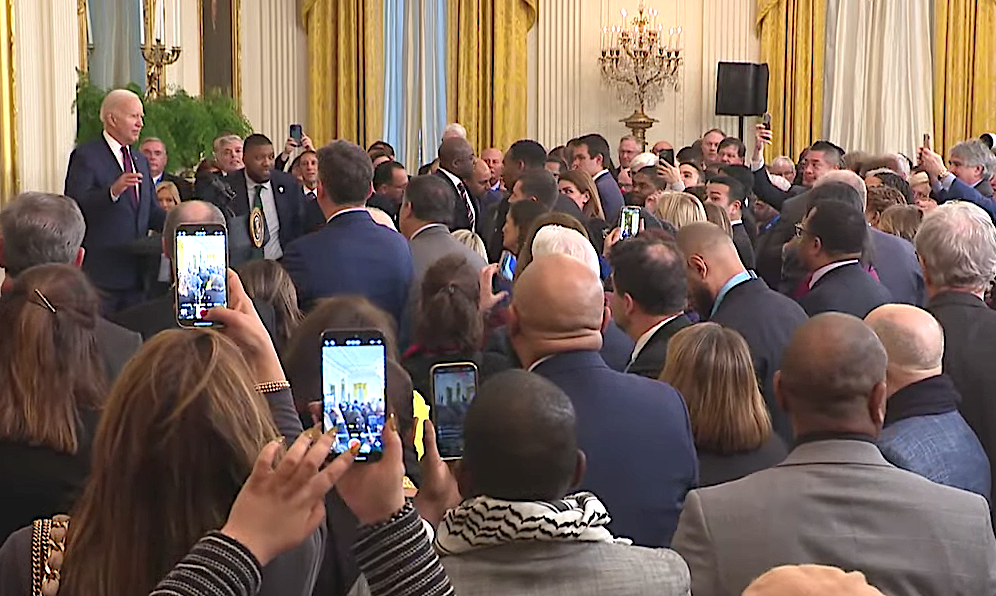
“We reacted to what he was saying. We all know what’s happening,” Roach said. “The public doesn’t seem to grasp how much has changed and how much is getting done around the country. He got a standing ovation from the mayors, and this is a non-partisan organization.”
“It started with the American Rescue Plan,” Biden told the mayors. “$350 billion for state and local governments. Money to put cops back on the beat, teachers in the classroom, keep families in their homes and train your workforces and get small businesses on their feet. Money directly to every single city in the country so you could decide how best to spend your money and meet your residents’ needs without having to go through a statehouse or a governor.”
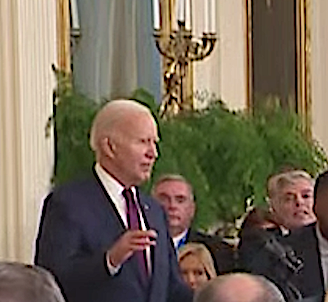
Biden thanked the mayors for what they do every day including promoting sustainability, promoting the building of more and better housing, improving mental health and enhancing public safety.
“I have enormous respect for job you do. I really mean it,” Biden said. “You can’t go anywhere without people knowing what you’re doing. You, they know where you live. And they think you can solve every problem. The fact is, you’re answering key questions people ask every day: Is my neighborhood safe? Is it going to be okay? Will this bus get me to work on time? You know, my kids … (are) they going to have a good future in this town? Am I able to stay in my hometown? It matters. It matters what you do.”