The U.S. Supreme Court ruling that the tariffs that Donald Trump imposed by claiming emergency powers were illegal was the result of a lawsuit whose filers included New York Attorney General Letitia James and Connecticut Attorney General William Tong. Trump decided he could get around the ruling by using what he saw as other executive powers and imposed a round of new tariffs. Now, both James and Tong are part of a new lawsuit seeking to invalidate the latest Trump tariffs.
James, Tong, 20 other state attorneys general and the governors of Kentucky and Pennsylvania fled a lawsuit in the United States International Court of Trade on March 5. They named as defendants Donald J. Trump in his official capacity as president, the U.S. Department of Homeland Security, Kristi Noem in her official capacity as secretary of DHS, U.S. Customs and Border Protection and Rodney S. Scott in his official capacity as its commissioner.
Trump claimed when imposing his new tariffs that Section 122 of the Trade Act of 1974 empowers a president to address certain fundamental international payment problems through surcharges and other special import restrictions and that tariffs are included. Trump takes the position that it allows tariffs of 10% to 15% for up to 150 days.
The lawsuit argues that Trump’s new tariffs do not meet the requirements of Section 122 and violate the Constitution’s separation of powers. The plaintiffs are seeking a court order declaring that the tariffs imposed by Trump relying on Section 122 are unlawful and ordering the federal government to issue refunds to states for the tariff costs that they paid as a result of what Trump did.

“Once again, President Trump is ignoring the law and the Constitution to effectively raise taxes on consumers and small businesses,” James said. “After the Supreme Court rejected his first attempt to impose sweeping tariffs, the president is causing more economic chaos and expecting Americans to foot the bill. These tariffs will only drive up the cost of living, and I will continue to uphold the rule of law to protect New Yorkers.”
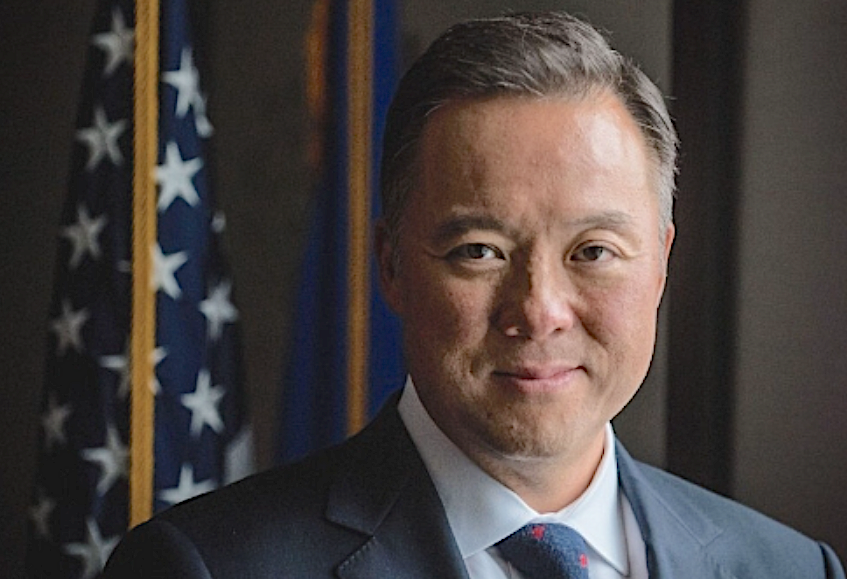
Tong said, “We beat Trump on tariffs in the Court of International Trade. We beat him in the Court of Appeals. We beat him in the Supreme Court. And now, we’re back in court once again defending American families and businesses from yet another round of lawless Trump taxes. He needs to stop this trade war and tell us how he’s going to give us all our money back. We can’t afford to keep bankrolling stupidity.”
The lawsuit claims that Trump’s sudden swings in tariff policy create significant costs for states, which must expend resources determining how these new costs will apply and how to handle soaring prices from vendors. The plaintiffs complain that erratic swings in tariff rates have also created new administrative costs for states as agencies must piece together official policy from social media posts, executive orders, proclamations, and other sources.
James, Tong and the other plaintiffs in the lawsuit claim that Trump’s claim that the country’s trade deficit justifies his tariffs is not a legitimate reason for imposing tariffs under Section 122. They point out that Section 122 requires new tariffs to be applied consistently in several ways, including that they are not applied discriminatorily. They say that the new tariffs exempt many goods from Canada, Mexico, Costa Rica, the Dominican Republic, El Salvador, Guatemala, Honduras, and Nicaragua and include 84 pages of specific product exceptions, which they say shows that Trump is using the tariffs to discriminate.
The lawsuit argues that Article I of the Constitution clearly gives Congress the power to tax and impose tariffs, and the president does not have the power to impose these kinds of sweeping tariff increases. The lawsuit seeks an order from the United States Court of International Trade declaring the Section 122 tariffs illegal and preventing them from being implemented, as well as an order to refund the states the costs of these tariffs while they were in effect.
In addition to James and Tong, the lawsuit was filed by the attorneys general of Arizona, California, Colorado, Delaware, Illinois, Maine, Maryland, Massachusetts, Michigan, Minnesota, Nevada, New Jersey, New Mexico, North Carolina, Rhode Island, Oregon, Vermont, Virginia, Washington, Wisconsin, and the governors of Kentucky and Pennsylvania.