ORANGE — United Illuminating has recently completed installation of two new platforms on which ospreys can build their nests in Fairfield and Stratford, the utility company announced Thursday.
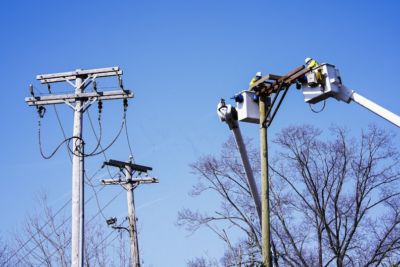
The new platforms were installed in Fairfield on March 12-13 and in Stratford on April 8, and are located adjacent to electric infrastructure on which ospreys had previously built a nest. The new osprey platforms provide an alternative for the location of their nests that is safer for the birds and their young while preventing customer outages.
“Protecting wildlife and other natural resources in and around our communities is essential for any business, especially for utility companies like UI because so much of our infrastructure is built into the natural world,” said Frank Reynolds, President and CEO of UI. “That’s why we have installed dozens of osprey platforms over the years, as they are an excellent tool to protect nesting ospreys from fires or other hazards while preventing customer outages in our coastal communities.”
The two new platforms in Stratford and Fairfield join dozens of similar platforms across UI’s service area, as UI typically installs between one and five such platforms annually and has done so in at least 12 of its 17 municipalities.
When an osprey begins to build a nest on electric infrastructure (such as utility poles, electric transformers), UI line workers and other members of the Electric Operations team typically discover it from a routine inspection or from an outage caused by the twigs, sticks, and leaves that comprise nesting material, as happened with the nest in Fairfield.
Following an internal or external report, UI’s Environmental & Permitting (E&P) department visits the nesting site and evaluates several factors: the stage of the nesting activity; whether there is space to install a platform within UI’s right-of-way; whether UI has or can obtain permission from the property-owner to install a platform; time of year in the nesting season; and location.
UI’s E&P department works with a variety of external stakeholders in making these evaluations to chart a best path forward. The utility company will often contact the Audubon Society to inform them of any planned activities related to the nest. If a nest is occupied by eggs or fledglings, UI discusses any plans or proposals with the Connecticut Department of Energy and Environmental Protection (DEEP) Wildlife Division and does not commence without DEEP approval. Each nesting situation is managed on a case-by-case basis to protect the ospreys and to prevent customer outages.
“At UI, progress and preservation can go hand in hand,” said Correne Auer, manager of E&P at UI. “By working with internal teams, our customers, and other stakeholders, such as at the Connecticut Audubon Society and DEEP, we can achieve two essential goals: reducing outages, which delivers on our commitment to provide safe, reliable power; and protecting wildlife, which is core to our social and environmental responsibilities.”