New York Attorney General Letitia James, who participated with 18 other plaintiffs in a lawsuit to block an attempt by Donald Trump to take control of elections through an executive order has welcomed the June 24 ruling by a federal judge to permanently block Trump’s effort. Trump’s order would have required people to prove they were citizens when registering to vote, stopped mail-in ballots arriving after election day from being counted and withheld federal funds from states that did not follow these and other of Trump’s wishes on elections.
“Generations of Americans fought tirelessly for the right to vote, and we honor their legacy by protecting that right against anyone who tries to undermine it,” James said in a statement reacting to the judge’s ruling. “I am grateful the court blocked the president’s unconstitutional attempt to seize control of our elections. As we approach this year’s midterms, I will continue doing everything in my power to protect free and fair elections and defend the sacred right to vote for New Yorkers and all Americans.”
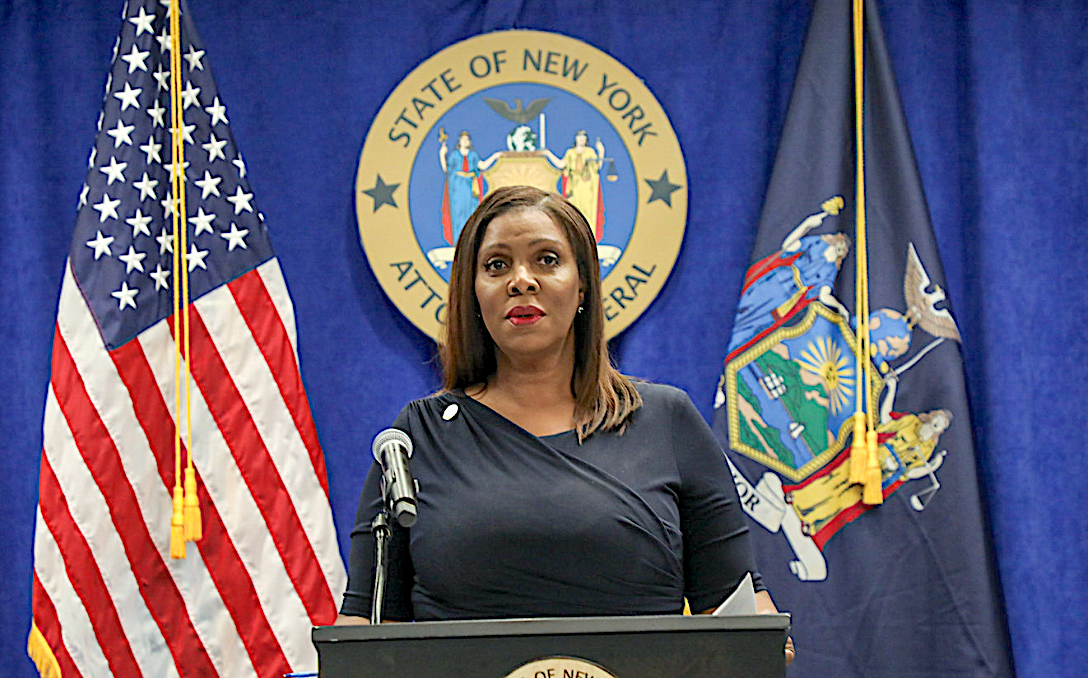
In April 2025, James joined with other attorney general to sue the Trump administration over the president’s March 2025 executive order seeking to override state control of elections and make it more difficult for Americans to register to vote and cast ballots.
Chief Judge Denise Casper of the U.S. District Court of the District of Massachusetts located in Boston previously issued a temporary restraining order against parts of Trump’s order. The June 24 ruling constituted a permanent ban.
Judge Casper rejected the Trump administration’s argument that the lawsuit to block the changes was premature because the rules had yet to be implemented. Casper decided that the Constitution gives states and Congress the authority to regulate elections, and that Trump’s requirements violated the separation of powers.
Regarding Trump’s proof of citizenship requirement, Judge Casper wrote in her June 24 ruling, “The States have attested that a documentary proof of citizenship requirement can pose a significant barrier for otherwise eligible voters. … Several forms of government-issued identification, including the majority of the REAL IDs administered by the Plaintiff States, do not include citizenship information … and a substantial portion of voting-age U.S. citizens do not possess some of the more common forms of government-issued identification that do, such as a passport.”
The judge noted that in 2023, there were only 160,668,889 valid passports in circulation compared with the 262,083,034 voting age citizens nationwide.
“Acquiring documentary proof of citizenship … poses both financial and administrative burdens for otherwise eligible voters … particularly for members of the armed forces serving abroad … and could lead to voter confusion and deterrence,” Judge Casper wrote.
Regarding the effort by Trump to prevent the counting of mail-in ballots that have been properly postmarked before election day but are delivered by the Postal Service after election day, Casper said, “The undisputed record shows that disqualifying ballots that are postmarked by Election Day but arrive thereafter would disproportionately harm military voters, elderly voters, voters with disabilities and voters in rural areas, all of whom face unique obstacles to mailing access and service.”
Judge Casper stated, “There is no evidence in this record of widespread ‘illegal voting, discrimination, fraud, and other forms of malfeasance and error’ within American elections, which the Executive Order purports to safeguard against.” She also said that there was no basis for the contention by the Trump administration that Trump’s executive order was carrying out mandates established by Congress when in reality the executive order violates the Constitution’s separation of powers.