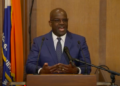
The superconductor industry is “very viable and healthy in New York state,” said the CEO of Schenectady-based CardioMag Imaging Inc., but the reality is, it”™s “a well-kept secret.”
Carl Rosner, who served as a moderator at the New York State Superconductor Technology Summit at Westchester Community College on Nov. 12, was joined by dozens of panelists who are actively involved in the technological advancement of superconductors.
“So much has been contributed by New York state companies to make this a very important industry and I think the state needs to assist in publicizing it and making it aware that we exist,” Rosner said.
Elmsford-based Hypres, a developer of superconductor electronics, approached the Valhalla-based community college to serve as host of the event designed to identify the high-tech industry as an economic driver for the Empire State.
Raising the visibility
“I”™m always on the lookout for ways to increase the visibility of exciting new areas of technology, so this was perfect not only for our students, but high school students too,” said Ted Nygreen, associate dean for the division of mathematics, engineering and physical sciences and technologies at WCC. “I think we”™ve all taken the first step and that is to get it (superconductor technology) on our radar screens.”
One objective of the summit partially organized by Sen. Andrea Stewart-Cousins, D-Yonkers, was to introduce students to the high-tech field.
Various companies detailed their concerns in promoting the niche technological sector.
Jeffrey Kristoff, who works in strategic development for nanotechnology companies, relocated company Electronic Beam Lithography from Cambridge, United Kingdom, to the Albany area after Vistec”™s acquisition of parent company Leica Semiconductor Systems.
“I will call it a real success story for Albany, the state and ourselves, and an example of how one can do business and work with the government, work with the local authorities and work with the universities to help spur economic growth,” Kristoff said.
Through the Arsenal Business and Technology Partnership, Vistec Lithography was able to retain a 30,000-square-foot facility at the Watervliet Arsenal along the Hudson River.
Kristoff said that without the partnership between the Arsenal, businesses and The College of Nanoscale Science & Engineering at the University at Albany, the company would not have seen the success it has had.
State, universities, industry need each other
“There”™s a role here for the state, the role of the universities and the role of industry, to work together as a unit and be willing to share and foster technology,” Kristoff said. “The cost of nanotechnology today is prohibitive. For a startup ”“ and I don”™t care how good your idea is, if you want to take a nanotech structure into manufacturing, it will probably cost you anywhere from $50- to $100-million just to make a few prototypes.”
Susan Jaffe, regional director of Empire State Development Corp. in Westchester, Orange, Sullivan, Ulster, Rockland, Dutchess and Putnam counties, offered a word of advice on financing.
“After you”™ve done all of this research and got some of your certifications, if your product is just getting to market, from my perspective, you are still a startup,” she said. “You are scrutinized in a different way than businesses that are already established. You need to be aware startups have a tremendous challenge. Everything has to be in place ”“your equity, your financing has to be in place before the state comes in at the tail end.”
Paperwork processing takes too long
Peter Gifford, CEO of Syracuse-based Cryomech, a leading designer and manufacturer of cryorefrigerators, expressed concern about the length of time it takes to obtain proper product certifications.
“If state universities could have clearinghouses where you can go and learn how to represent your product to people who give you your certifications, it would help,” Gifford said. “Every time you go, it”™s like making engineers lawyers ”¦ and they sort of bend you over backward. It cost me $50,000 to get (an international certification).”
Dick Ferdinand, a financial investor who attended the summit, said it”™s not enough to think outside of the box in developing ways to bring nanotechnology and superconductor technology to market quickly and effectively.
“What was described today was a technology that reduces time, reduces exposure to ionizing radiation that is very damaging, improves diagnostic results, anticipates therapies that are needed ”¦ and it is being inhibited by a set of rules that dominate the disposition and payment of Medicare and Medicaid funds,” Ferdinand said. “There is not as much money in diagnosis as there should be, and things are skewed against getting what should be a technology that”™s being adopted at a very active rate into market.”