Negotiators for the Metropolitan Transportation Authority and five unions reached a deal after the May 18 rush hour to end the strike against the Long Island Rail Road that began at 12:01 a.m. on May 16. The deal came too late to restore service for the May 19 morning rush hour but service was phased in beginning at noon with full service restored by the May 19 afternoon rush hour.
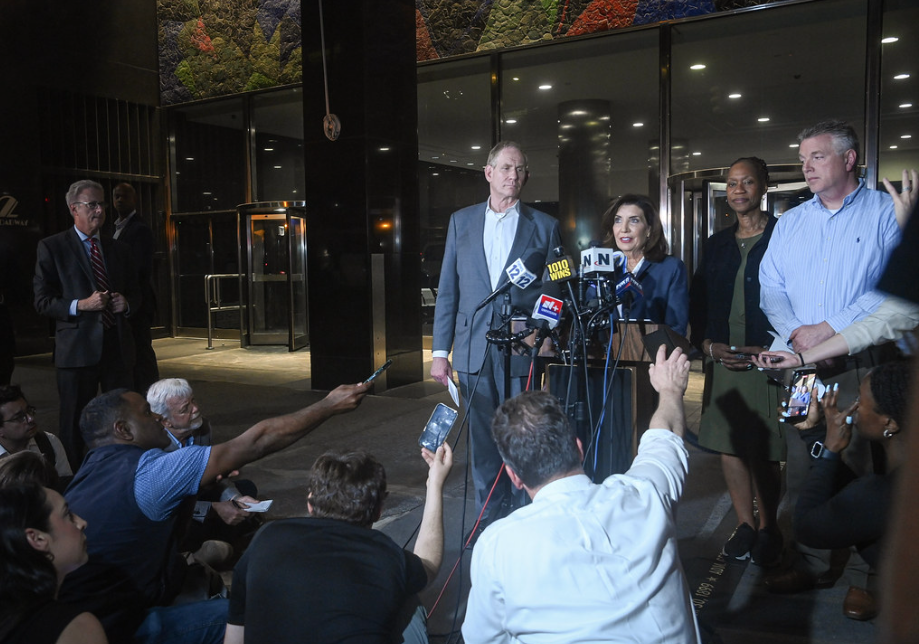
Gov. Kathy Hochul, in announcing the contract agreement said, “Negotiations are rarely easy, but I have a lot of respect for the collective bargaining process that unfolded over the last few days. And I always believed that we could reach a good, fair compromise, a contract that achieved two principles: Number one, protecting affordability for Long Islanders and commuters while giving fair wages to the employees. And by working and negotiating together, we have reached that kind of deal.”
Hochul said that the new contract will ensure that the 3,500 Long Island Rail Road employees who are members of the unions that went on strike will be paid fairly for their labor. Hochul noted that a benefit of the contract agreement was that Knicks fans could to take LIRR trains to Madison Square Garden in time for game one of the Eastern Conference Finals.
Two of the striking unions, the International Association of Machinists and Aerospace Workers and the Transportation Communications Union had released a joint statement in which they blamed the strike on MTA Chair and CEO Janno Lieber, who was reported to have made a demand that the contribution made by union workers toward their health care coverage be increased to help offset pay hikes.
“The dedicated Long Island Rail Road workers represented by our unions are not asking for special treatment — they are simply fighting to keep up with the skyrocketing cost of living in the New York region after years without a raise,” the unions said. “There seems to be a disconnect between Mr. Lieber and the reality faced by workers who have gone four years without a raise.”
The unions accused Lieber of “turning his back” on two proposals from federal officials that the unions said could have avoided a strike.