Along with the slew of new CBD shops, macramé candle “concept” stores and alternative yoga studios that seem to proliferate in our region, it’s sometimes easy to forget that aerospace, defense and high-tech industries also flourish here in Westchester and Fairfield counties. Such is Hardened Network Solutions Inc.
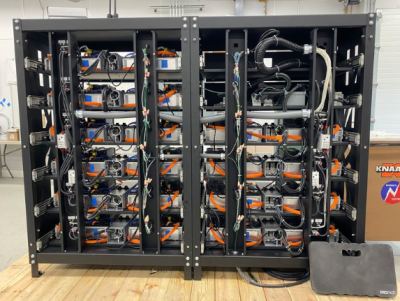
Founded in 2019 by former investment banker Matthew Gove, a graduate of Colby College, Maine, and the Columbia Business School and the company’s CEO, HNSI is a developer of upcycled energy storage systems, especially as they pertain to and benefit the telecommunications industry.
It’s a fascinating field. Grids and power systems in our own country – indeed across the globe – are beginning to show age and are increasingly vulnerable. And while problems that arise might be limited to a minor local inconvenience, they can, of course, be much more serious than that. In Europe in May, Spain’s entire power grid along with a great swath of Portugal’s collapsed, plunging those countries into chaos.
While Gove says he founded the company specifically to address the vulnerabilities of wireless telecommunications networks, upon which modern society is so reliant, HNSI’s aims and aspirations appear to be even bolder, its applications even more encompassing.
The successful testing two years ago of a prototype, known as the PSU-1 power storage unit, has been a feather in HNSI’s cap. Christopher Britt, senior vice president of HNSI, has commented on the testing, saying, “This milestone demonstrates the remarkable capabilities of our upcycled EV battery-based solution, which outperforms traditional diesel generators in terms of duration and emissions. With our scalable and self-contained product, we are confident in our ability to provide reliable backup power to commercial locations across the country.”
HNSI has an order in place for its first large-scale, multiyear rollout. The company’s commitment to sustainability, reliability and cost-effectiveness positions it as a leader in the energy storage industry.
Britt went on to point out that during the initial stages of modern technology development and adaptation, costs are high and adoption slow. “This has almost always been the case in modern history with examples like automobiles, telephones, televisions, computers and cell phones.”
Similarly, capital intensive services, when first introduced, like train, air and space travel, are for the affluent, “until they are so widely adopted they become more affordable.” That is clearly the direction in which the company is heading.
HNSI has sound eco-credentials, too. “Backup solutions don’t have to cost the earth, nor do they have to damage it,” Gove is on record as saying.
Specifications and configurations can be tailored to meet customers’ different needs, such as the aggregate electric load of the customer equipment present at the site and its peak draw, along with the duration the customer would like the backup power to last. That could be up to five days, or – with the addition of solar power – even in perpetuity.
While HNSI sees opportunity in specific commercial applications, Britt himself goes further. “I firmly believe that there will be battery storage everywhere (industrial, commercial, public spaces, etc.), including in homes,” he said. “With widespread commercial adoption of BESS (battery energy storage systems) over the coming years, the costs of such systems will come down and be affordable to a much wider market. It is not difficult to imagine some storage capacity deployed in conjunction with every electric meter on the grid.”
Doubtless with HNSI at the forefront of its deployment.