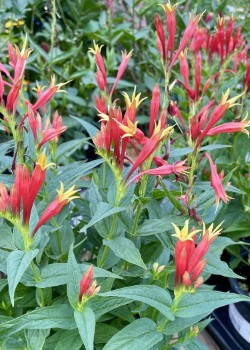
As you prepare your gardens for winter, consider marking the location of late emerging perennials to avoid accidentally weeding them out next spring.
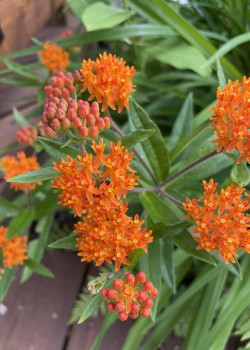
Hardy hibiscus, balloon flower (Platycodon), leadwort (Ceratostostigma), Crocosmia, Red-hot poker (Kniphofia), whirling butterflies (Gaura lindheimeri), Butterfly bush (Buddleia), Russian sage (Perovskia atriplicifolia) and blue spirea (Caryopteris x clandonensis) are a few you may have growing in your garden. Many native plants like butterfly weed (Asclepias tuberosa), swamp milkweed (Asclepias incarnata), black-eyed Susan (Rudbeckia), Culver’s root (Veronicastrum), Indian pink (Spigelia marilandica), Joe-pye weed (Eutrochium spp. formerly Eupatorium), asters, liatris and goldenrods can also be late to emerge. It’s easy to accidentally weed these out during spring cleanup.
These plants are worth the wait since they add extra color to our mid- and late-season gardens. They extend the beauty, pollinator appeal and food source for many insects and songbirds visiting your gardens.
Try leaving the stems or a portion of the stems of these plants intact until the new growth emerges. Unfortunately, many of us have accidentally removed these, too.

Plant tags will identify the plant and mark their location but can be unsightly. Try placing a colorful dowel rod, golf tee or short bamboo stake at the base of these plants. Number each and mark them on your garden plans to help track the plant’s identity.
Stones or shells, where they are abundant, can be placed next to or surrounding these plants to mark the location. These tend to stay put and may be less obtrusive than plant tags. Just be sure to alert anyone helping in the garden of their purpose and that they need to stay put.
Or mark their spot with bulbs. Plant spring flowering bulbs like daffodils, hyacinths and alliums next to these plants to extend your garden’s bloom time and help prevent damage to the perennial plants.
Avoid tulips, crocus and other bulbs that animals love. Squirrels, chipmunks, rabbits and deer may move or eat your marker.
Consider using a mix of early-, mid- and late-spring flowering bulbs to further extend the color in your garden. Or skirt these late emerging plants with early spring blooming perennials like woodland and creeping phlox, candytuft or rockcress. You’ll enjoy the added color.
Patience is key here. Next year, these late emerging perennials may have you worried they died over winter. Lingering winter weather and cooler than normal spring temperatures might further delay their appearance. But know this adaptation allows them to avoid damage from late spring frosts as they wait for the soil to warm and begin growing.
Melinda Myers has written more than 20 gardening books, including “The Midwest Gardener’s Handbook, Second Edition” and “Small Space Gardening.” She hosts “The Great Courses’” “How to Grow Anything” instant video and DVD series and the nationally-syndicated “Melinda’s Garden Moment” TV and radio program. Myers is a columnist and contributing editor for Birds & Blooms magazine. For more, visit here. https://www.melindamyers.com.