HARTFORD – The Connecticut Conference of Municipalities (CCM) earlier this week called Gov. Ned Lamont’s statements about the state’s financial commitments to local government “incomplete and misleading.”
According to CCM, the governor touts a “17% increase in the ECS (education cost-sharing) grant” without acknowledging the following facts:
- Increases in ECS that were made in 2023 were done by the General Assembly over objections by the governor at the time.
- In 2024 the governor’s own budget proposed reducing those investments by $50 million.
- An independent analysis by the Boston Consulting Group (BCG) outlines that in real dollars the state has reduced its proportional share of public education spending during Governor Lamont’s tenure by a whopping $407 million annually.
“Local leaders are being asked to do more with less, and the state’s leadership needs to be honest about the challenges our communities face,” said CCM Executive Director and CEO Joe DeLong. “It’s time for real solutions that provide stable, predictable, and sufficient funding for our cities and towns – not just political talking points.”
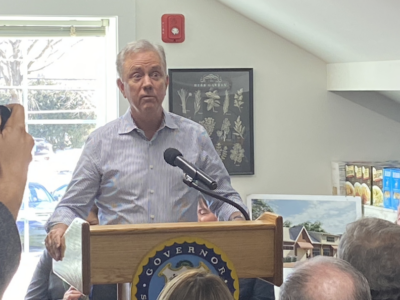
In his own press release Tuesday the governor announced that his FY 2026/2027 biennial state budget proposal increases state funding for Connecticut’s town and city governments to support the administration and delivery of municipal services.
“Municipal aid is the largest category of state spending within the entire general fund,” according to the statement. “Since taking office since 2019, every state budget Gov. Lamont has enacted has not only held municipal funding harmless, but it has also increased that funding each year.
“My budgets prioritized significant municipal aid investments because that funding is about more than ensuring our unique towns and cities are incredible places to live, but because that funding supports our children’s education and gives them the best opportunity at the starting line in life,” he said. “Over the last several years, our budgets have doubled municipal aid and PILOT (payments in lieu of taxes) funding, and in my next biennium proposal we kept with those investments by proposing more special education funding, community economic development grants, and school and local capital improvement projects.”
The governor pointed out that the state’s per pupil spending of $22,000 is among the highest in the country (top five) and nearly $5,000 above the national per pupil average of $16,665. He also stated general government aid to municipalities has doubled and that more than $400 million in state grants have been provided to the state’s most distressed municipalities through the Community Investment Fund.
CCM wanted to make clear that while the governor touts a “doubling of PILOT funding,” he should acknowledge the following facts:
- PILOT increases were the priority of Speaker Matthew Ritter and Senate President Martin Looney. The governor has never proposed increases to PILOT funding in any budget he has presented.
- PILOT remains underfunded by over $400 million which is striking considering state statute only suggests towns be reimbursed 45% off the lost revenue for state owned property and 77% for private colleges and hospitals.
The General Assembly’s Appropriations Committee and Finance, Revenue and Bonding Committee are currently reviewing the governor’s budget proposal and are anticipated to act on it in the coming weeks.