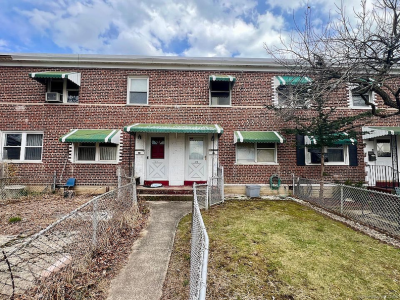
Bridgeport and Stratford mayors Joseph Ganim and David Chess Wednesday issued a unified call for state legislative action to provide financial relief to the more than 920 families residing at the Success Village housing cooperative.
In joint written testimony submitted to the Connecticut General Assembly’s Planning and Development Committee, the two mayors voiced their strong support for a bill that would waive interest on certain delinquent municipal property taxes. The bill seeks to refund tax interest and penalties accrued since July 1, 2022 — costs incurred not by the residents themselves, but by documented financial mismanagement that left the cooperative in a state of crisis.
“The residents of Success Village are the victims of this mismanagement, not the cause,” the mayors stated in their joint testimony. “For years, these families paid their monthly common charges in good faith… To penalize them further for a financial failure they did not cause is a double victimization that we must rectify.”
They thanked the work of the local state legislative delegations of both Bridgeport and Stratford for promoting the bill. “Working together at all levels of government, we will help Success Village be the thriving housing cooperative that has been for generations,” they wrote.
The joint effort follows a tumultuous period for the cooperative, which saw a near-total collapse of its heating and hot water infrastructure in late 2024. The crisis prompted both municipalities to take the extraordinary step of seeking a court-appointed receiver to stabilize the association’s operations and deal with its crushing debts.
By waiving tax interest and penalties, the bill would provide the receiver attorney Barry Knott with the necessary fiscal “breathing room” to address critical infrastructure upgrades and restore the cooperative to long-term stability.
Ranked choice voting progresses in state legislature
A bipartisan coalition of municipal leaders from across Connecticut sent a joint letter Thursday to Gov. Ned Lamont and legislative leaders urging passage of legislation to authorize ranked choice voting (RCV) as an opt-in option for municipalities.
The call for action comes as Senate Bill 386 received a favorable vote earlier today from the Government Administration and Elections (GAE) Committee in the Connecticut General Assembly. The bill would allow Connecticut municipalities to voluntarily adopt RCV for municipal elections and party primaries.
The letter, addressed to Senate President Pro Tempore Martin Looney, Senate Minority Leader Stephen Harding, Speaker of the House Matthew Ritter, and House Minority Leader Vincent Candelora, emphasizes that the proposal would empower cities and towns to adopt the system for their own municipal elections, if they choose.
Signatories include mayors and local officials representing diverse communities such as Stamford, New Britain, Norwalk, Norwich, Bridgeport, and Hartford, underscoring broad geographic and bipartisan support for the reform.
“This is a practical, incremental reform that respects local control,” the municipal leaders wrote. “It gives communities the freedom to strengthen democratic participation in ways that best reflect their residents’ needs.”
The coalition points to troubling declines in civic engagement during the 2023 municipal elections. Bridgeport’s turnout fell to 19.98% (down from 21.98% in 2019), while Hartford’s dropped to 13.74% (down from 18.14% in 2019). Leaders argue that these numbers reflect both voter disengagement and diminished confidence in a system that frequently produces plurality winners without majority support.
Ranked Choice Voting allows voters to rank candidates in order of preference, ensuring that winners secure majority backing in multi-candidate races.
With Quinnipiac polling showing that nearly 70% of voters express concern about the future of democracy, municipal leaders describe RCV as a timely, constitutional, and community-driven reform that can help restore public trust.
Mayor Barbara Smyth of Norwalk stated: “As a mayor, my priority is making sure residents feel heard and represented. Ranked Choice Voting offers a way to encourage broader participation and ensure that winners in multi-candidate races have true majority support.”
Mayor Caroline Simmons of Stamford said: “This opt-in framework is exactly the kind of practical, incremental reform that respects local control while modernizing our democratic processes. Allowing municipalities to adopt ranked choice voting voluntarily ensures that communities can evaluate and implement reforms that strengthen participation and better reflect the will of their voters.”