Five months to the day Pope Leo XIV was elected, a new poll shows that he is not only on Americans’ radar but that they are looking to him for moral leadership.
But Michelle C. Loris, Ph.D., Psy.D., — a professor, associate dean and director of the Center for Catholic Studies at Sacred Heart University in Fairfield, which conducted the national survey with GreatBlue Research Inc. in Glastonbury, Connecticut – didn’t have to look farther than her own property for evidence of that.
A group of hardhats were working outside her house as she was preparing to do the inaugural episode of the school’s “Cor Ecclesiae” (“Heart of the Church”) podcast, she said. (See sidebar below.) When she asked them what time they’d be finished – otherwise she’d have to move to a quieter location – they assured her they’d be done in time, then expressed interest in the podcast’s subject. Told it was Pope Leo, they said, “Oh, we know him. He’s the American pope.” (Well, technically the second pope of the Americas, since he spent much of his ministry in Peru and succeeded Pope Francis, who was from Argentina.)

Indeed, according to the digital survey – in which 500 people nationwide, mainly white, educated, middle-class individuals evenly divided between both sexes and among various age groups and political persuasions, answered 40 questions, with a margin of error of +/- 4.33% — 81.4% were aware of Leo’s ascension on May 8, with 67.1 % generally holding a favorable opinion. (In contrast, President Donald J. Trump’s approval rating is 37%, according to the latest Quinnipiac University poll.)
One of the key survey takeaways was the nuanced view that young people have of the pope, with 59.6% of 18 to 34 year olds holding a favorable view of Pope Leo XIV – versus 70.4% of people ages 35 to 54 and 70.3% of those 55 and older. But sentiment was stronger among the young, with 34.9% very favorable toward Leo versus 24.7% who were somewhat favorable. This age group was also more likely to see him as an American national figure (27.9%) and consider following him on TikTok (26.5%). (Overall, more than half of respondents found the tech-savvy pope – who has championed the ethical use of AI as befits the namesake of Leo XIII, known for addressing social injustice in the Industrial Age – to be an effective communicator, one they would engage with on such social media accounts as X (@Pontifex) and Instagram (@Pontifex – Pope Leo XIV).
This suggests to Loris – who holds doctorates in literature and clinical psychology and has completed work on her Master of Arts in systematic theology — that “.. those young people are seeking moral leadership. They don’t have a great deal of confidence in institutions, but they are hungry for moral leadership. They do see the pope as an example of that moral leadership. They see him as the voice.”

Since May 8 when the pontiff, who turns 70 Sept. 14, stepped onto the loggia of St. Peter’s Basilica in Vatican City, he has spoken of peace, Loris said. (His first words to the throng were “peace be with you,” echoing Jesus’ words in the Gospels to his disciples after his Resurrection.) On Aug. 22, as Roman Catholics commemorated the queenship of the Virgin Mary, Leo called for a day of fasting and prayer for peace and justice in the Middle East and Ukraine. On Aug. 27, Leo demanded Israel end the “collective punishment” of Gaza and yet again called for Hamas to release the approximately 50 remaining Israeli hostages, living and deceased.
Of course, there are those who want more than fasting and prayer from Leo: They want action. On Aug. 12, Madonna published a respectful open letter to the pope, urging him to bring aid and his light to the children of Gaza. (Such a visit would require permission from Israel and extreme security measures.)
Both Pope Francis and Pope Leo offered to host peace talks between Russia and Ukraine. Ukrainian President Volodymyr Zelenskyy, who has asked for Leo’s help in getting Russian-held Ukrainian children returned, agreed to the offer, while Russian President Vladimir Putin has rejected the Vatican as an inappropriate site for negotiations between two Orthodox Christian nations. (The Russian argument is somewhat countermanded by Leo’s efforts to continue dialogue with the Orthodox Church.)
In the survey, 40.9% of respondents said Leo should prioritize clergy sexual abuse and accountability, followed by addressing global conflicts (32.9%), immigration and refugee support (28.3%), the role of women in the Church (26%) and abortion/reproductive rights (25.6%). Roman Catholics were more concerned with the abuse scandals (48.4%) and declining church attendance (26.5%).
The role of the pope on the world stage in the modern era is a complex, delicate one, Loris indicated in her conversation with Westfair’s Fairfield County Business Journal. He is the head of Vatican City — the world’s smallest sovereign nation, surrounded by the city of Rome – and the spiritual leader of 1.4 billion Catholics worldwide. But, Loris added, “he is not a political leader. He’s not going to get into a war of words.” (As Cardinal Robert Prevost, Francis’ prefect of the Dicastery of Bishops, he did repost an article challenging the notion of ordo amoris, or ranking our love for others, as put forth by Vice President JD Vance, a Catholic convert, as a way of explaining the Trump Administration’s views on immigration and foreign aid. There has since been a rapprochement between the Vatican and the Trump Administration, with Vance nonetheless pointedly presenting Leo, a member of the Augustinian order, with a copy of St. Augustine of Hippo’s “The City of God” – in which the phrase ordo amoris first appears.)

| Dreamstime.com.
The idea that a pope needs to walk a fine line when it comes to politics – particularly a pontiff birthed by a nation inured in the separation of church and state — would seem to dovetail with respondents’ views of Leo’s involvement in U.S. affairs. While 54.7% thought the pope should play “some role” in U.S. policy and one-third (33.4%) said the pope should comment on political issues, 35.4% said “it depends” on the issue.
Such a balancing act is consonant with the role of the pope, who operates in the sphere of spiritual communication, Loris said – speaking out, yes, but always in the context human dignity, the common good and the love of God triumphing over evil; “listening, listening, listening”; and unifying.
But it is also in keeping with recent papal history and Leo’s own temperament, she added. Popes who are seen as disrupters are regularly followed by stabilizers – John XXIII and Paul VI; John Paul II and Benedict XVI; Francis and — Leo XIV?
Pope Leo is widely viewed as a bridge and consensus builder – not as conservative as Benedict, not as liberal as Francis. In his first papal appearance, Leo wore the mozzetta, or short red cape, as Benedict did in his first appearance, in contrast to Francis in the papal whites. Leo is also more reserved than Francis. Who can forget the image of the spontaneous Francis with a bride and groom, all three sporting red clown noses? When the world’s No. 1-ranked male tennis player, Italy’s Jannik Sinner, presented Leo with a racket at the Apostolic Palace and suggested a hit, the tennis-loving pope looked around at the furnishings and said, “Better not.”
He is cautious, methodical and process-oriented, Loris said – as befits someone who has a Bachelor of Science degree in mathematics from Villanova University in Philadelphia and taught math and physics at St. Rita of Cascia High School in his native Chicago while studying for his Master of Divinity (MDiv) at Catholic Theological Union. (Leo also holds a Licentiate of Canon Law (LCL) and a Doctorate of Canon Law (DCL) from the Pontifical University of St. Thomas Aquinas, named for the medieval Doctor of the Church who was heavily influenced by St. Augustine.) At the same time, Loris added, the pope has all the casualness of his American heritage, joining in a chant of “White Sox, White Sox” with other fans of his beloved Chicago team at St. Peter’s Square.
“He’s an American,” she said. “There’s nothing more American than baseball.” Perhaps more important, “he’s seen as an American representing America and its values.”
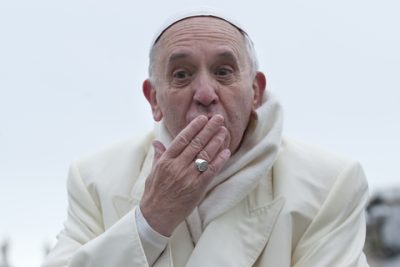
But Leo is also the product of his mentorship by Francis, who advanced his career, and like his predecessor, he has already proved a strong champion of the environment and synodality, which involves the laity as well as bishops and clergy in decision-making processes. About a third of survey respondents expect him to continue Francis’ legacy, while 34.2% think Leo will blend that legacy with something new.
It’s too early to say what Leo’s legacy will be, Loris said. But a hint to its direction lies in his Augustinian vocation, with its emphasis on communality. (In contrast to previous popes who lived in the Apostolic Palace – or in Francis’ case, the Casa Santa Marta, the Vatican guesthouse — with a small staff, Leo will be moving into the papal apartments this fall with a group of Augustinian friars and his personal secretary, the Rev. Edgard Iván Rimaycuna.)
“In ‘The City of God,’ St. Augustine asks, How can a Christian be a Christian and live in a secular world?,” Loris said. As a bridge builder and an exemplar of fellowship, Loris said, Leo will offer a way.

Sacred Heart University debuts “Cor Ecclesiae” podcast on Pope Leo XIV
Looking to position itself as a national voice in Roman Catholic thought, Sacred Heart University (SHU) has launched the podcast “Cor Ecclesiae” (“Heart of the Church”).
Hosted by Michael W. Higgins — professor emeritus and papal biographer — the podcast features leading voices from SHU’s Catholic Studies program — Charles Gillespie, Michelle Loris and Daniel Rober. Together, they offer insights into the papacy of Pope Leo XIV and the evolving role of the Roman Catholic Church in the modern world.
The inaugural episode marks Pope Leo XIV’s 100th day as the leader of Roman Catholics and coincides with the release of the Sacred Heart University poll gauging public sentiment on the new pope. Available on YouTube, Spotify and Apple Podcasts, “Cor Ecclesiae” is designed to deliver accessible, intellectually rich conversations for Catholics, scholars and the broader public.

“This is more than a podcast; it’s a platform for shaping the conversation around the future of the Church,” said Higgins. “Sacred Heart University is uniquely positioned to lead this dialogue, rooted in our Catholic intellectual tradition and commitment to public scholarship.”
The podcast emerged from internal roundtable discussions among SHU scholars following the death of Pope Francis on April 21 and the historic conclave that elected Pope Leo XIV three weeks later. As the new pope begins to define his legacy, SHU’s experts offer insight into his leadership style, theological priorities and the Church’s global trajectory.
Highlights from Episode 1 of “Cor Ecclesiae” include:
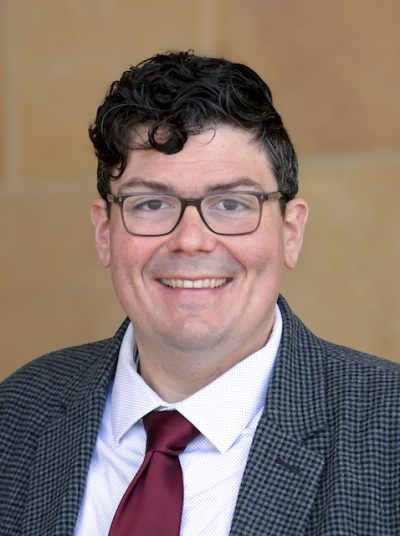 Charles A. Gillespie, Ph.D., assistant professor of Catholic Studies and co-director of the “Pioneer Journey”: “Pope Leo calls us not just to seek peace in conflict zones, but also in our everyday lives.”
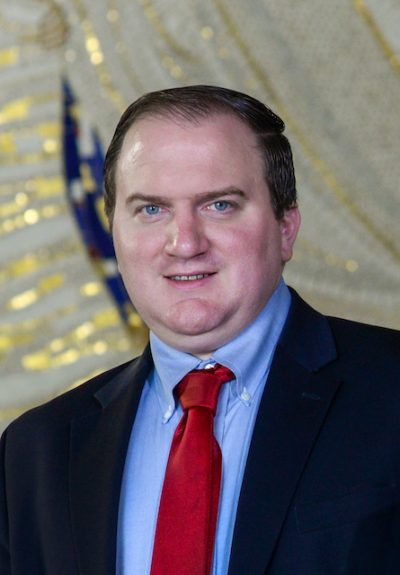 Daniel Rober, Ph.D., chair of the Department of Catholic Studies: “If Francis was the disruptor, Pope Leo is the stabilizer — carrying reform forward without burying it.”
For more, visit SHU’s Papal Media Resources webpage.
As the second-largest Catholic university in New England behind Boston College, and one of the fastest-growing private doctoral institutions in the U.S., SHU has more than 100 undergraduate, graduate and doctoral programs on its Fairfield campus. Sacred Heart also has a campus in Dingle, Ireland, and offers online programs. More than 10,000 students attend the university’s eight colleges and schools – the College of Arts & Sciences; School of Communication, Media & the Arts; School of Social Work; School of Computer Science & Engineering; College of Health Professions; the Isabelle Farrington College of Education & Human Development; the Jack Welch College of Business & Technology and the Dr. Susan L. Davis, R.N., & Richard J. Henley College of Nursing.
Sacred Heart, a Laudato Si’ campus in the tradition of Pope Francis’ encyclical on the environment, stands out from other Catholic universities as it was established to be led by the laity. The Princeton Review includes SHU in its “Best 390 Colleges: 2025 Edition” and “Best Business Schools: 2025 Edition.” Sacred Heart is home to the award-winning,National Public Radio (NPR)-affiliate station, WSHU Public Radio; a Division I athletics program; and a performing arts program that includes choir, band, dance and theater. For more, visit www.sacredheart.edu.