The proposed 2026 Executive Budget for Dutchess County includes a 1.8% increase in spending accompanied by a 3% cut in property taxes. Spending would be $651.4 million, and includes an increase of $6.7 million to cover state and federal mandates.
County Executive Sue Serino said that the budget does not skimp on spending for public safety, housing, youth initiatives, and services for seniors, veterans and families while staying below the New York state property tax cap.
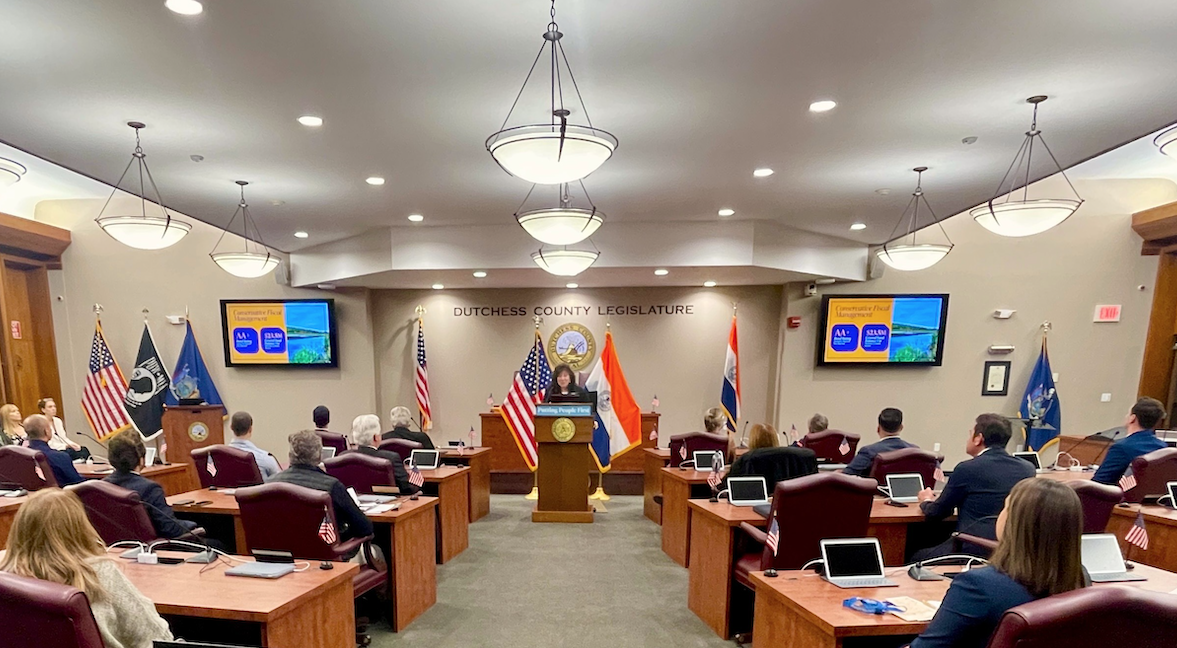
“This budget is all about protecting people with purpose,” Serino said. “Every dollar we spend must be done in a way that protects our taxpayers while also protecting the programs and services our neighbors depend on. We’ve worked hard to make sure every dollar is spent wisely, with investments in public safety, mental health, seniors, and youth, while making sure we are prepared for future uncertainty.”
The proposed budget calls for the county’s 11th consecutive year of a reduction in the property taxes. Sales tax revenues are projected at $273.8 million, and represent 42% of the new budget. The county’s sales tax rate will remain at 3.75%. Dutchess is one of only six counties with a sales tax rate below 4% in New York state. Being eliminated effective March 1 is the local sales tax exemption on clothing and footwear items under $110. That would bring the county an additional $5.4 million in revenue.
The budget eliminates eight positions from the county’s payroll and keeps 17 positions vacant.
The 2026 Executive Budget draws down $23.5 million from the county’s general fund balance, which stood at more than $101 million at the end of 2024. It allocates approximately $2.5 million to support new and ongoing programs for young people, $2 million in continued support for supplemental ambulance service through the Community Benefit Fund, and $1 million for the Dutchess County Housing Trust Fund.
The 2026 Executive Budget includes a decrease in reimbursement for the administration of the federal government’s Supplemental Nutrition Assistance Program (SNAP). The county is expecting to have to pay for 75% of the administrative costs of SNAP instead of the usual 50%. Dutchess figures the increase will cost it $1.5 million and will fully hit in 2027. The proposed budget also raises the possibility that the county may be affected by negatively by agreements and changes that are negotiated with the federal government.
The County Legislature has until Dec. 10 to adopt a budget and submit it to the county executive, who can then make line item vetoes and send it back to the Legislature, which then would have until Dec. 20 to override any vetoes by a two-thirds majority vote.