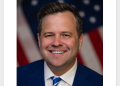
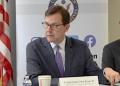
Yonkers Mayor Mike Spano testified in Albany on Feb. 11 at Joint Legislative Budget Hearing chaired by Assemblyman Gary Pretlow of Mount Vernon. Spano was one of several mayors testifying on how they’d like to see the legislature amend Gov. Hochul’s proposed 2026-2027 state budget, which calls for $260 billion in spending.
Spano called for fairness in the way state aid to education is distributed, saying that the city is being short-changed compared with funding some other cities receive from the state.
Spano pointed out that the state aid formula currently being used does not reflect the true cost of educating students in Yonkers.
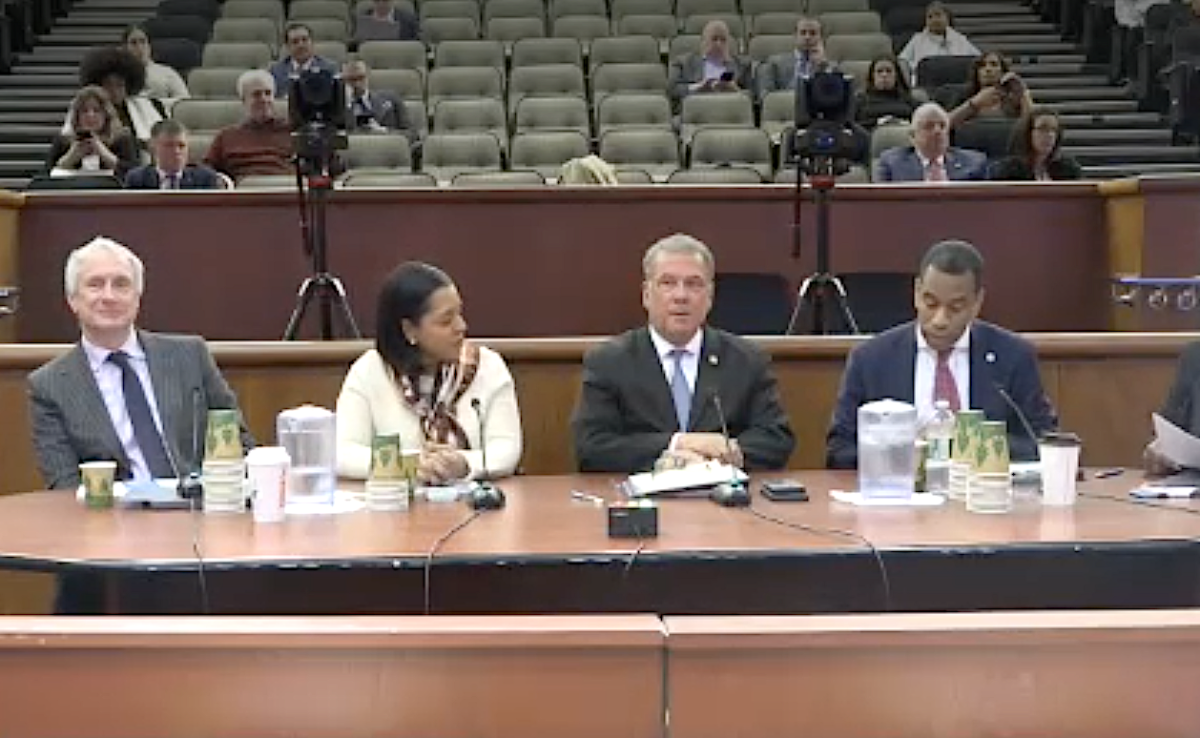
“Each and every year more than 60% of our property taxes go to schools and we contribute an awful lot in terms of our local dollars to education,” Spano said. “We’ve absorbed school deficits. We’ve combined departments. Our taxpayers are simply exhausted. We need you to fix the formula.”
The Yonkers City Council last May adopted a $1.54 billion budget for the 2025-2026 fiscal year. It includes school operating and debt service spending of $809.2 million.
Spano explained that Yonkers, in Westchester County, is put into an “upstate” cost index even though it’s really part of the New York City Metro area and faces its high costs rather than lower costs encountered in other parts of New York.
Spano said that if Yonkers received state aid at a rate reflecting its true costs of education it would be receiving nearly $50 million more in education aid from Albany each year.
“Our costs across the board, special education costs, are significantly higher. We have 74% of our kids living at or below the rate of poverty,” Spano said. “We have students that need a lot of remediation and we need to have those costs recognized. Transportation costs, both in terms of regular transportation and special needs education transportation … are huge burdens placed on the taxpayer.”

Spano said that cities including his are on the front lines of education, homelessness, failed immigration process, and food insecurity to name a few issues of the day.
“When the federal government can’t get it done or New York can’t get it done we have to. We have no choice but to get it done,” Spano said. “Please try to see state aid not as some giveaway but as real recognition of how you need to support us.”
Spano said when the state does not come through with the aid that’s needed he has to go to taxpayers to give more or must institute cuts to services.
“We’ve kept our head above water and done some wonderful things but at the end of the day the costs are enormous for us,” Spano said.
As examples he cited overall inflation, rising costs for health insurance for municipal employees and current interest rates that affect the cost of borrowing money for capital projects. He noted that a new school that cost $80 million to build a few years ago would today cost $200 million.
“We want to build a firehouse, repair a school, the interest rates are incredible,” Spano said.