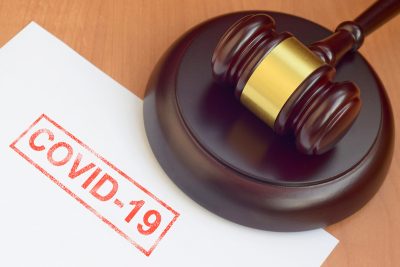
A New Rochelle man who stole $4.6 million in Covid-19 relief funds has been sentenced to prison for eight years.
U.S. District Judge Cathy Seibel also ordered Glenroy Walker, 67, to forfeit $855,940 in ill-gotten gains and to repay $4.6 million to the U.S. Small Business Administration, on Sept. 12 in White Plains federal court.
Walker and Howard Levy, of the Bronx, schemed from July 2020 to February 2022 to steal funds from the Paycheck Protection Plan, a loan program created to help small businesses survive economic calamity during the pandemic.
Funds had to be used for specific purposes, such as covering payroll, and if used correctly the loans could be forgiven.
Walker and Levy applied for more than a hundred loans totaling $14.7 million. Thirty-nine loans totaling $4.6 million were approved.
Walker’s job was primarily to recruit loan applicants. Levy created fake documents, such as bank statements, to support phony loan applications.
The men applied directly for some PPP loans and received kickbacks from people for whom they submitted phony applications.
Walker was arrested in 2023. He represented himself in court proceedings, with a standby attorney appointed by the court.
He was convicted in a four-day trial this past March of conspiracy, wire fraud, money laundering, engaging in a monetary transaction derived from unlawful activity, and aggravated identity theft.
Walker asked the judge to sentence him to time served, for the 12 months he had spent in detention before trial.
He described himself in a sentencing memorandum as a devoted husband, entrepreneur, community servant, lifelong church member, mentor and civic organizer who “prioritized social upliftment and public wellness.”
Walker, a Jamaican, also emphasized his status as an “indigenous sovereign maroon,” in reference to people of African descent who escaped slavery and formed independent communities in the Caribbean.
He denied committing any crimes, in the sentencing memo, and he challenged the legitimacy of the entire judicial process. He claimed, for example, that his standby attorney was ineffective, the jury was biased, and the case was riddled with judicial irregularities.
“Any sentence beyond time served, “he argued, “would be excessive, punitive, and unsupported by the principles of fairness and rehabilitation.”
Assistant prosecutors Jared D. Hoffman and Jeffrey C. Coffman countered in a sentencing memo that Walker’s memo is “untethered to reality.”
They recommended nine years in prison.
During the height of the pandemic, “while countless businesses were struggling to keep employees on the paryroll and their doors open,” they advised the judge, “the defendant exploited the crisis for personal gain.” Eventually, the government ran out of funds and eligible businesses got nothing.
Walker repeatedly challenged the court’s authority to govern him: citing his status as a member of the Maroon Nation, failing to appear in court or with Pretrial Services after his arrest; inundating the court with frivolous filings.
Unlike Levy, his co-conspirator who had been sentenced to five-and-a-half years in prison, the prosecutors said, “Walker has never accepted responsibility for his crimes, and he continues to deny any wrongdoing.”
On Sept. 17, Walker appealed the conviction and sentence.