Westchester County is testing solar-powered lighting at 14 Bee-Line bus stops in Ardsley, Bronxville, Elmsford, Greenburgh, Mount Kisco and Mount Vernon. The pilot program is designed to help determine whether the lighting improves safety and visibility for riders. The lights were installed by the county’s Department of Public Works and Transportation.
County Executive Ken Jenkins said, “This pilot program aims to make thoughtful improvements that help riders feel more secure while they wait for the bus. If these solar lights perform the way we expect, they will help guide future investments that strengthen the Bee-Line system for residents across Westchester.”
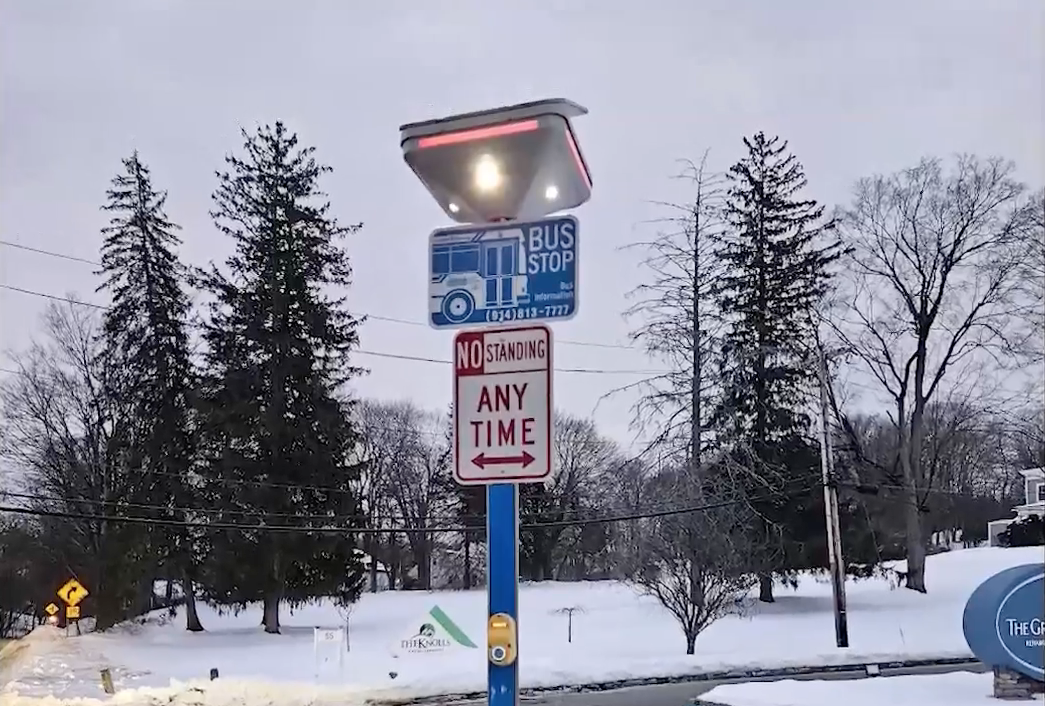
The solar lights are powered by batteries that are charged during daylight hours by solar cells. They are installed directly at bus stop locations and operate independently of the power grid. They turn on an off according to the intensity of ambient light in the area.
County officials will monitor performance, durability and rider feedback to determine whether the program should be expanded.
The county’s Director of Surface Transportation Mike Swee said the units are fairly easy to install.
“They just pop on top of a bus stop pole and they were installed about a month ago, right before Mother Nature decided to turn Westchester into Siberia,” Swee said. “On the bright side, it really gives us a good test environment with limited sunshine, extreme cold and ice. We’re really going to see how these things perform.”

The county’s Director of Energy Conservation Pete McCart described the program as a classic “win, win, win, win” scenario.
“Most obvious is that solar lighting eliminates electric costs,” McCartt said. “We avoid significant installation costs. Running electrical service to a bus shelter often requires trenching, conduit installation, permits, inspection and coordination with the utility company as well as the property owner, whether it’s the county or whomever. In most cases traditional infrastructure costs more than the lighting itself.”
McCartt said that maintenance costs are low and predictable.
“Modern solar systems last for about 50,000 hours (of operation) or more,” McCartt said. “There are fewer wiring components and fewer failure points compared with grid systems. Well-lit shelters improve visibility and rider safety. Lighting deters vandalism of course and reduces property damage. It can lower liability risk and potentially reduce emergency response incidents. It aligns fiscal responsibility with sustainability.”