Although they didn’t state the amount of money that was collected during the month of June, Gov. Kathy Hochul and the Metropolitan Transportation Authority (MTA) on July 5 declared that the Congestion Pricing tolls that went into effect Jan. 5 are on target to reach $500 million in collections for 2025 as had been projected. Though the end of May, the tolls had brought in $219 million to help support the MTA’s capital spending program.
Hochul and the MTA tied increases in business activity in Manhattan’s Central Business District (CBD) to the Congestion Pricing tolls. They cited fewer cars coming into the city, less congestion on city streets and improvements in mass transit operations.
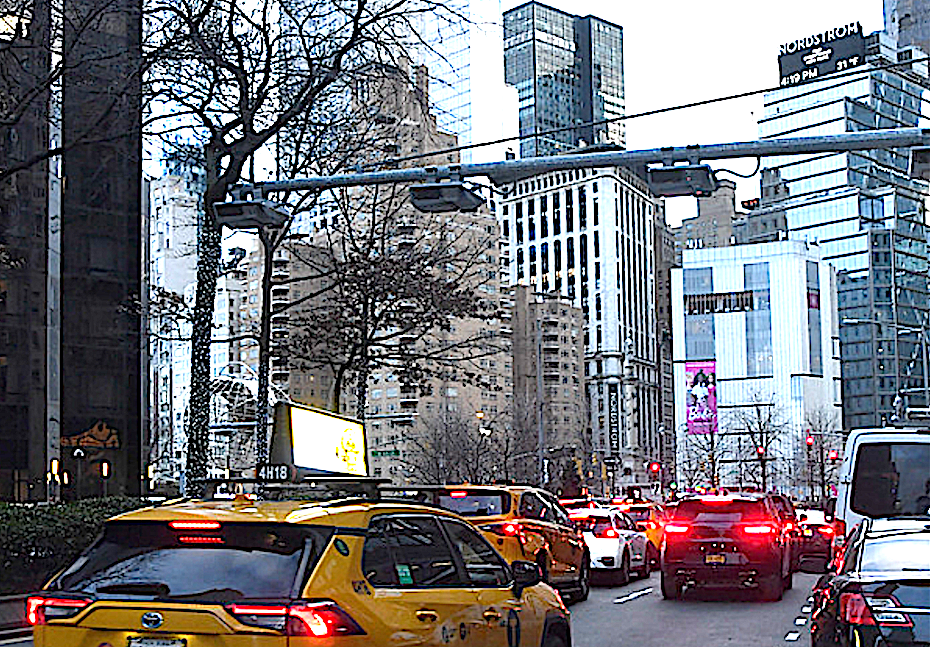
The number of vehicles entering the CBD is down by 11% since congestion pricing started, according to Hochul and the MTA. They say that every day 67,000 fewer vehicles enter the CBD, and since the program started, more than 10 million fewer vehicles have entered the CBD below 60th Street compared with last year.
Hochul and the MTA cited a report from the Regional Plan Association and the traffic app Waze showing traffic delays down by 25% in the CBD and across the metropolitan region by 9%. Delays are also down by 10% in the Bronx and 14% in parts of Bergen County, New Jersey. Time lost to traffic jams is down 12%. Travel times on river crossings have decreased by 6% to as much as 42% in 2025 compared with 2024. In the Holland Tunnel, rush hour delays are down by 65% since congestion pricing began, according to the report.
Hochul and the MTA said that business is doing better in the CBD as a result of Congestion Pricing. They pointed out that Broadway just posted its biggest season ever with $1.9 billion in ticket sales; retail sales are on track to be up $900 million in 2025 compared with 2024; hotel occupancy was 87% in April 2025 compared with 85% in April 2024; commercial office leasing in the first quarter of 2025 was up 11% compared with 2024.
“Six months in, it’s clear: congestion pricing has been a huge success, making life in New York better,” Hochul said. “In New York, we dare to do big things, and this program represents just that. We’ve also fended off five months of unlawful attempts from the federal government to unwind this successful program and will keep fighting – and winning – in the courts. The (Congestion Pricing) cameras are staying on.”
The Trump Administration’s Department of Transportation had issued a May 28 deadline for the Congestion Pricing tolls to be ended with a threat to withhold federal highway funds from the city and state if the deadline was not met. The MTA filed a lawsuit in federal court to oppose the move. U.S. District Judge Lewis Liman issued an order blocking the federal government from taking its threatened action while the lawsuit is pending.
Hochul and the MTA said that since Congestion Pricing went into effect, ridership on Metro-North has increased by 6% and the railroad’s on-time performance has been 98%. They also said that other transit operations including the New York City buses and subways have seen increased ridership and better performance since introduction of the tolls.