New York State Comptroller Thomas DiNapoli says in a new report that the trend remains unbroken and New York state agency overtime costs increased 10.2% in 2024 for a total of $1.3 billion. DiNapoli’s report aloe found that the number of overtime hours increased by 7.8%, or 1.8 million hours higher than the previous year.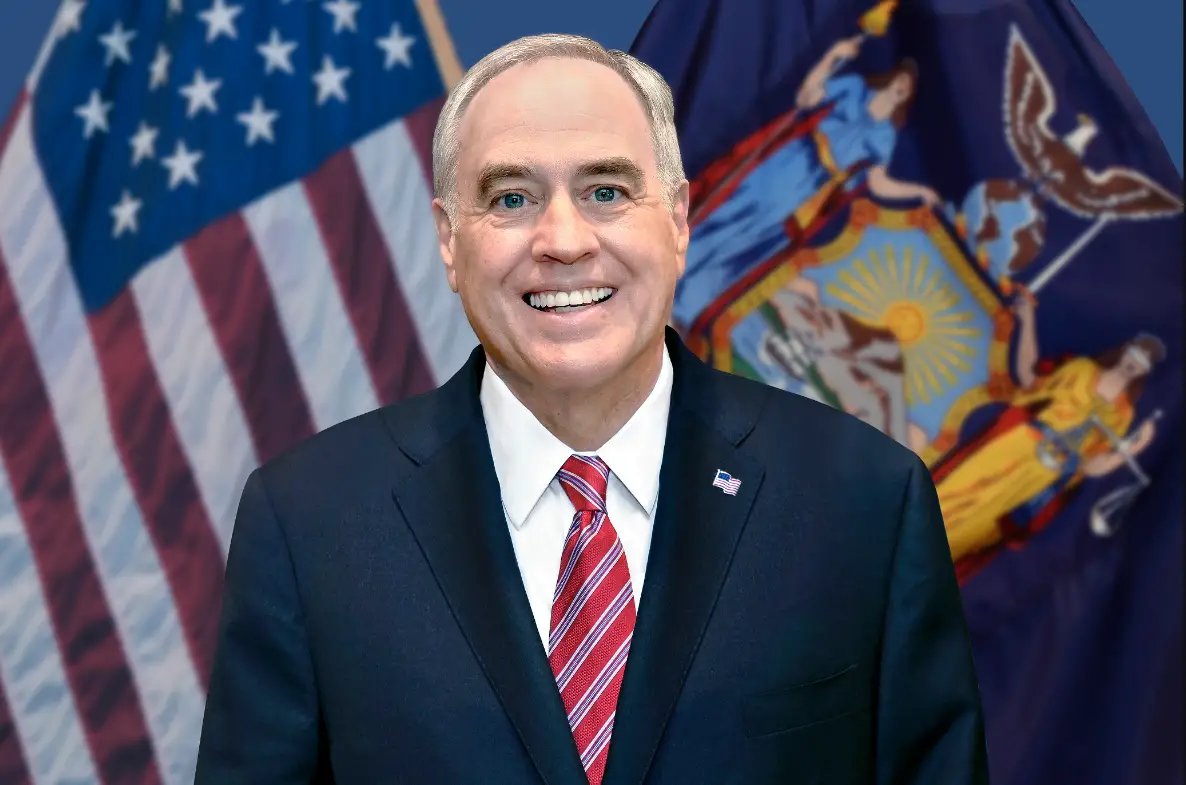
New York State Comptroller Thomas DiNapoli.
The report showed that after a long-term decrease in staffing levels, the size of the state workforce, not including SUNY (State University of New York) and CUNY (City University of New York), grew from 2023 by 3.7% in 2024, or 5,330 positions, to an average annual total of 151,309. This was the second year in a row the workforce increased, but headcount is still below where it was in 2019 and markedly lower than 15 years ago when it was more than 177,000.
On the matter of overtime, DiNapoli said, “New York needs to continue to attract and retain a range of diverse employees, and agencies need to ensure the use of overtime hours is justified and services are delivered safely and effectively for residents.”
The Department of Corrections and Community Supervision (Corrections), the Office for People With Developmental Disabilities (OPWDD), and the Office of Mental Health (Mental Health) comprised 23% of the workforce but accounted for 66.7% of the overtime hours and 64.5% of the overtime earnings logged by all state agencies in 2024.
DiNapoli found that along with the increase of almost 1.3 million hours at Corrections, there were major rises in the number of hours at the Department of Transportation (241,000), State University of New York (226,000), Division of State Police (190,000), Mental Health (107,200), the Unified Court System (101,000) and the Office of Children and Family Services (98,500).
DiNapoli reported that last year state payroll costs were $21 billion. Overtime earnings comprised 6.3% of total payroll spending in 2024, higher than the 5.4% average from 2015 through 2023. In 2015, overtime cost the state $716 while last year it had grown to $1.3 billion in 2024, or an 8% average annual increase.