“When good Americans die, they go to Paris,” Oscar Wilde famously quipped, although over the summer months he might have reworked it: “When especially good Americans die, they go to the Riviera.”
Because, come the summer, the French Riviera, made fashionable by the British aristocracy toward the end of the 19th century – a popularity consolidated by well-heeled, well-connected and occasionally charmingly dissolute Americans in the Roaring ’20s – really is heaven.
But with around 150 miles of beaches and coastline, the next question is where to go – or perhaps, where to base yourself?
My answer to that is Antibes, which lies between Nice, capital of the Côte d’Azur and Cannes. Neither as urban as the former nor as flash as the latter, it’s the perfect size resort. And it’s a gem.
Antibes has a 16th-century fort and a magnificent port, a beautiful Promenade du Soleil and graceful public gardens. And culturally, Antibes punches well above its weight, with a rich offering that includes superb musical events, artist trails and splendid museums – one of which is the town’s highly regarded Picasso Museum.
Antibes also has villas and mansions galore, many of them (or their gardens) open to the public, like the Villa Eilenroc – once owned by American businessman Louis-Dudley Beaumont. Or the sienna-colored castle, Villa la Vigie, once owned by the American gas magnate and philanthropist Frank Jay Gould and his wife, Florence. (His local claim to fame was that he and his siblings inherited Lyndhurst in Tarrytown from their father, railroad tycoon Jay Gould.) And then there’s the glorious, all-white Château des Juan-les-Pins, built around 1860, once the residence of Queen Emilie of Saxony and later the home of Rudolf Valentino.
Yes, you may well sigh.
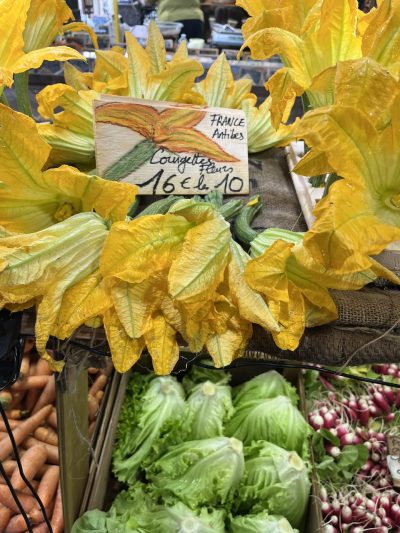
Antibes–Juan–Les–Pins, as the town is correctly styled, incorporating its smaller but busier neighbor “Juan,” also has excellent restaurants and stores – from big name fashion houses to charming independents – as well as one of the best outdoor food markets on the Riviera, and yet it improbably retains an almost village-y vibe.
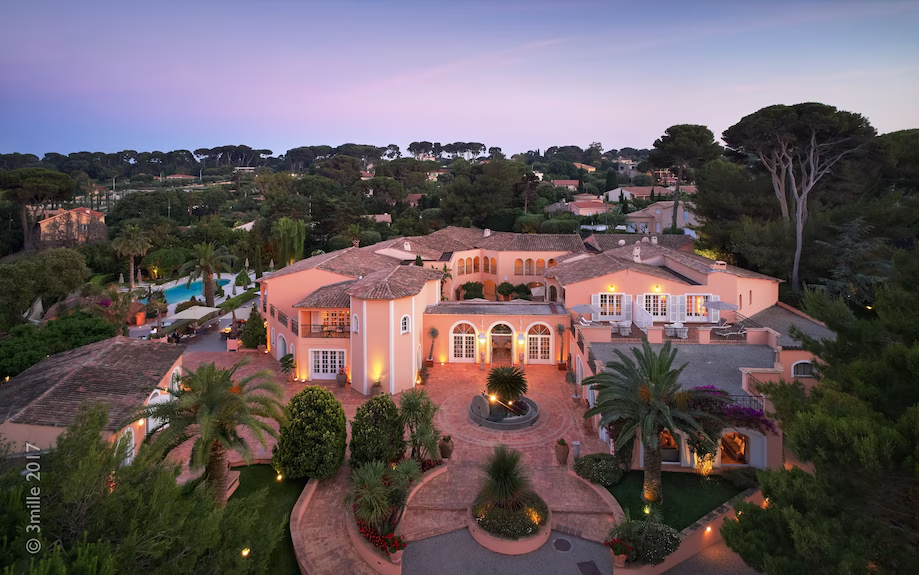
And as if all of this were not enough, Antibes has a beautiful new hotel, Villa Miraé, open just a year and a member of the prestigious Relais & Châteaux association. It’s located in Cap d’Antibes, an essentially calm, excusive promontory, which has a kind of discreet, King’s Point, Long Island, feel to it, but with palm trees, bougainvillea, plumbago and agapanthus replacing Long Island’s, maples, ferns and black-eyed Susans.

The hotel was celebrating its first birthday on the evening I arrived, and so was en fête, which is to say gently partying. This came as a surprise to me, but a delightful one. A jazz band played Harry Styles and Ed Sheeran numbers in a kind of slow-tempo smooch, while waiters circulated among the well-dressed guests, making figures of eight with their trays of mini croque monsieurs and strips of pissaladière, the classic Niçois preparation of tomato and anchovy on flatbread. Bartenders poured glasses of Laurent-Perrier Brut Champagne from magnums, and celebrity chef Mauro Colagreco, whose 3-Michelin star restaurant Mirazur is along the coast in Menton, and who is taking over the restaurants at Villa Miraé, introduced his kitchen brigade. It was a night to remember and a great start to my stay.
Next morning, breakfast in the Villa Miraé’s courtyard was quite the sensory experience, with buttery baby croissants, superb jams, yogurt from cows which I was told grazed nearby, omelettes made to order on the terrace with eggs from happy hens – and beautiful fruit, all just coming to season. Almost everything was local because, in the South of France, “local” tends to mean the best there is.
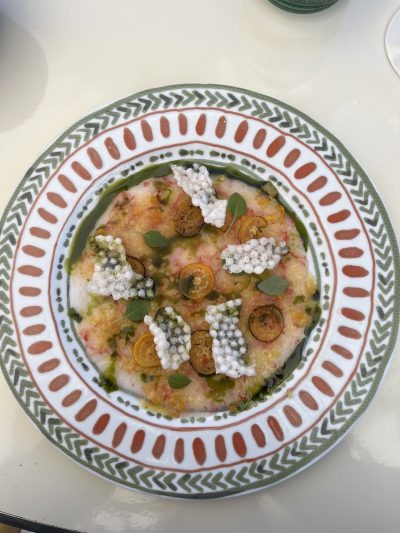
But breakfast was only a prelude to what was to come. At lunch at the hotel’s Miraé terrace restaurant, carpaccio of gamberoni, spotlighting raw prawns, followed by a slow cooked shoulder of lamb, perfumed with the herbs of Provence, were the standouts, while at dinner at Amarines, the hotel’s “gastronomic” restaurant, wonderful local fish and shellfish, along with Colagreco’s signature “tiger” veal – from a rare breed of Corsican cattle – took center stage.
Villa Miraé’s swimming pool isn’t huge, and therein lies its beauty – just the right amount of space you need between your own luxurious chaise longue and your neighbor’s but still an intimate, all-pervading pool ambiance. And for beach lovers, there is a private deck across the street, with beach access, (although it should be noted that the area behind the beach is currently undergoing a major redevelopment). The hotel also has a small wellness center, located in a cabin in the grounds.
Did I mention the guest rooms? There are 35 of them, each with its own private terrace. I was hardly ever in my mine, which was a pity, because it was beautifully appointed, with its own dressing room, sitting area and, yes, a generously-sized terrace. Using frescoes and mosaics inspired by the Azurean heritage and motifs paying homage to Jean Cocteau and Henri Matisse, French-born designer Oscar Lucien Ono has done a wonderful job, not only in the guest rooms and suites but throughout the entire property.
I found Villa Miraé to be thoroughly friendly, sophisticated certainly but subtle and restrained. But, of course, if it’s high-octane glamour you’re after (and if you’re happy to pay an arm and a leg for a glass of Provençal wine or a gin and tonic, in contrast to Villa Miraé’s relatively modest prices), you can always visit the nearby world-famous Hôtel du Cap-Eden-Roc, which was the inspiration for Gausse’s Hotel des Étrangers in F. Scott Fitzgerald’s “Tender is the Night.”
Then again, no matter where you stay, or dine, or simply hang out, what really survives in Antibes is not glamour exactly but the memory of people who once believed in it completely. And that is certainly good enough for me.

Jeremy Wayne is a travel adviser with Superior Travel of New York. Contact him at jeremy@superiortravel.com.