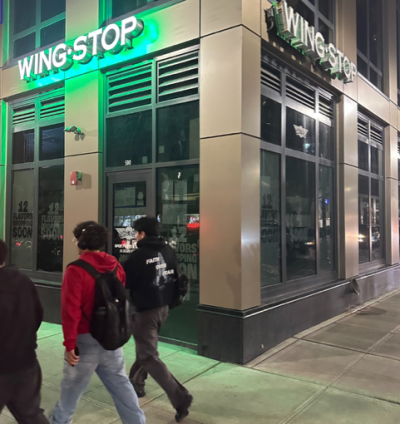
“We’re not in the wing business. We’re in the flavor business,” said Spencer Rubin and Avanka Kannangara, who together have 30 fried chicken franchises in the tristate area out of Wingstop’s approximately 3,000 branches nationwide.
“Eye on Small Business” connected with the pair via email to find out mor, and was particularly struck with Rubin’s answer to the question of whether adding additional franchises – their latest outlet just opened in New Rochelle – becomes progressively easier.
“The honest answer,” said Rubin, “is that the complexity scales with the portfolio. You get better at managing it, but you never stop earning it.”
Spencer and Avanka, thank you so much for speaking with the Westfair Business Journal. First, let me ask you what made you think New Rochelle was right for your new Wingstop location, and what factors convinced you the community would respond well to the brand?
“New Rochelle checked every box for us. Strong foot traffic, a dense and diverse population and a real appetite for the brand. Wingstop has incredible consumer awareness, and we knew the community would respond. It was really a matter of finding the right site and getting to work.”
We understand the New Rochelle Chamber of Commerce has been supportive during the process. Tell us about the kind of assistance you received, and what advice you would give prospective franchisees about working with local chambers, councils or economic development organizations for support?
“The New Rochelle Chamber was genuinely helpful in connecting us with the right people, from economic development contacts to local stakeholders who cared about the project. For any prospective franchisee, our advice is simple: Engage early. Chambers exist to help businesses succeed, and that relationship is worth far more than most people realize.”
With Wingstops in Port Chester and White Plains in Westchester County and Bridgeport and Danbury in Fairfield County, do either of you have personal ties to the area?
“Absolutely. We’ve always wanted to be part of the community’s growth, not just do business in it. Westchester feels like home.”
As we understand it, you operate 30 Wingstop franchises under the “Eastwing” umbrella. Tell us about Eastwing itself and any other businesses perhaps that operate under that banner?
“Eastwing is our franchisee operating company, built specifically to grow a best-in-class Wingstop portfolio. We’re focused exclusively on Wingstop, operating across several markets in New York and New England. The brand is all we do, and that focus is intentional.”
What about your business partnership: Are you equal franchise owners, and how do you divide responsibilities between you?
“Just to clarify, we are truly employees of the business. I (Spencer) am the CEO, leading growth strategy and development, Avanka is our senior vice president of operations and leads all people and operations. The roles are complementary, and that balance is a big part of why the business runs well.”
For readers who may be curious about franchising themselves, what kind of financial investment is typically involved in opening, say, a first Wingstop location, and how long does it realistically take before owners can expect to see a return?
“We’re not in a position to share specific numbers.”
How hands-on are you in the day-to-day operation of the restaurants? And do franchise owners generally work directly in the business, or can they take more of an investor or management role?
“Very hands-on. As you grow, you build a team you trust, and the operator’s role shifts toward leadership and culture-building rather than daily execution. But we’re never truly out of the business.”
As a multiple franchisee, with big plans for expanding Wingstop outlets over the next few years, presumably taking on new franchises becomes easier in all respects. Would you comment on this “rapid growth” aspect of your business, please?
“In some ways, yes. You have systems; you have a team; and you have a track record that helps with everything from landlords to lenders. But each new location has its own challenges. The honest answer is that the complexity scales with the portfolio. You get better at managing it, but you never stop earning it.”