With a president-elect of the United States who watches the S & P 500 the way some of us watch our weight and/or credit score – as a measure of success – what affect will businesses have on the new Trump Administration’s approach to the environment?
“It’s a fascinating question,” said Jason J. Czarnezki, who wears multiple hats at Pace University’s Elisabeth Haub School of Law in White Plains as its Gilbert and Sarah Kerlin distinguished professor of environmental law; associate dean of environmental law programs and strategic initiatives; faculty director of the Sustainable Business Law Hub; and inaugural international law faculty scholar. “We don’t know how businesses will influence him.”
Recently, ExxonMobil CEO Darren Woods tried to do just that, raising eyebrows – and environmentalists’ hopes – when he asked President-elect Donald J. Trump not to withdraw, again, from the Paris Agreement, a legally binding 2015 international treaty designed to limit global warming.
A spokesman for ExxonMobil — the largest U.S.-based oil and gas company, which supports the agreement — said: “A second U.S. exit from the Paris Climate Agreement would have profound implications for the country’s efforts to reduce its own emissions and for global efforts to combat climate change.” (After Trump pulled the nation out of the agreement in his first administration, the U.S. rejoined it under President Joe Biden.)
At Cop 29, the United Nations’ November climate summit in Baku, Azerbaijan, Woods added that a consistent, pragmatic environmental policy is essential not only for the planet but for the business community: “I don’t think the stops and starts are good for businesses. It’s extremely inefficient and creates a lot of uncertainty.”
Might not other companies join Exxon in urging Trump to stay in the treaty, if only out of their own economic interests?
“In relation to the Paris Agreement, I do agree that many gas and oil companies would want a seat at that table,” Czarnezki said. “But I expect the Trump Administration will pull out of the Paris Agreement for political reasons as he already promised to do so.”
The relationship among the environment, the business community and the incoming administration will be a complex one. On the one hand, many businesses are champing at the bit for Trump’s proposed deregulation blitz. On the other, despite the financial challenges of implementing them, companies have taken advantage of green incentives – grants, rebates and tax credits, including those under the Inflation Reduction Act (IRA) – that may now dry up.
Adding another layer is Trump’s close relationship with Elon Musk – founder of electric car company Tesla, who will head, with Vivek Ramaswamy, the new Department of Government Efficiency (DOGE). (The informal nature of Musk’s position will enable him to retain leadership of Tesla, social media platform X and rocket company SpaceX, which critics said is a conflict of interest.) Here, Czarnezki added, look for the deregulation of driverless cars to increase the demand for electric vehicles (EVs) and thus benefit Tesla.
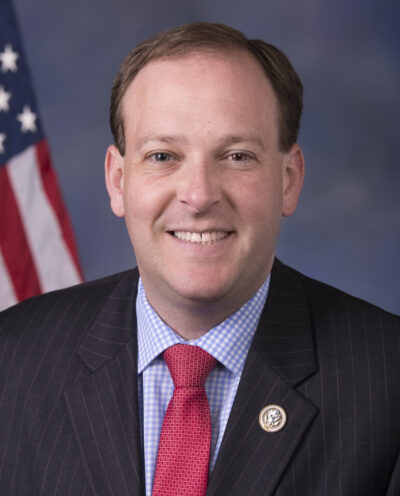
Compounding the complexity and uncertainty of the new administration’s environmental stance is what Czarnezki called the “mixed record” of Trump’s pick to administer the Environmental Protection Agency (EPA) – Lee Zeldin, who represented much of Long Island as a congressman from 2015 to ’23 before running unsuccessfully for New York state governor against Kathy Hochul. While Zeldin has been tasked with streamlining regulations and does not have environmental experience – he did not sit on congressional committees with environmental oversight – he does have a pro-environment voting record on some issues. These include the cleanup of the Long Island Sound, opposition to offshore drilling, co-sponsorship of the Carbon Capture Improvement Act to create the necessary carbon-capture technology and support for renewable energy in the forms of extending solar investment tax credits and researching offshore wind potential.
However, he has also voted against the Clean Air Act and failed to support expanded protections for fish. In his run against Hochul – in which he garnered the highest percentage of the vote for a Republican gubernatorial nominee since 2002 – he vowed to rescind the ban on fracking, the extraction of oil and natural gas from deep underground rock formations.
Another Trump cabinet pick who would affect environmental policy as secretary of the interior and energy czar, North Dakota Gov. Doug Burgum, also has a mixed record. He signed into law his state’s first Department of Environmental Quality and set a goal for the state to stop adding carbon dioxide into the atmosphere by 2030. But he also supports Trump’s plan to open federal lands and waters for oil and gas drilling as well as a project that would trap carbon emissions from 57 Midwestern ethanol plants in an $8 billion North Dakota pipeline that many of his constituents oppose.
With the federal government entirely in Republican control and a conservative U.S. Supreme Court, states can play a role as a counterweight. On July 18, 2019, New York state enacted the Climate Leadership and Community Protection Act (CLCPA) to reduce economy-wide greenhouse gas emissions 40% by 2030 and no less than 85% by 2050 from 1990 levels. Connecticut has passed several laws designed to achieve its greenhouse gas-mitigation goals.
States like California and New York – which have the first and third largest economies in the nation and the fifth and 10th largest in the world, respectively – can have an affect with carbon-neutral emissions, Czarnezki said. But, he added, “there are limits to what states can do.
“Some states will have cleaner water and air,” he said. “It will come down to the haves and have nots.
Becoming environmental activists at a young age – a very young age
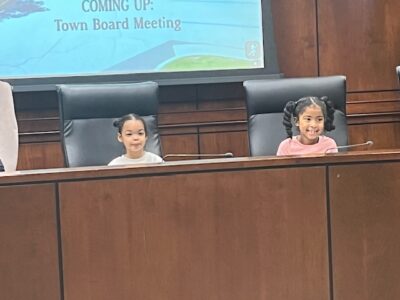
Move over, Greta Thunberg. Make room for 6-year-old Zoe and her 4-year-old cousin Hope.
Over a month ago, the two wrote to Greenburgh Town Supervisor Paul Feiner to protest the town removing some trees from Bob Gold Parklet on East Hartsdale Avenue.
Feiner invited both to attend a town board meeting to highlight the importance of trees in the community. They made a presentation to the town board on Monday, Dec. 2, when Joe Lucasey, commissioner of Parks & Recreation, responded that the trees had to come down to give the remaining trees more room to grow. (An arborist who has worked for the New York Botanical Garden in the Bronx seconded the decision.) Next year, another tree and more bushes will be added. But the seeds of community engagement have already been sown.
“When Zoe and Hope apply to college years from now, they will be able to add to their college application that they started making a positive difference in the community very early in their lives – probably earlier than any other applicant,” wrote Feiner. “Zoe and Hope are learning at a very early age the importance of engaging with their elected officials and are role models for other young people.”