The Federal Reserve has cut interest rates by 0.25% (one-quarter percent). In an announcement this afternoon the Fed’s Open Market Committee said it acted because indicators suggest that growth of economic activity moderated in the first half of the year. Job gains have slowed, and the unemployment rate has edged up but remains low. Inflation has moved up and remains somewhat elevated, the Fed said.
Some observers suggested that the Fed might institute a larger rate cut because of pressure from President Trump while others felt that it would resist the political pressure, which has been accompanied by efforts by Trump to gain control over what was designed to be an independent board.
“In assessing the appropriate stance of monetary policy, the Committee will continue to monitor the implications of incoming information for the economic outlook,” the Fed said. “The Committee would be prepared to adjust the stance of monetary policy as appropriate if risks emerge that could impede the attainment of the Committee’s goals. The Committee’s assessments will take into account a wide range of information, including readings on labor market conditions, inflation pressures and inflation expectations, and financial and international developments.”
Voting against the cut was Trump appointee Stephen I. Miran, who preferred to lower the target range for the federal funds rate by 1/2 percentage point at this meeting.
The Fed signaled that there may be two additional rate cuts this year.
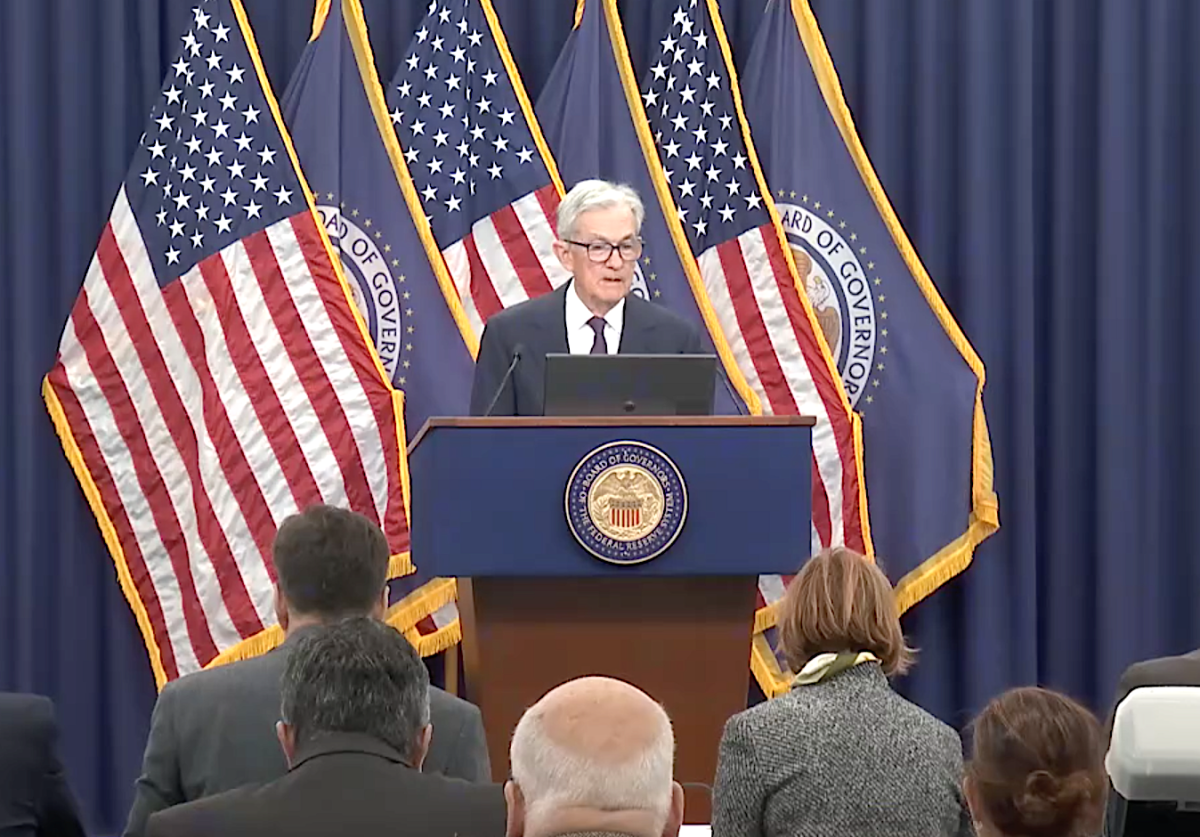
At a news conference following release on the interest rate decision, Fed Chairman Jerome Powell said that the Fed still is concerned that inflation may increase even though projections show it will be at 3% this year, 2.6% next year and 2.1% the following year. Powell noted that the housing sector remains weak.
Powell did not comment on Trump’s pressure other than saying the Fed remains committed to its economic goals. Powell said that a good deal of the recent economic slowing likely reflects a decline in the growth of the labor force due to lower immigration and lower labor force participation.
“The recent pace of job creation appears to be below the break-even rate needed to hold the unemployment rate constant,” Powell said. “In addition, wage growth has continued to moderate while still outpacing inflation. Overall, the market slowing in both the supply of and demand for workers is unusual. Inflation has eased significantly from its highs in mid-2022, but remains somewhat elevated relative to our 2% longer-run goal.”