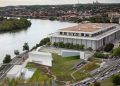
Northern Westchester Hospital (NWH), a Northwell Health Hospital Association facility at 400 E. Main St. in Mount Kisco, is seeking approval from the Village of Mount Kisco to add a heliport to the hospital’s roof.
Attorney Leslie J. Snyder of the Tarrytown-based law firm Snyder & Snyder, LLP explained that NWH “routinely receives patients requiring time-sensitive treatment for trauma, stroke, cardiac, and other emergency conditions where every minute counts.”
She said that currently, helicopters must land at a public community park one-half mile from the hospital, requiring coordination with local police and fire departments and EMS agencies for patient transfer.
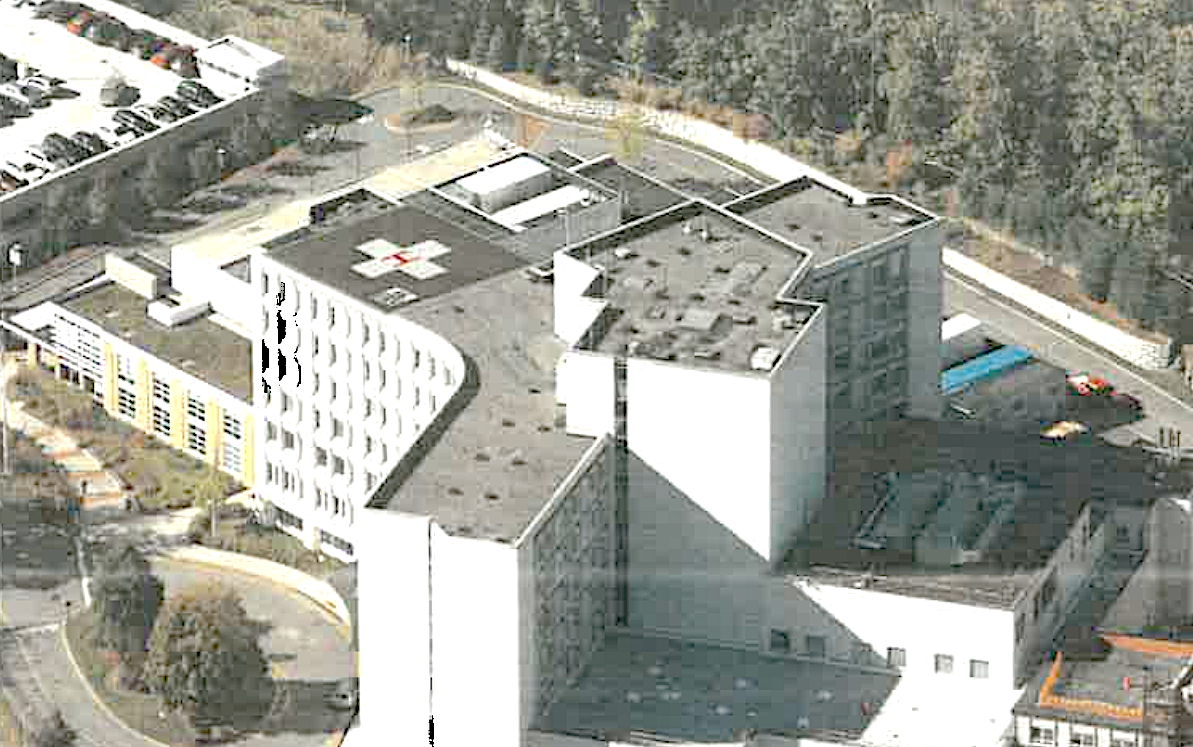
“This additional transfer introduces delay, a use of community resources, and operational complexity for patients requiring urgent care,” Snyder said. “With this rooftop helipad, NWH will eliminate delay and use of community resources, and enhance its ability to serve critically ill patients.”
Snyder noted that both the Mount Kisco Volunteer Fire Department and the Mount Kisco Volunteer Ambulance Corps are in support of the heliport.
Derek Anderson, president of NWH, said, “Based on historical helicopter utilization for medical transport and the continued growth of clinical services at Northern Westchester Hospital, we estimate approximately 12 flights per year. While past activity at Northern Westchester Hospital for the last three years averaged roughly four flights annually, it is reasonable to anticipate an increase as we continue to expand our life-saving clinical programs that serve our community and surrounding regions.”
Anderson emphasized that 12 flights per year is merely an estimate, and the number may increase over the years with the growth of the hospital and the needs of the community. He expects that adding a heliport on the roof of the hospital would improve patient survival and positive outcomes while enhancing community safety by freeing up resources currently needed for landing at ground level.
Architect John McGuire of McGuire Group Architects in Melville said that the helipad would have some lights that are controlled by the pilots when the helipad is active, and lights that are photocell-controlled and are activated automatically at night.
There would be perimeter LED lights along the outer edge of the helipad and the ramp down to the building entrance. There are also would be four lights aimed toward the center of the landing pad to illuminate the landing area. Those lights would be pilot-controlled through radio signals and would be visible only from above the helipad and would not be visible from any surrounding structures or the adjacent topography.
There also would be red LED obstruction lights as required by the Federal Aviation Administration. Four of the obstruction lights would be installed on the edge of the adjacent elevator machine room roof. There also would be a light inside of the wind cone, a device that is on a swivel and points into the wind to provide a visual indication of wind direction and speed. In addition, a rotating beacon would be installed on the elevator machine room roof. Rotating beacons, common to airports, allow visual identification of a landing facility while pilots still are some distance away.