The City of Kingston has released the draft of a plan that identifies goals for redeveloping a 471-acre area that runs along the Broadway corridor in the city’s Midtown section. Titled “Midtown Thriving,” the plan was prepared by the nonprofit organization Hudson Valley Pattern for Progress using a $238,559 Brownfield Opportunity Area grant from the New York State Department of State.
Kingston’s Mayor Steven Noble said that a public meeting is planned for Jan. 14 at City Hall to discuss the plan.
“We are proud to release this plan which was created with robust community engagement, and we feel represents the vision of the community,” Noble said. “Working with the public and with our partners at Pattern for Progress, we worked to create a plan that identifies key redevelopment goals with the aim of revitalizing underutilized parcels while moving Midtown toward equitable and environmentally responsible mixed-use and walkable infill development.”
The plan covers topics that include population and demographic trends, economic development, housing, transportation, and infrastructure. It includes policy recommendations and an implementation strategy.
Pattern for Progress CEO Adam Bosch said the organization “was honored to help create a plan for longtime vacant and underutilized sites that can be redeveloped to better serve the Midtown community. Working together, Pattern and Kingston have developed a community-driven roadmap for putting dormant properties back to use in ways that strengthen connectivity, affordability, and vibrancy in the Midtown.”
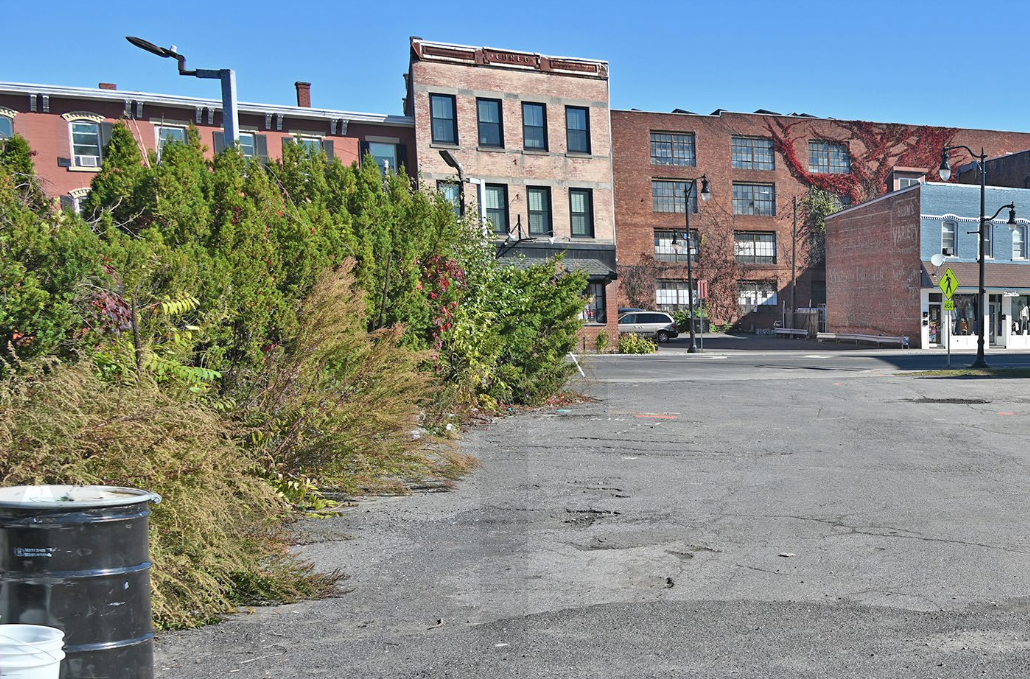
The plan says that Midtown Kingston contains the highest number of known and suspected brownfields in Ulster County. It says that the contaminated sites relate to the city’s past industrial activity.
“Brownfields in Midtown are the former sites of industry and manufacturing that once fueled Kingston’s economy,” the draft report says. “By the late 1800s, Midtown had become a hub of production, supported by the railroads that transported goods in and out of the neighborhood. Historic fire insurance maps from the late 1800s and 1950s reveal the neighborhood’s industrial past: foundries, gasworks, machine shops, factories, lumber and coal yards, textile mills, and auto repair facilities. Manufacturing expanded through both World Wars, but as industries declined and the region’s economy changed in the second half of the 20th century, Midtown was left with a scattering of vacant and potentially contaminated sites.”
The report says that the sites in Midtown Kingston “have the potential to support significant new residential, commercial space, or light industrial space, affordable housing, community centers, or small business spaces, and could integrate green infrastructure and public amenities.”
The draft report notes that construction of new multifamily units in Kingston is beginning to increase. It says that as as of 2024, the rental market in Kingston included about 5,300 units. About 320 new rental units were built during 2023-2024, with 220 of those units already leased during that period. By 2029, the city is aiming to approve 1,000 new units. Developments that are currently under construction or in the development pipeline as of early 2025 included nearly 200 units in study area and over 300 units in other areas of the city.
The draft report emphasizes reality when it says, “Despite the presence of numerous organizations and initiatives aimed at creating opportunities in Midtown and Kingston residents and small business owners in Midtown face multiple barriers to economic stability and growth, including limited access to capital, rising costs, and a shortage of skilled local labor. … An all-hands-on-deck effort should be made to increase local community access to real estate development and ownership opportunities.”