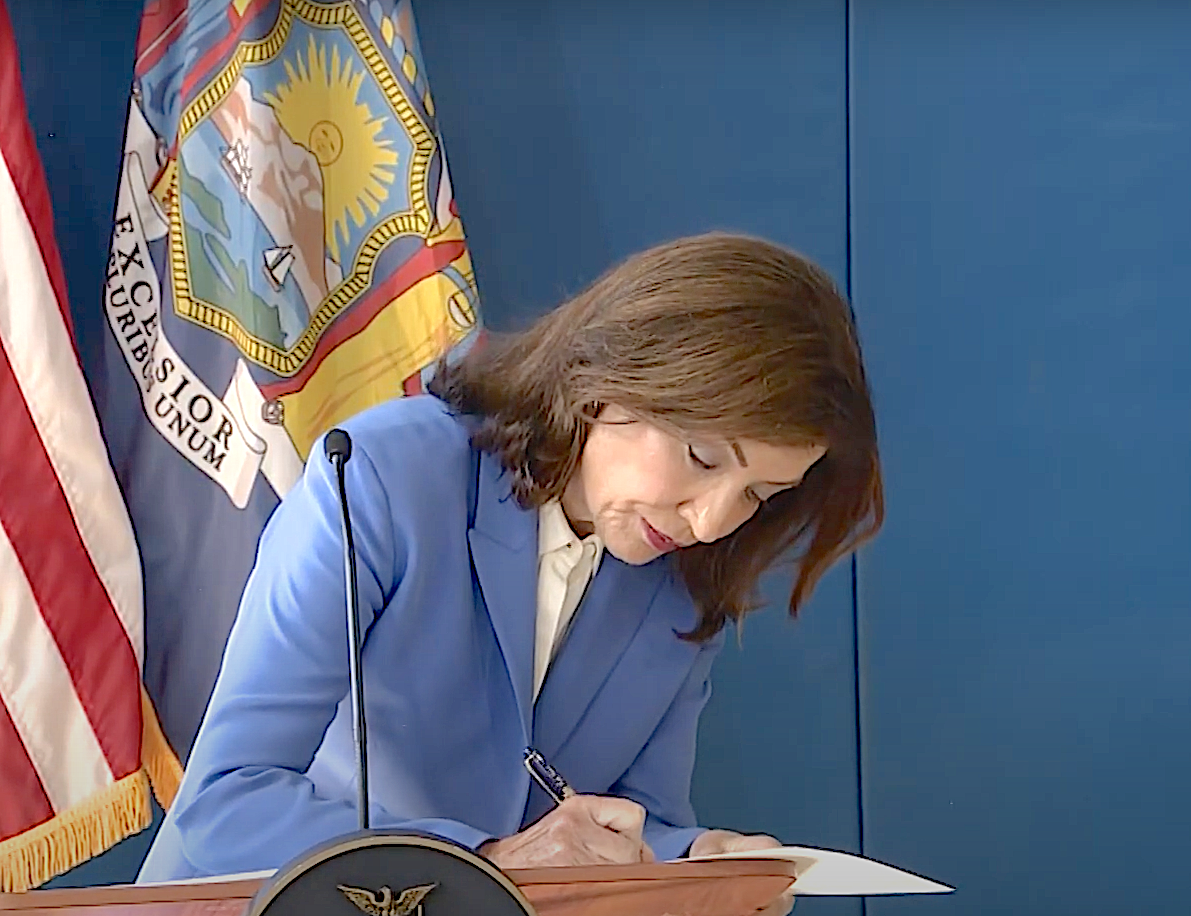
Gov. Kathy Hochul on May 27 signed into law what her office describes as the most significant reforms of the State Environmental Quality Review Act (SEQRA) since its passage in 1975. The reforms are part of the new state budget and have been branded as the “Let Them Build” agenda.
“Red tape and duplicative reviews have stopped New York from doing the very building that made us the envy of the world, making our housing more expensive and our infrastructure outdated – that ends today,” Hochul said. “By removing these barriers and empowering communities across the state, we are working to drive down costs of critical housing and infrastructure and sending a simple message: now is the time to build.”
In part because of the extensive and expensive environmental reviews required under SEQRA housing and infrastructure projects can take as much as 56% longer in New York state to get from concept to groundbreaking compared with some other states.
One reform signed into law by Hochul establishes a two-year timeline to complete an environmental impact statement when one is required, creating clear project schedules and faster decisions. For categories of housing and infrastructure projects consistently found not to have any significant environmental impact various specific studies can be dispensed with. Full environmental reviews still will be required for projects in New York City of more than 250 units citywide and more than 500 units within medium-density and high-density areas. In urbanized areas outside of New York City, projects of more than 300 units would require a SEQRA review. In non-urbanized areas, projects with more than 100 housing units would need a full review as would projects with more than 20 units in areas that do not have zoning.
There are SEQRA review exemptions for certain categories of projects including clean water infrastructure, public parks and trails, green infrastructure and public schools within New York City.
To qualify for reduced SEQRA review requirements housing projects must be on previously disturbed land and connected upon occupancy to existing water and sewer systems. The reforms to SEQRA do not supersede environmental requirements, permitting or local zoning.
Hochul had pointed to studies showing that detailed and lengthy SEQRA reviews could increase the cost of building housing by $82,000 per unit in New York City, adding up to $8 million in additional costs for a 100-unit development. She had said that by eliminating duplicative reviews, “Let Them Build” will get projects from the planning process to the construction site faster and make it easier and more affordable for new homes to be built across the state.