Since the bodies of Oscar-winning actor Gene Hackman and his wife, classical pianist Betsy Arakawa, were discovered in their Sante Fe, New Mexico, home on Feb. 26, we have learned a a great deal about the rodent-spreading hantavirus that took her life, probably around Feb. 10. But we’ve also reconsidered the crucial role of caregiving, as she was the caregiver for her husband, who died a week later of heart disease and Alzheimer’s.
According to a recent valuation study conducted by Columbia University Mailman School of Public Health and sponsored by Otsuka America Pharmaceutical Inc., caregivers in the U.S. perform the equivalent of an estimated $873.5 billion worth of labor each year — or 3.2% of the U.S. gross domestic product (GDP). That exceeds the revenues of Amazon, Apple and Walmart combined.
But such unpaid caregivers also demonstrate in the end why there really is no free labor. The study found that “caregivers who begin their duties at a younger age are at risk of facing up to a 90% deficit in retirement savings (depending on salary) by age 65, compared to non-caregivers” and that “caregiving-induced declines in health contribute an estimated $28.3 billion annually to health-care costs.”
“As the data tell, the sheer scale of unpaid family caregiving is a hidden economic force that can no longer be ignored,” said John McHugh, Ph.D., MBA, lead researcher and adjunct professor of health policy and management at Columbia University Mailman School of Public Health. “The ramifications are clear: Without robust support for caregivers, both our health-care system and economy will continue to be overwhelmed.
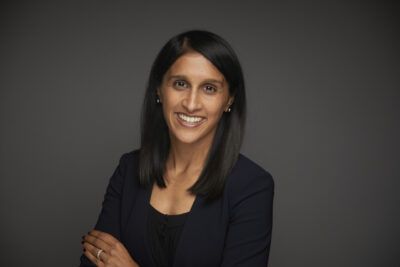
The Hackmans’ sad end also illustrates that not even a celebrated couple is immune to the challenges of caregiving. It’s something that Tina Sadarangani, RN, Ph.D., a nurse practitioner specializing in the elderly, understands. Here is her open letter to Arakawa, highlighting the concerns of being a caregiver in a public health system that offers little support in return:
Dear Betsy,
The world is trying to make sense of the tragic loss of both you and your husband, Gene Hackman. We are left with shock, sadness and so many unanswered questions. I write to you not just as someone reflecting on this loss but as a family caregiver and as a nurse practitioner dedicated to improving the well-being of caregivers. While many are consumed with fears of hantavirus, the real lesson your passing should have us concerned with is the toll of caregiving and the importance of not shouldering it alone.
Without having been there, we can only speculate based on the medical examiner’s report. But what we do know is that Gene had Alzheimer’s disease and severe heart disease – two complex and progressive conditions that made him functionally dependent on others. You were the quarterback of his care team, the constant presence ensuring that he was safe, comfortable and supported. We know from those close to you both that Gene himself acknowledged that he would have died much earlier without your love and care.
And yet, on the day of your passing, the world saw you — diligently wearing a mask, as you often did — worried about protecting your husband from an illness you could pick up from the pharmacy. You were likely feeling unwell but continued pushing forward, tending to the dog, to Gene, to the daily responsibilities that caregivers take on without pause. Like so many caregivers, you may not have realized the toll this was taking on your own body, how the stress and exhaustion can weaken even the strongest among us.
This is the lesson we must learn from your death: Caregiving cannot and should not be done alone.
We know why people hesitate to ask for help – some want to protect their privacy; some fear the judgment of others; some don’t want strangers in their home; and some simply don’t have the financial means to hire professional help. Others wish to shield their loved ones from the harsh realities of dementia, from what it takes away, from what it turns a person into. But the reality is that caregiving, especially for someone with a serious illness, requires a village. And if we do not build that village – if we do not seek respite, support and relief – the stress will eventually take its toll.
That village doesn’t have to be made up of family. It can be neighbors, friends, volunteers, a faith community or paid caregivers. It can take different forms for different people. But caregivers need support. No individuals should feel that they have to do this alone, no matter how much they love the person they are caring for. When caregivers burn out, when their bodies give out, it is often at the worst and most inopportune time.
There are 53 million caregivers in this country. We all deserve support.
Betsy, you and Gene will be deeply missed. And you deserve deep gratitude – not just for the love and care you gave your husband but for the lessons your life and passing leave behind.
With respect and remembrance,
Tina Sadarangani, RN, Ph.D.