We rely on financial and estate planners to guide us through a host of important decisions about our later years—setting up wills and trusts, planning advance directives, and reducing financial risk after retirement. Possibly the most difficult yet important conversation often goes unspoken: where to spend our retirement years. It’s a very personal and sometimes emotional topic with significant financial implications worth discussing.
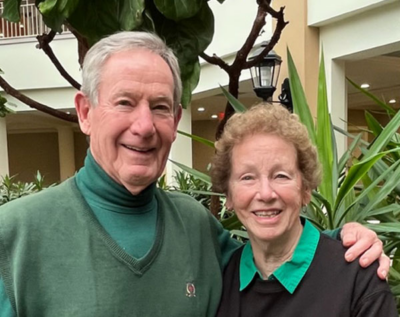
As the CFO of a major oil company and the head of an investment consulting firm, I was well equipped to handle retirement planning for me and my wife, Rilla. As early as our 50s, we knew we were going to move to a senior community. Rilla and I each had to make difficult decisions when it came to caring for our own parents and we wanted to alleviate our children of the responsibility and burden of caring for us. Maybe you’ve had a similar experience. By planning ahead, we maintained control over where we would live and how we would pay for our future care.
Ultimately, we chose to move to Meadow Ridge, a continuing care retirement community (CCRC) in Redding, Connecticut. CCRCs support residents in living their best lives in every stage of life. These communities typically offer independent and assisted living, memory care, and skilled nursing and rehabilitation. With a lifecare contract, a CCRC resident can move through the unpredictable continuum of care at a predictable cost. Moving here was a smart decision, both financially and for our quality of life.
When you add up all the expenses that are associated with maintaining a home — property taxes, upkeep and repairs, lawn care, snow plowing, cleaning service, grocery shopping, and so on — it’s quite an impressive total. When weighed against the cost of living in a CCRC, where all these benefits are provided, the numbers are often comparable. But the real financial advantage of a CCRC comes when you project future expenses.
Few of us know when we retire what our health will be like 10 or 15 years later. Too often, we live in denial about what might happen. Then, suddenly, someone has some type of medical event that thrusts a whole series of decisions upon them for which they were not prepared. This causes tremendous stress on families. It can also be financially devastating when you consider the cost of rehabilitation, in-home services, and modifications to make the home safe.
A CCRC lifecare contract — specifically a Type-A contract — ensures both access to and predictable costs for care, from physical therapy to short- and long-term rehabilitation, to assisted living. In fact, a portion of a CCRC’s monthly fee is considered by the IRS to be a prepaid medical expense and can be eligible for a tax deduction. Rilla and I are fortunate to still be physically and intellectually healthy but, as we age, we all need a little extra help.
I think, however, the most important aspect of life after retirement is socialization. People who are intellectually stimulated in their older years tend to live longer and better. Rilla and I were very attached to the home we designed and enjoyed it for many decades. Despite being comfortable there, we knew the longer we stayed at home the more isolated we were bound to become. The interaction and stimulation of daily conversation, not to mention all of the activities in a CCRC, make the difference between people who are living well and people who are just living long.
How one lives the last 20 years of their life is one of the most important decisions they’re going to make. If planned well, those last 20 years (or even more) can be tremendously enriching and a lot of fun. So, let’s confront it. Let’s not look at it as an agonizing conversation but one that’s practical and, with the right guidance, ensures a fulfilling life, however long that is.
(Jack Neafsey is a former executive with Sunoco and held leadership roles with various energy companies and financial investment firms. He has served as a director for corporate and nonprofit boards and holds B.S. and M.B.A. degrees from Cornell University. At Meadow Ridge, he is the Residents’ Association Board president and led the community’s Finance Committee)