New York State Attorney General Letitia James has led a coalition of 20 state attorneys general in filing a lawsuit in the United States District Court for the District of Massachusetts to stop the Trump Administration from shutting down the Department of Education (DOE). The shutdown is well underway with about half of the department’s employees having been fired as of March 12.
The lawsuit names as defendants Linda McMahon in her official capacity as Secretary of Education, the Department of Education and Donald Trump in his official capacity as president.
According to James, New York state faces the possibility of losing the approximately $6.17 billion a year it receives from the DOE. Federal funding for public colleges and universities averaged $1,256 per student in New York in federal fiscal year 2024, Kames said. The states that joined in the lawsuit all said they have an interest in what happens to the DOE because they all would stand to lose funds and other aid.
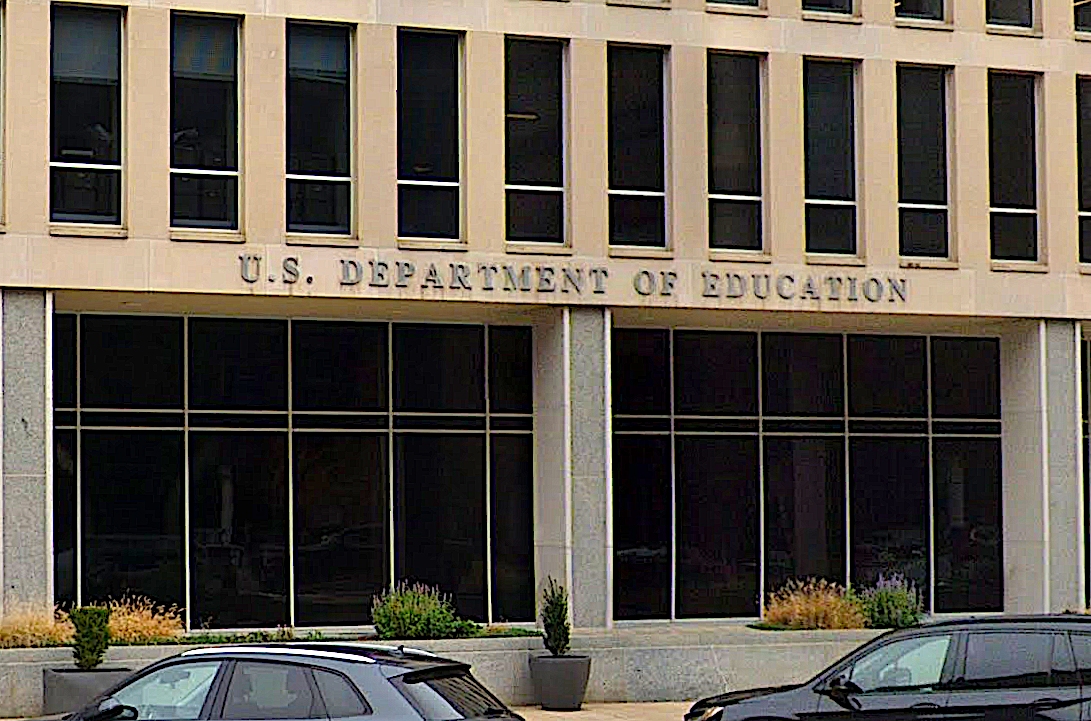
“It is clear that their only mission is to take away the necessary services, resources, and funding that students and their families need,” James said. “This outrageous effort to leave students behind and deprive them of a quality education is reckless and illegal.”
James said that what Trump is doing to the DOE amounts to madness. She points out that the department’s programs serve nearly 18,200 school districts and over 50 million kindergarten through grade 12 students attending roughly 98,000 public schools and 32,000 private schools throughout the country. Its higher education programs provide services and support to more than 12 million postsecondary students annually. Students with disabilities and students from low-income families are some of the primary beneficiaries of DOE services and funding.
Federal DOE funds for special education include support for assistive technology for students with disabilities, teacher salaries and benefits, transportation to help children receive the services and programming they need, physical therapy and speech therapy services, and social workers to help manage students’ educational experiences. The DOE also supports students in rural communities by offering programs designed to help rural school districts that often lack the personnel and resources needed to compete for competitive grants.
The lawsuit asserts that the administration’s actions will deprive students with special needs of critical resources and support. The department’s Office of Civil Rights, which will be gutted, has protected students from discrimination and sexual assault. College students will have a harder time accessing loans, Pell Grants, and work-study programs. James says this would be particularly harmful to New York, where more students receive Pell Grants than almost any other state.
James and the coalition argue that the administration’s actions to dismantle the DOE are illegal and unconstitutional. The lawsuit points out that DOE was authorized by Congress with numerous different laws creating its various programs and funding streams. The coalition’s lawsuit asserts that the executive branch does not have the legal authority to unilaterally incapacitate or dismantle it without an act of Congress.
“Because neither the President nor his agencies can undo the many acts of Congress that authorize the Department, dictate its responsibilities, and appropriate funds for it to administer, the President’s directive to eliminate the Department of Education (“Directive”)—including through the March 11 decimation of the Department’s workforce and any other agency implementation—is an unlawful violation of the separation of powers, and the Executive’s obligation to take care that the law be faithfully executed,” the lawsuit states.
The lawsuit alleges that “the process of the Department’s dismantling will create and has created chaos, disruption, uncertainty, delays and confusion for Plaintiff States and their residents. States anticipating federal fund disbursements do not know whether staff will be employed and able to be contacted regarding those disbursements. Students at state universities do not know whether their federal student aid packages will be timely processed and made available before the Fall 2025 semester begins.”
In addition to James, the lawsuit was filed by the attorneys general of Arizona, California, Colorado, Connecticut, Delaware, Hawaii, Illinois, Maine, Maryland, Massachusetts, Michigan, Minnesota, Nevada, New Jersey, Oregon, Rhode Island, Washington, Wisconsin, Vermont, and the District of Columbia.