A Final Environmental Impact Statement has been prepared for the redevelopment of the closed Galleria shopping mall in White Plains and it includes changes that the developer is proposing for the project.
The developer is Galleria City Holding Company LLC based in White Plains. Project sponsors are the LLC along with Louis Cappelli’s Cappelli Organization, Pacific Retail Capital Partners based in Los Angeles, SL Green Realty Corp. based in New York City, and Aareal Bank Group, which is based in Germany.

Attorney Mark Weingarten of the White Plains-based law firm DelBello Donnellan Weingarten Wise & Wiederkehr LLP told the White Plains Common Council that the proposal remains a $2.5 billion investment that would create a visionary mixed-use project in the city.
“After we submitted our petition to rezone the property back in November of 2023 we have engaged in a very public 18-month process including the environmental review under SEQRA (State Environmental Quality Review Act),” Weingarten said. “We have met with numerous neighborhood groups, (and) participated in a number of public meetings conducted by the Common Council and the Planning Board in connection with the SEQRA process.”
A Draft Environmental Impact Statement was prepared and preparation of the Final Environmental Impact Statement was authorized. It was during that process that the modified concept plan was created.
Weingarten said that changes made in the proposal include a reduction in the number of apartments that would be built, dropping to 3,001 units from the 3,200 originally proposed. There would be a reduction in the amount of retail/commercial space from 228,940 square feet originally proposed to 96,780 square feet.
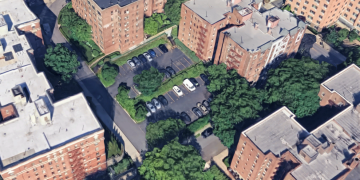
“In this revised plan we will comply with the city ordinance and provide the 12% or 300 affordable units inside the buildings while adding 500 additional affordable units in two buildings on the (municipal garage) property currently owned by the city,” Weingarten said. “All told, 800 affordable units, or in other words 27% affordable units out of the total 3,001 units. This is an extraordinary increase. In the midst of our current housing crisis the city is providing unprecedented leadership.”
Weingarten provided assurances that the buildings containing 100% affordable housing units would be of the same quality as the other buildings in the development.
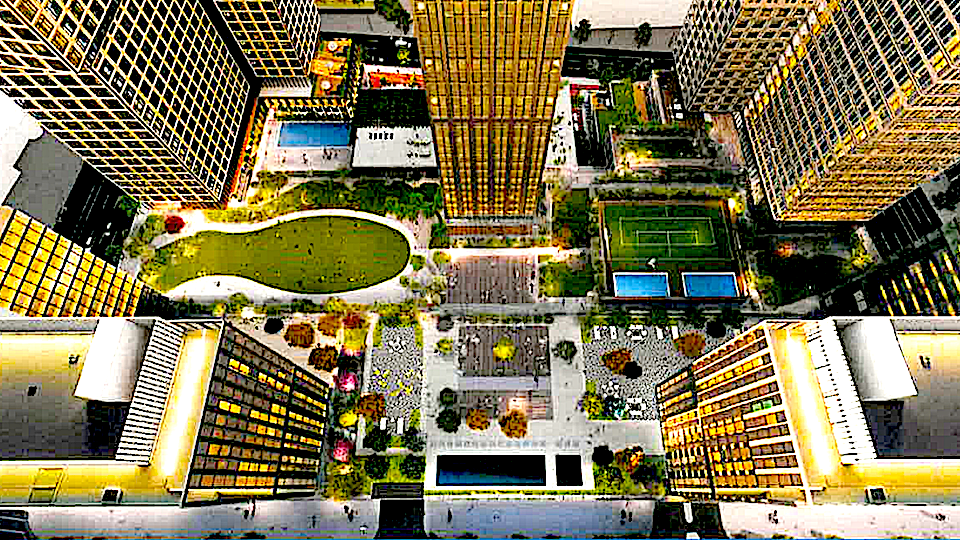
Weingarten pointed out that the traffic and other studies that have been submitted were based on a larger project than what’s in the modified concept plan. He said that 50% of the site would be devoted to providing open spaces.
“The project remains a true transit-oriented development that promotes a car-optional lifestyle by providing access to public transportation and providing eco-friendly mobility options,” Weingarten said. “Sufficient parking for residents and the public will be provided in the 3,140 parking spaces being provided at the project site.”
The current unit total and bedroom mix is anticipated to generate approximately 282 public school age children, which is a reduction from the 325 students originally projected. The gross square footage of residential space is being cut by 81,909 to 3,306,229 square feet. Combined with the reduction of 132,160 square feet in retail space there would be a reduction in the total gross square footage to be built of 214,069.
The maximum height of the buildings in the project would remain at 450 feet, or 41 stories. Total open space to be provided would increase by 0.03-acre and total 5.91 acres.
The two buildings with the additional affordable apartments would be placed above parking structures and also would be in the proximity of parks that would be used by residents as well as the public. Retail spaces would be on Main Street and wrap around to Court Street and Martine Avenue.
Weingarten said that the retail uses would include restaurants and fitness. He indicated that a large food court that was in the original plan likely would no longer be included.