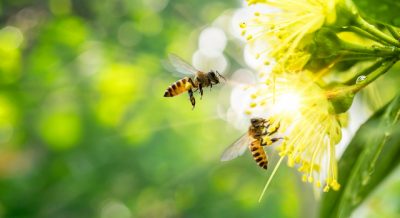
Tuesday, May 20, was a day to “bee” thankful.
It was World Bee Day, although conservationists will tell you that every day should be Bee Day for the contributions that honey and wild bees make to our economy and agriculture, contributions that have been declining through no fault of the little buzzers.
According to the American Beekeeping Federation, honeybees alone contribute $20 billion to the economy by pollinating many of our fruits, vegetables and nuts, including apples, cranberries, melons, pumpkins and broccoli. “Some crops, including blueberries and cherries, are 90 % dependent on honeybee pollination. One crop, almonds, depends entirely on the honeybee for pollination at bloom time.”
But the number of managed honeybee colonies has been declining steadily since 1947, due to loss of habitat and genetic diversity, mite infestations, viruses, pesticides and something called colony collapse disorder (CCD), the unexplained loss of bees in a hive. Researchers at Washington State University (WSU) said that this could be one of the worst years yet as colony loss could increase from an average of 40/50% to 70%.
Honeybee loss also mirrors the loss of other pollinators, including bumble bees and Monarch butterflies. Westfair contributor Jim McHale, president of JP McHale Pest Management LLC in Buchanan and Ridgefield and on Long Island, said, “We prioritize eco-conscious practices and are committed to raising awareness and informing our clients about the crucial pollinators versus the true stinging insects. One of the biggest challenges we face is public confusion about bees and other stinging insects. Bees are often blamed for behavior that actually comes from wasps and carpenter bees.”
McHale identified them thusly:
“Wasps, often mistaken for bees, are more likely to sting, especially when threatened. Unlike bees, they can sting multiple times and are far more aggressive when their queen is in danger.
“Carpenter bees, though technically part of the bee family, are responsible for creating a different problem. These large bees dig into wood and can cause significant damage to decks, siding,and other structures.”

As for tips on how to stay safe around bees, he offered these:
Stay calm: “Sudden movements or swatting can provoke a sting.”
Avoid floral fragrances: “Bees are drawn to strong scents, so skip the perfume or scented lotions when outdoors.”
Wear light-colored clothing: “Bees are less attracted to whites and pastels than dark or bright colors.”
Keep food covered: “Sweet drinks and open containers can attract bees at picnics or barbecues.”
Don’t disturb hives or nests: “Call a professional for safe removal or relocation if you find one on your property.”
At JP McHale, targeted treatments, which do not use harmful chemicals, are designed to protect pollinator populations and other non-pest species. In addition, he said, education and prevention strategies can help homeowners understand when bees are a danger and when they’re just doing their job
“Our goal is to manage pests responsibly while ensuring essential pollinators like bees continue to thrive.”
For more, call 833-276-3217 or email sales@nopests.com.