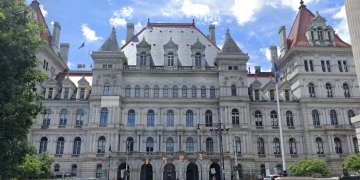
The New York State Supreme Court’s Appellate Division, First Judicial Department, has rejected former National Rifle Association (NRA) Executive Vice President Wayne LaPierre’s appeal of the verdict against him won by New York Attorney General Letitia James.
In a lawsuit that had been filed in August 2020, James secured a judgment requiring LaPierre to pay $4.3 million back to the NRA and banning him from serving as an officer or director of the NRA for 10 years.
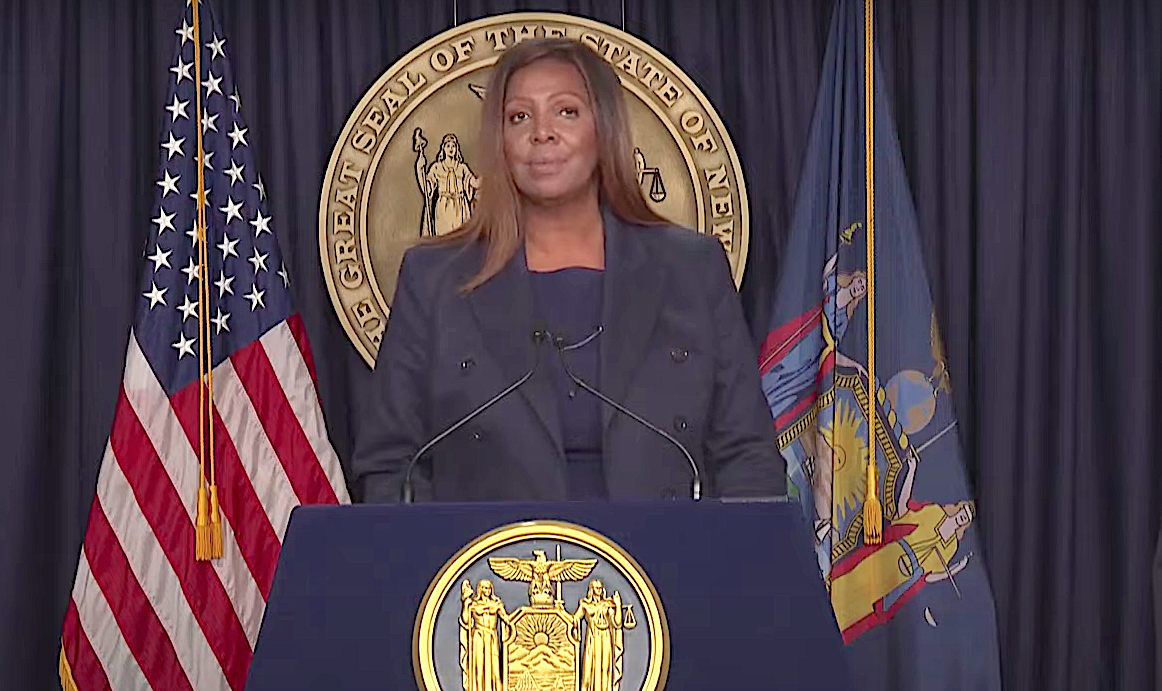
“Wayne LaPierre and other senior NRA leaders broke the law by funneling millions of dollars in lavish perks to themselves and their families,” James explained. “After we successfully proved our case to a jury, LaPierre was ordered to pay $4.3 million and was barred from serving as an NRA officer or director for a decade. This decision upholds the jury’s verdict and is another victory in our efforts to ensure that LaPierre is held accountable for his illegal self-dealing.”
James had charged that the NRA, LaPierre and other senior officers mismanaged the organization’s funds and contributing to the loss of tens of millions of dollars. In February 2024, a jury decided the first stage of a two-part trial when it found the NRA, LaPierre, Chief Financial Officer Wilson “Woody” Phillips, and former General Counsel and current Corporate Secretary John Frazer violated state laws. The jury found that the NRA failed to properly administer charitable funds and protect whistleblowers, that the NRA and Frazer made false regulatory filings, and that LaPierre and Phillips, together, caused the organization $7.4 million in monetary harm.
In December 2024, following a bench trial, James secured a court judgment ordering the NRA to significantly reform its governance and requiring LaPierre and Phillips to pay millions ordered by the jury plus nine percent interest per year.
The State Supreme Court’s decision regarding LaPierre’s appeal noted, “To the extent LaPierre argues that the Attorney General brought this action against him in retaliation for his exercise of free speech, we reject this contention. As we previously held, the Attorney General ‘showed as a matter of law that it had probable cause to investigate and sue,’ since ‘public reports of malfeasance at the NRA predated the investigation’ and the ‘investigation uncovered ample evidence of malfeasance.’”
The State Supreme Court’s Appellate Division pointed out that in his appeal LaPierre did not challenge the weight or sufficiency of the evidence presented against him, or the jury’s findings in the case, but instead raised issues based on interpretation of law with which the court disagreed.