The Business Council of Westchester’s (BCW) Clean Energy Action Coalition (CEAC), which has some 130 members, hosted its 2026 Clean Energy Action Conference: “Powering Change Together” at Windrose on Hudson in Ossining. The summit brought together top policymakers, utility executives, and business leaders to continue the coalition’s efforts to address the need to ensure reliability, affordability, and sustainability for New York state’s electric energy grid.
John Ravitz, BCW’s executive vice president and chief operating officer, told the conference that the coalition now has nine different working groups that have continuously met on a monthly basis.
“We have one group that was specifically tasked with putting together the agenda for this conference,” Ravitz said. “The meetings started almost six months ago to really put together an agenda that hopefully will give as much new and updated information of what all of us need to know about how we are going to build a reliable, affordable and sustainable power system.”
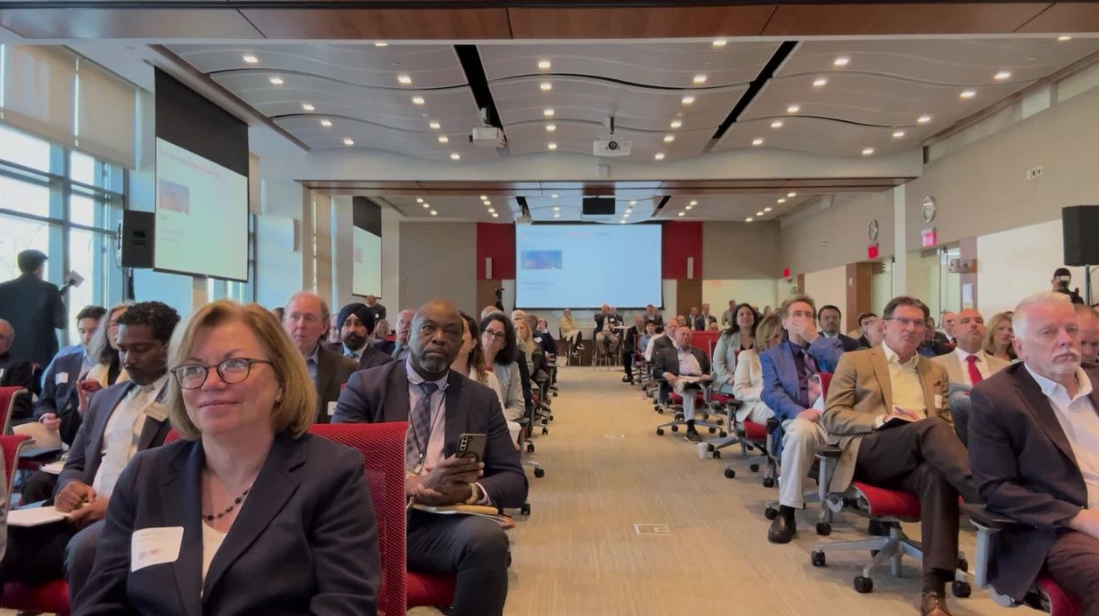
In opening remarks, Westchester County Executive Ken Jenkins said that issues being discussed at the conference are not isolated and touch everything that goes on in the county from how the economy grows to how communities are supported.
“Clean energy is no longer just an environmental conversation,” Jenkins said. “It’s about infrastructure; it’s about reliability; it’s about our competitiveness. Companies today are making decisions based on where they can get consistent, reliable power; where they can meet their sustainability goals and where the infrastructure exists to support long-term growth.”
Jenkins said that the work being done by the CEAC has real implications for jobs and investments and the future of the region.
“At the county level, we can focus on taking a practical approach,” Jenkins said. “We’re not just talking about big ideals, but also testing and implementing solutions that work in the real world.”
The keynote address at the conference was delivered by Justin Driscoll, president and CEO of the New York Power Authority (NYPA).
Driscoll detailed four important areas for NYPA: strengthening the electrical system’s transmission backbone; building utility-scale renewables; embracing advanced nuclear energy; and investing in local communities as highlighted by NYPA’s recent decision to keep its headquarters in White Plains but move to a new new office building at the Hamilton Green development site in the city.
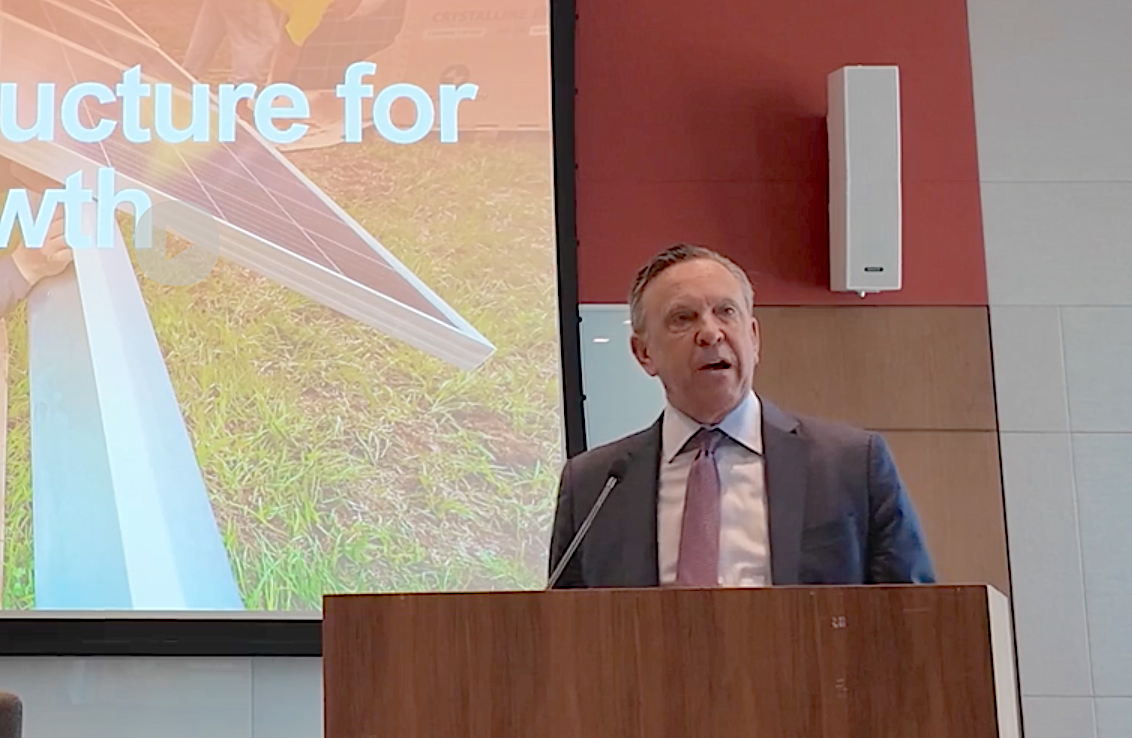
Driscoll pointed to Propel NY, a major project to build new underground transmission lines and substations connecting the Bronx, Long Island and Westchester. Construction is expected to begin this year with the upgrades going into service by 2030. He said that NYPA has been in close touch with various communities about Propel NY and participated in 70 local events to help explain what the project is about and how it would benefit communities and consumers.
“You can’t modernize an energy system without modernizing its transmission backbone,” said Driscoll. “This is a once in a generation modernization effort, and we’re strengthening reliability, fueling economic growth and making sure our energy system can meet the needs of every business and every resident in Westchester. For every dollar that we spend on transmission it brings about $2.40 in economic activity back into the region.”
Driscoll noted that NYPA is working with local schools like New Rochelle High School and Mount Vernon STEAM Academy to prepare the next generation of energy professionals.
Among the BCW coalition’s various work groups are those to: collect and analyze data on energy consumption in Westchester; develop messaging to promote clean energy technologies to stakeholders, the media, and the public; support development programs to expand the clean energy workforce and support job growth in the region; and develop standardized model laws for municipalities to streamline the approval of clean energy new construction, adaptive reuse, and retrofit projects.