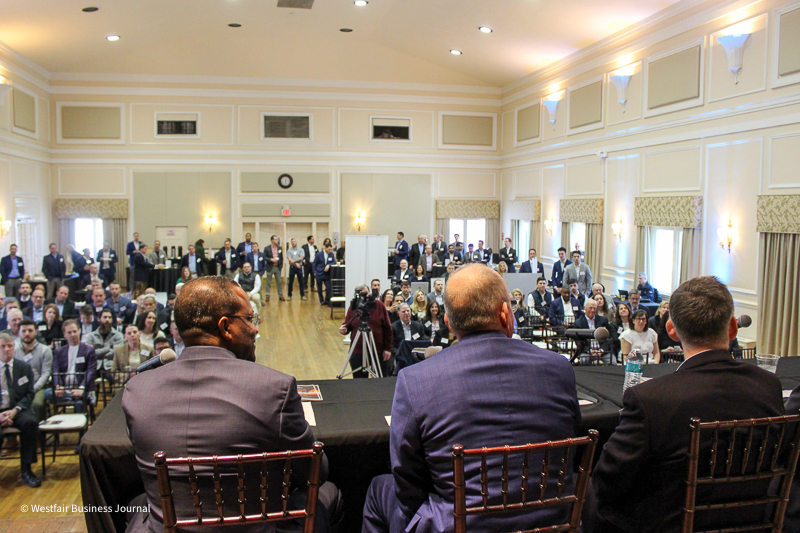
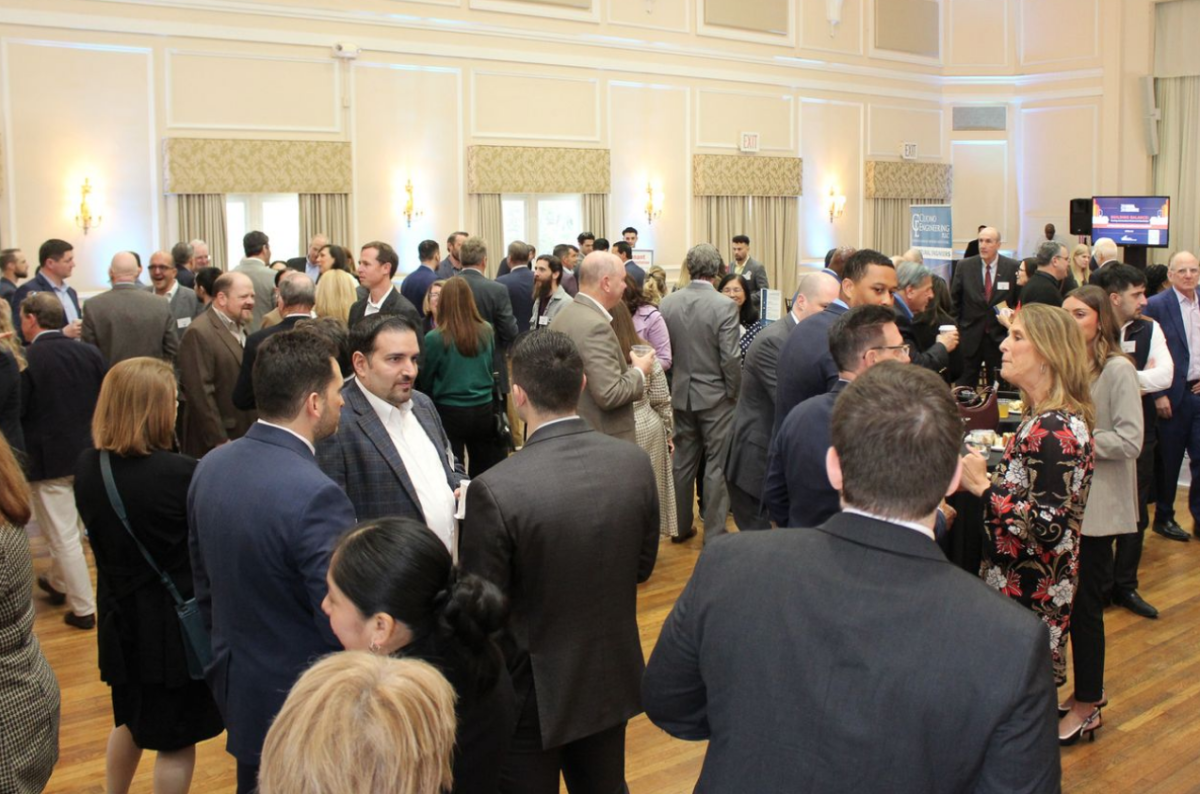
The shortage of affordable housing in Westchester was one of the topics discussed by a panel of real estate professionals at the 2026 Real Estate event presented April 9 by Westfair Communications, publisher of the Westchester and Fairfield County Business Journals. There was agreement on the need to streamline the environmental review process under the New York State Environmental Quality Review Act (SEQRA) that has slowed down and boosted the cost of new projects. The panel also noted that NIMBY (not in my backyard) forces still are at work in many communities when it comes to new development.
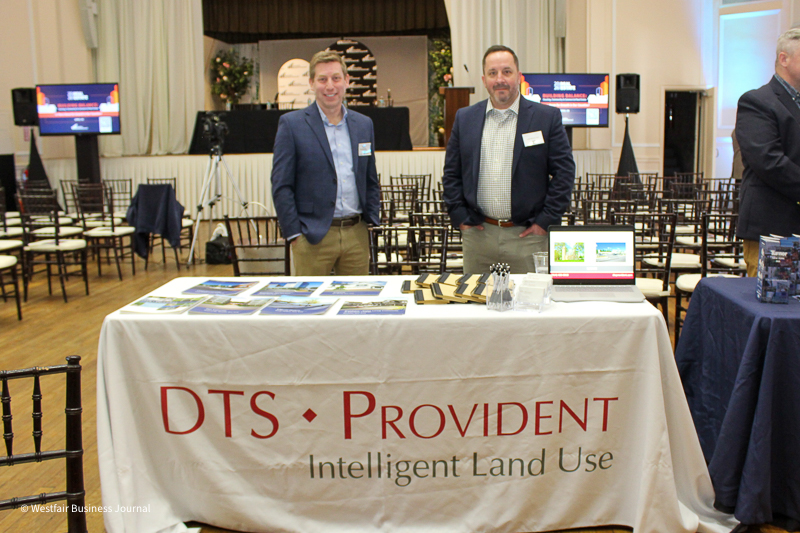
The event was titled “Building Balance: Housing, Community & Commercial Real Estate.”
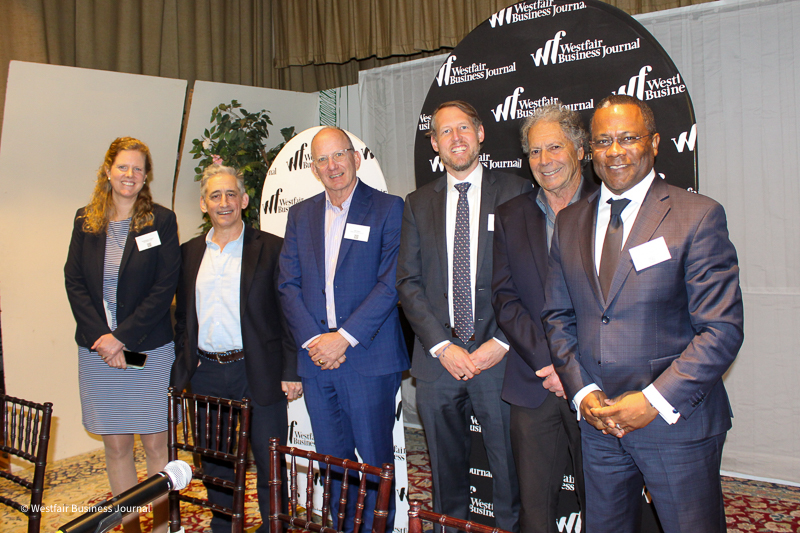
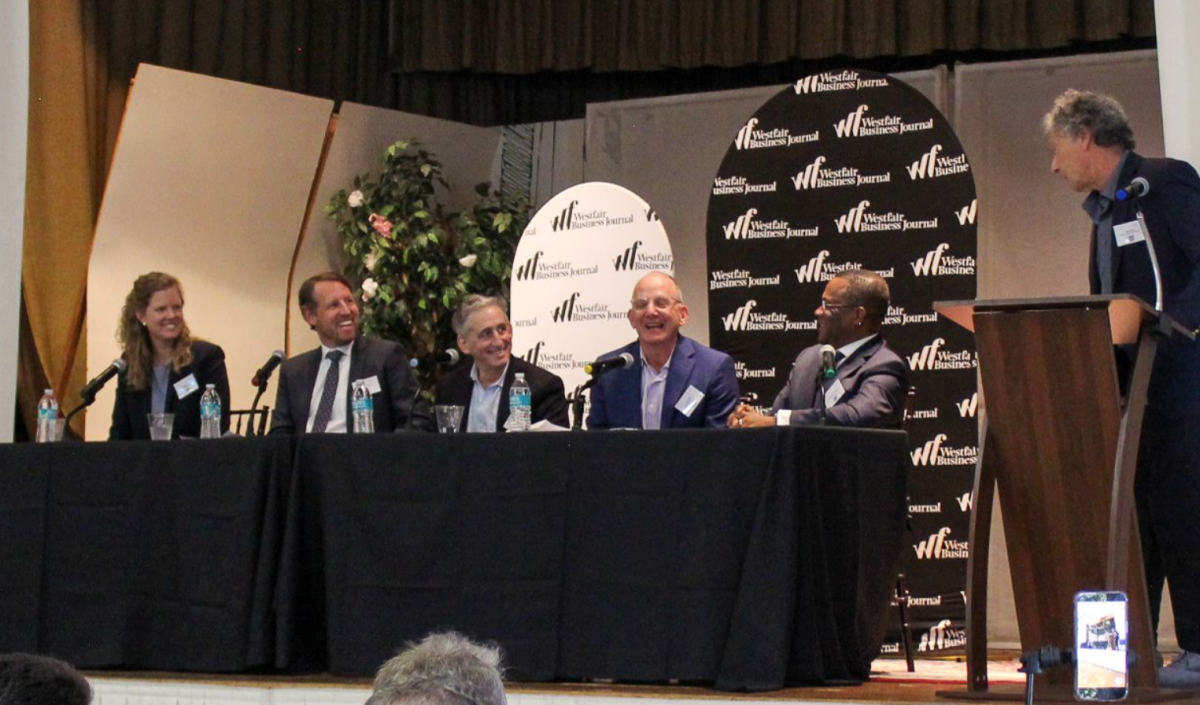
The panelists were: Ronald Rosado Abad, CEO of Community Housing Innovations; Bill Balter, president of WBP Development, LLC; Bruce Berg, CEO of Cappelli Development Company; J. Ryan Harvey, CEO and president of The Ashforth Company; and Sarah Jones-Maturo, president of RM Friedland. The moderator was Clay Fowler, founding partner, chairman and CEO of Spinnaker Real Estate Partners. The event took place at the C.V. Rich Mansion in White Plains.
In delivering opening remarks at the event, Deputy Westchester County Executive Joan McDonald emphasized that the administration of County Executive Ken Jenkins is committed to working with developers to bring more housing and other real estate development to the county.
“We are very, very grateful for our partners, with developers, with government, and with contractors and engineering firms,” McDonald said. “You guys get it done and we hope we can do everything in our power to partner with you.”
McDonald pointed out that the Jenkins administration has endorsed Gov. Kathy Hochul’s proposal to make changes to SEQRA.
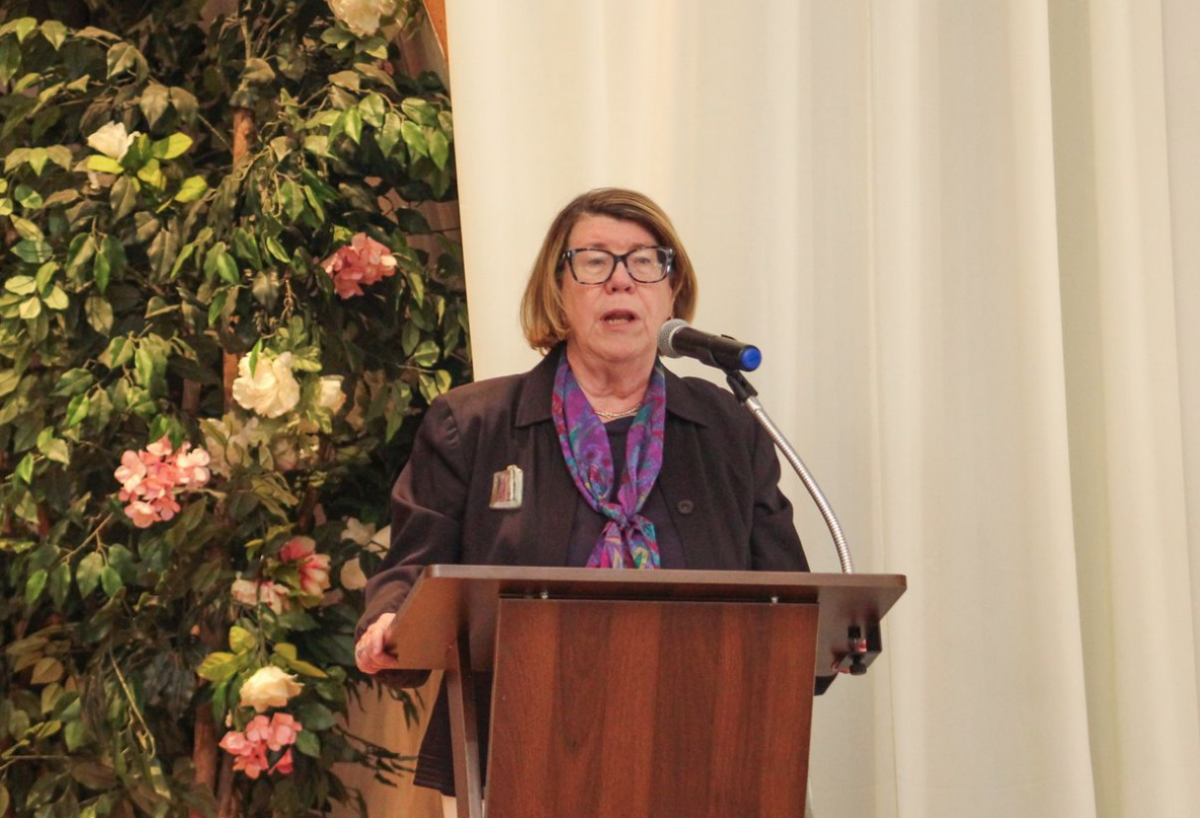
“We know they’re slogging it out up in Albany and getting through the budget but we’re hopeful that that provision will remain intact,” McDonald said. “We think it’s extremely helpful for those of you and for those of us in government to get housing built.”
Moderator Fowler asked the panelists for their take on what is the biggest problem facing Westchester and Fairfield.
Abad declared it is affordable housing, while Balter said it is a combination of the accelerating cost to build and operate housing and interest rates.
Berg agreed with Abad and Balter while adding, “the interest rates environment today is very difficult; the uncertainty in the world climate makes things very challenging and affordable housing is clearly an issue for everybody.”
Harvey said the future of the American suburb is a major issue while Jones-Maturo said that affordable retail, office and industrial space are issues just as is affordable housing.
“Affordability, affordable housing, has always been an issue in our country,” Abad said. “There is a massive demand, but there is insufficient supply to meet that demand. Westchester County models many other neighborhoods throughout the country but affordability has always been an issue in our country, it’s always been someone struggling for the use of land, the maximum use of land, to benefit your family or your community so that you live a quality life.”
Berg said that most municipalities where Cappelli Development is building have an affordable housing requirement in their codes.
“We do build affordable in every one of our projects,” Berg said. “It’s typically 10% to 12% of all the units.”
Jones-Maturo said that when many people hear the word “affordable” they immediately think it means high-density and people worry about the impact on schools but a study from Friedland showed that there was little effect on school enrollment.
Fowler pointed out that without population growth, either from the country’s birth rate or an influx of immigrants, there will be economic problems.
“We can get an influx from New York City (in Westchester and Fairfield) when people are unhappy with New York City but I think long-long-term we’re still very much tied to New York City and Westchester and Fairfield County need a strong New York,” Harvey said. “I think it’s still more about figuring out how to make our communities places where everybody can live.”
Abad said that 50% of the people in Westchester are spending more than 30% of their incomes on housing and there isn’t enough housing and people have to leave Westchester for northern counties.
Jones-Matguro said that transit-oriented development around train stations and downtown areas allows an opportunity to retain the charm of a community while adding needed density.
Berg said that Cappeilli is very focused on transit-oriented development.
“You don’t have to worry about direct impacts on peoples’ houses, impacting their sunlight,” Berg said. “We want to be in downtown; that’s where the services are. The parking requirements are vastly different. You get outside into the urban areas outside of your downtowns instead of building one car per unit you’re now one-and-a-half or two cars per unit. It impacts your cost structure. It impacts the number of cars on the road. And, the people that we’re serving, they like having doormen. They like being able to walk to the train station. They like having all the services and amenities. Building multi-story buildings in downtowns helps solve a lot of the problems.”
In discussing the state of the office market in Westchester, Berg said that Cappeilli has a small portfolio of office space and is finding that tenants are starting to come back after the Covid pandemic that led to an increase in remote working.
“Close to Grand Central Station not only are they getting occupied, they’re getting occupied at rents that are two or three times the rest of the marketplace,” Berg said. “There’s clearly a demand for quality office space. The product in Westchester County is pretty old and tired. Same thing in Fairfield.”
Jones-Maturo said RM Friedland has been working with Ginsburg Development Companies on its office building at 50 Main St. in White Plains, which Ginsburg has renovated and enhanced.
“We started there at 65% occupied; we’re now at 95% occupied,” Jones-Maturo said. “We’ve actually had tremendous leasing activity at that building. It’ well located and a Class A building. Rents keep pushing up.”
Fowler mentioned that a company in Arizona is building modular homes using robots and suggested that since robots are being used to build automobiles, which are complex mechanical devices, they also should be able to be used on building construction sites.
The partnering sponsor for Westfair’s event was The Cappelli Organization. Supporters were: Action Entertainment; The Building & Realty Institute of the Hudson Valley; Caperberry Events; CClean; Cuddy & Feder LLP; RXR; Simone Development Companies; Spinnaker Real Estate Partners LLC; Stagg Group; Turner Construction Company.
Lear more about this event at: events.westfaironline.com/real-estate