The White Plains Common Council by a unanimous vote has adopted revisions to the city’s affordable housing program that it hopes will increase the number of affordable units being created in the city while at the same time increasing the number of affordable units a developer can opt not to provide and instead pay a fee to the city’s Affordable Housing Assistance Fund. The changes become effective Sept. 15.
According to the city’s Planning Commissioner Christopher Gomez, there are four major features to the changes that have been adopted by the Common Council.
The first major change involves adjusting the income levels served by the program. The program previously was aimed at people with income levels of 50% to 80% of the Westchester Area Median Income (AMI). With the changes, the program now requires affordable units to be available for households earning between 40% and 60% of the AMI.
The second major change establishes an eligibility preference for White Plains residents, and employees of the City of White Plains, White Plains Housing Authority, White Plains Urban Renewal Agency, and White Plains School District.
The third major change involves increasing the cap in the number of units that a developer can opt not to provide and instead pay a fee-in-lieu. The cap had been 25 units and was increased to 35 units. The fee for each affordable unit not provided was increased from 125% of the Westchester County HUD (U.S. Department of Housing and Urban Development) AMI for a four-person household to 130% of that AMI.
The Westchester County HUD AMI currently is $119,000 for one person and goes up to $197,200 for a family of six people.
The fourth change adjusts when the amount of a fee-in-lieu to be paid by a developer is calculated and when the payment can be made. Payment now can be made at any time between site plan approval and the issuance of the first temporary or final Certificate of Occupancy. The amount due will be calculated at the time of the payment.
Gomez said that the city’s affordable housing regulations have so far resulted in 401 affordable units being built, with 32 more currently under construction. In addition, projects that are due to bring another 129 affordable units have been approved. The mix of units now available or under construction includes 96 studios, 207 one-bedroom units, 119 two-bedroom units and nine three-bedroom units.
Gomez also noted that there are about 5,000 housing units at below market rates in White Plains, about 22% of the total number of housing units in the city.
“We’ve done a lot of data crunching and what really has come to fruition here is that the AMI numbers have been increasing exponentially post-Covid and that in turn obviously has increased both the incomes and eligibility criteria for the program to a level that a lot of the folks on our waiting list are missing out,” Gomez said.
Gomez said that about 60% of the people that are in affordable units came from outside of White Plains while 40% were White Plains residents before moving into an affordable unit. Twenty-three percent came from places in Westchester other than White Plains, while 11% came from the Bronx, 4% were from Long Island, 3% were from Connecticut and 2% were from New Jersey.
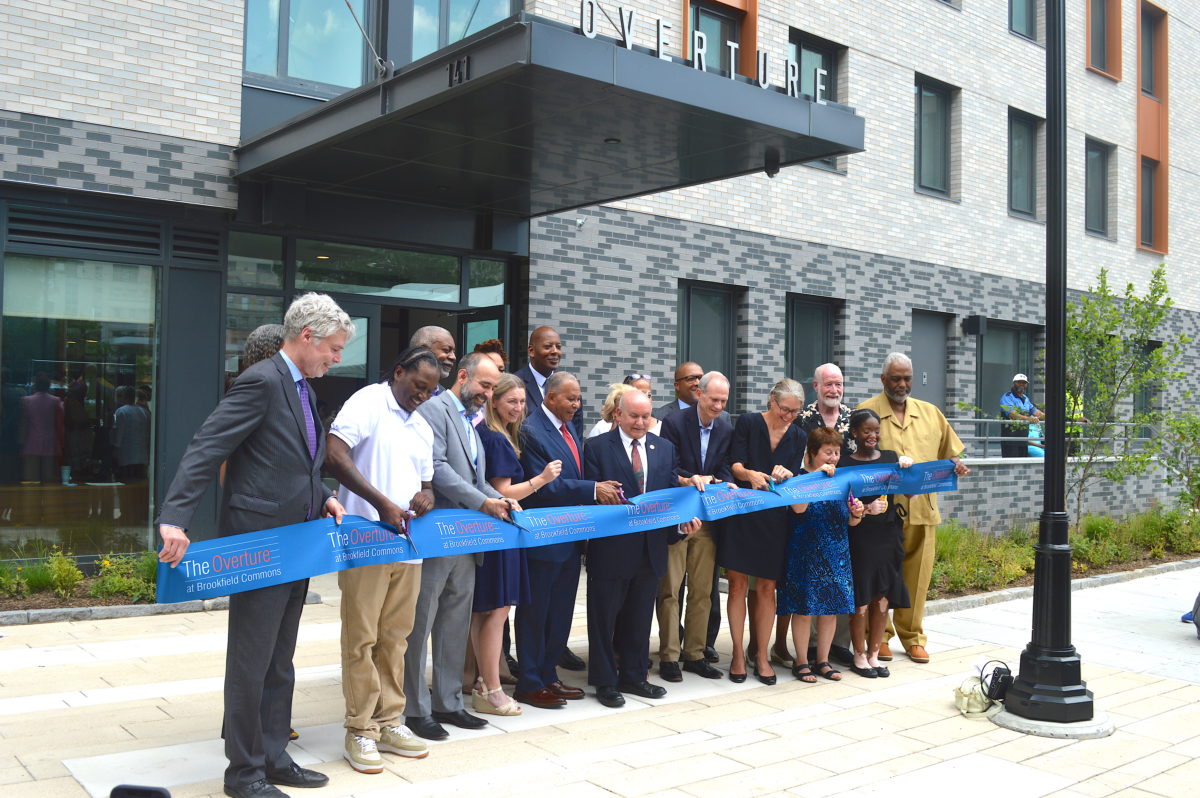
Gomez said that developers of projects that have been completed or are now under construction have paid fees instead of providing a total of 75 affordable units. The payments to the city’s Affordable Housing Assistance Fund have totaled $11,593,125. He said the city committed $9,402,000 of those funds to support five developments that will create a total of 473 affordable units. These include the White Plains Housing Authority’s Brookfield Commons project, the 99 Church St. development, AME Zion’s Lake Street project and a development at 60 S. Kensico Ave.
Councilman Justin Brasch, who is running for mayor, noted that reducing the AMI percentages “makes these apartments affordable to many, many more: workforce families; teachers; firefighters; nurses; police officers; people working in our hospital, whatever the case may be. I think it’s a fantastic thing.”
Mayor Tom Roach said that the city has been trying to have affordable housing units built without chasing away developers.
“We are a sought-after city. People want to live here; at every income level this is a great city to be,” Roach said. “We can all as a community be proud of the work that we’ve all done together to make that so. But, what comes with that is pressure on prices. Supply and demand tells you that if you do not feed the market that need will push out into other places and that’s how you have gentrification and loss of multi-level rents.”